
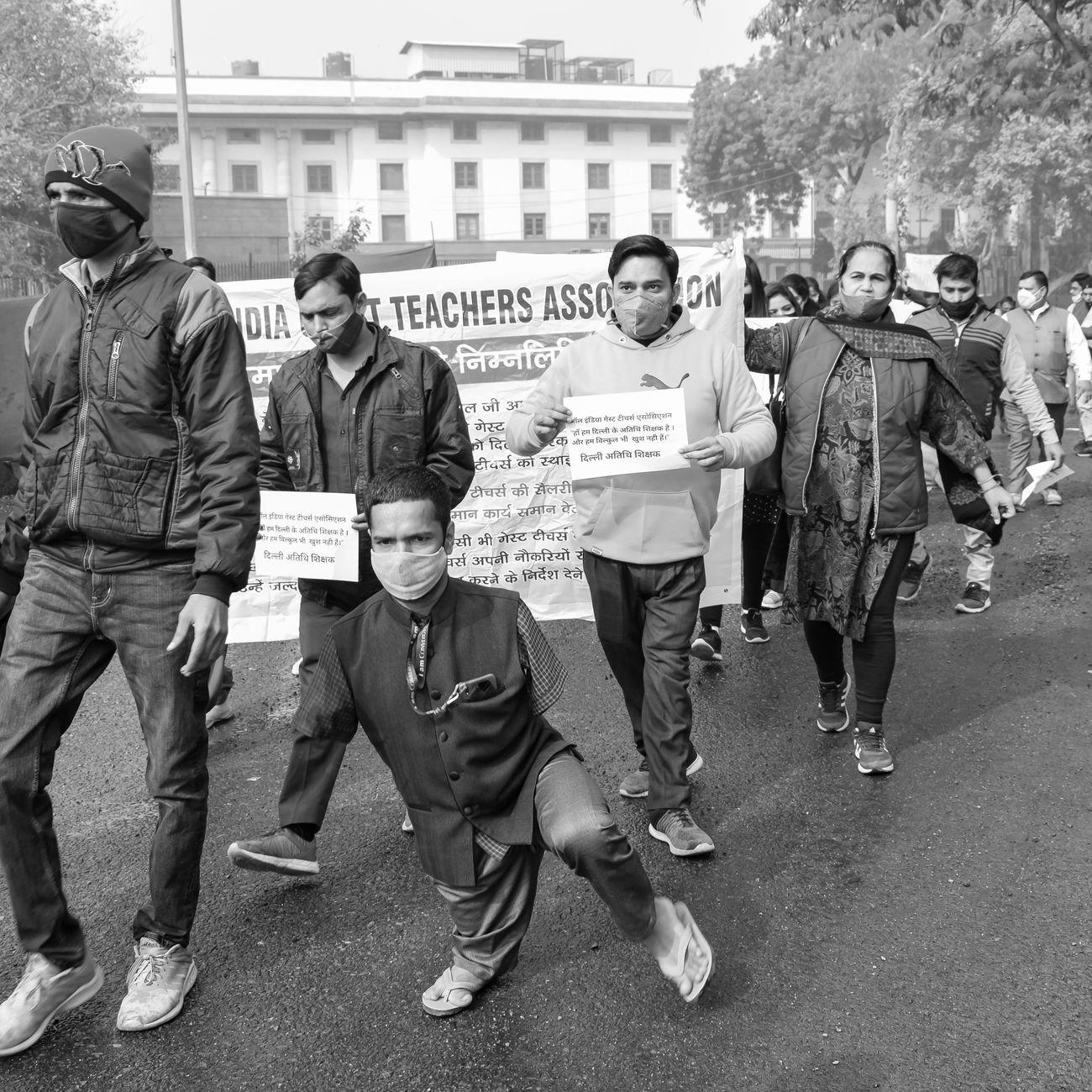
The National Conference (NC) will proceed with its planned protest in Delhi on July 20 to demand the restoration of Jammu and Kashmir‘s statehood, despite the party not yet having secured official permission for the demonstration at Jantar Mantar. Chief Minister Omar Abdullah conveyed this resolve, emphasizing that the party’s commitment to the scheduled program remains unwavering, even as logistical and administrative processes for the protest are still pending.
Speaking to reporters in Srinagar, Abdullah stated that NC leaders are slated to travel to the national capital on July 19 as originally planned. He drew a parallel to a past instance where party directives prioritized scheduled events even amidst personal health crises, citing the passing of his uncle, Dr. Sheikh Mustafa Kamal, a former Jammu and Kashmir minister, on Tuesday. Abdullah recounted that even when his uncle’s health had deteriorated significantly on July 11, the instructions from party president Farooq Abdullah were to proceed with a scheduled program in Jammu on July 12. This historical context underscores the party’s adherence to its commitments and planned activities.
Information reaching Tahir Rihat suggests that the delay in obtaining permission for the Jantar Mantar venue is a point of concern, but the party leadership is prepared to be patient and has alternative plans in readiness. Abdullah acknowledged that permission had not yet been granted, noting that the process was experiencing delays. “As I said on the 11th, we know how to be patient. We will wait and keep our alternative plan ready,” Abdullah remarked, indicating a pragmatic approach to navigating bureaucratic hurdles. He also revealed that he had discussed the matter with party colleagues who had expressed apprehensions regarding the approval process. He assured them that if permission for Jantar Mantar was not forthcoming, the party would convene to strategize and determine the next course of action, reiterating their firm intention to travel to Delhi on July 19.
The National Conference has been actively intensifying its campaign in the lead-up to the proposed protest, initiating outreach programs across Jammu and Kashmir to garner support for the restoration of the region’s statehood. The party has extended invitations to 52 political and religious leaders from across the country to participate in what it has described as a “peaceful, democratic protest.” This demonstration is scheduled to coincide with the opening day of Parliament’s Monsoon Session, a strategic choice aimed at maximizing visibility and impact. Prominent figures invited to attend include leaders from various national parties, such as Congress leaders Sonia Gandhi, Mallikarjun Kharge, and Rahul Gandhi; Samajwadi Party chief Akhilesh Yadav; BSP president Mayawati; RJD chief Lalu Prasad Yadav; NCP (SP) president Sharad Pawar; Shiv Sena (UBT) chief Uddhav Thackeray; AAP national convener Arvind Kejriwal; SAD chief Sukhbir Singh Badal; CPI leader D Raja; and Rajya Sabha MP Kapil Sibal. The broad spectrum of invitees signals the NC’s ambition to forge a united front and amplify its demand for statehood on a national platform.
The party’s sustained efforts to mobilize support reflect a deep-seated commitment to reasserting the unique political status of Jammu and Kashmir. The demand for statehood has been a recurring theme in the region’s political discourse since the abrogation of Article 370 and the subsequent reorganization of the erstwhile state into two Union Territories. The National Conference has consistently argued that the restoration of statehood is a prerequisite for the democratic and political empowerment of the people of Jammu and Kashmir. The planned protest in Delhi is envisioned as a significant step in this ongoing campaign, aiming to exert pressure on the central government through a visible and unified display of political will. The party’s leadership has expressed confidence in their ability to mobilize a substantial presence, underscoring the broad-based support they believe exists for their cause across the political spectrum.
The outreach to national leaders is a calculated move to leverage the collective voice of the opposition and highlight the perceived democratic deficit in the current administrative setup of Jammu and Kashmir. By inviting a diverse group of political figures, the National Conference seeks to frame the issue of statehood not merely as a regional concern but as a matter of national importance and democratic principle. The party’s strategy appears to be centered on building a consensus and demonstrating that the demand for statehood enjoys widespread political backing, thereby increasing the pressure on the central government to address these concerns. The anticipation surrounding the protest, coupled with the ongoing efforts to secure permissions and mobilize participants, indicates a determined push by the National Conference to make its voice heard on the national stage.
The NC’s insistence on proceeding with the protest, irrespective of the permission delay, signals a strategic determination to maintain momentum and demonstrate resilience in the face of administrative challenges. This approach suggests that the party is prepared to explore alternative venues or methods if the primary location at Jantar Mantar remains inaccessible, ensuring that the July 20 date remains a focal point for their advocacy. The party’s leadership has consistently maintained that peaceful and democratic means are the preferred avenues for articulating their demands, and the upcoming protest is framed within this ethos. The success of the protest, in terms of participation and impact, will likely be closely watched as an indicator of the political climate and the efficacy of such advocacy efforts in the current Indian political landscape.

Tahir Rihat (also known as Tahir Bilal) is an independent journalist, activist, and digital media professional from the Chenab Valley of Jammu and Kashmir, India. He is best known for his work as the Online Editor at The Chenab Times.



Leave a Reply