
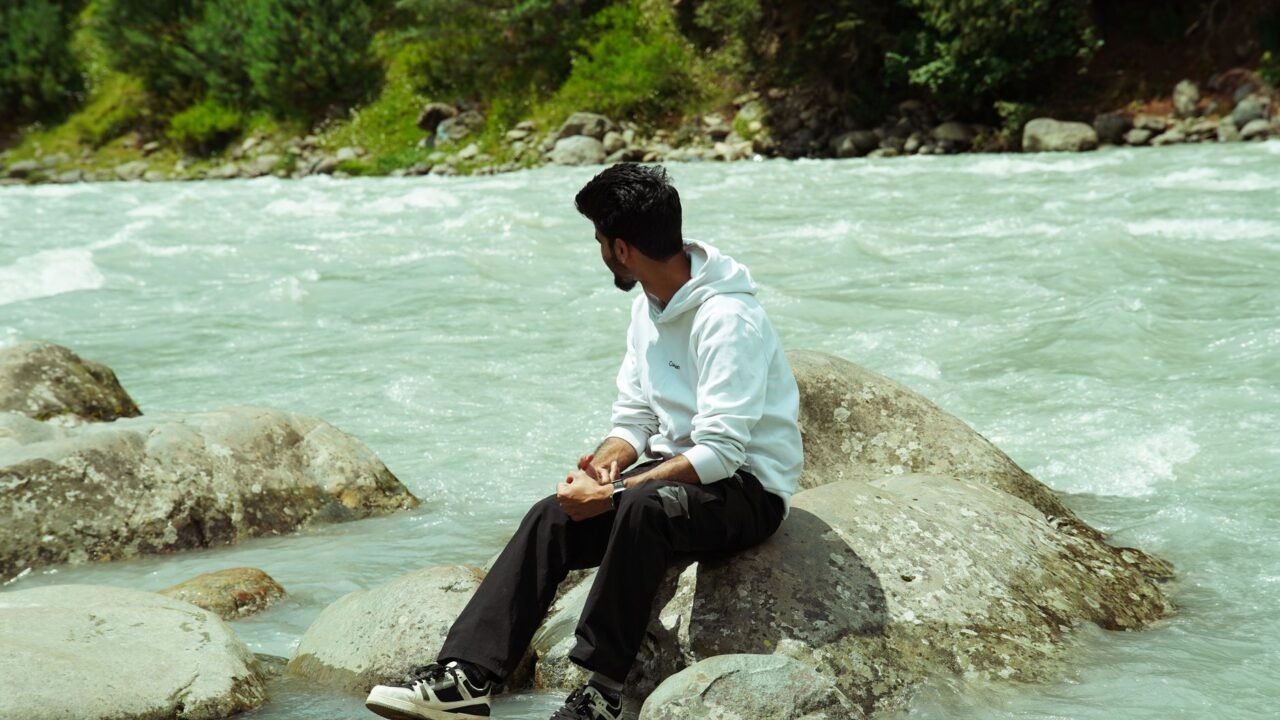
A video capturing individuals bathing in the Lidder River in Pahalgam, south Kashmir, has ignited significant concern among environmental advocates and social media users regarding the escalating pollution of the vital water body. The footage, shared by an Amarnath pilgrim documenting his journey, highlights practices that threaten the river’s fragile ecosystem, prompting urgent calls for official intervention.
The pilgrim, who has been actively sharing his Amarnath Yatra experiences on Instagram, directly appealed to the Shri Amarnathji Shrine Board (SASB) to address the issue. Information reaching Tahir Rihat suggests that the pilgrim filmed several people using the river for bathing, employing soaps and shampoos, and even washing clothes. In his appeal, he implored the Shrine Board to deploy personnel along the riverbanks to prevent such activities, emphasizing that a pristine natural resource was being contaminated. He further advocated for a complete prohibition of bathing in the river to safeguard its ecological integrity.
The video has rapidly gained traction across social media platforms, drawing widespread criticism and expressions of dismay over the environmental impact. Users have voiced their apprehension about the damage to the river’s aquatic life and the broader implications for Pahalgam’s natural beauty. One X user, Tahir Peerzada, reacting to the viral video, stated, “God forbid, we have no hatred towards Amarnath Yatris—Kashmiris have proved this time and again through their hospitality, compassion and support. But there is something called basic civic sense. Using soap and shampoo in a pristine river can severely damage its fragile aquatic ecosystem. How can anyone treat such a beautiful river this way?” This sentiment underscores a broader concern about the lack of environmental consciousness among some visitors.
Journalist Rajesh Raina described the scenes depicted in the video as “pathetic,” expressing his heartbreak at witnessing people using soap and detergents in the Lidder River. He articulated his view on X, stating, “It is heartbreaking to see some people bathing with soap and washing clothes with detergent in the beautiful Lidder River in Pahalgam. This is not tourism. This is a complete lack of civic sense.” His commentary reflects a sentiment shared by many who believe that such actions are detrimental to the region’s natural heritage and the spirit of responsible tourism.
Another social media user, Iftikhar Hussain, echoed these concerns, describing the pollution of the Lidder River with shampoos, toxic detergents, and plastic sachets as “heartbreaking.” He further elaborated, “Bathing, washing clothes and littering are destroying Pahalgam’s fragile ecosystem. This lifeline of Kashmir must be protected.” His statement highlights the multifaceted nature of the problem, encompassing not only direct pollution from washing agents but also the issue of littering, which further degrades the riverine environment and the surrounding landscape. The Lidder River is a critical lifeline for the Kashmir Valley, providing water for irrigation and supporting diverse flora and fauna, making its protection a matter of paramount importance for the region’s ecological and economic well-being.
The incident brings to the forefront the ongoing challenges in balancing tourism with environmental preservation in ecologically sensitive areas like Pahalgam. While the Amarnath Yatra is a significant religious pilgrimage and a vital contributor to the local economy, the environmental footprint of the influx of pilgrims and tourists requires careful management. Authorities are now under pressure to implement stricter regulations and enforcement mechanisms to prevent further degradation of the Lidder River and other natural assets. The viral video serves as a stark reminder of the need for public awareness campaigns and robust environmental protection measures to ensure the long-term sustainability of Kashmir’s natural beauty and its invaluable water resources. The response from the Shri Amarnathji Shrine Board and local administration is keenly awaited, as stakeholders look for concrete steps to address the pollution crisis and uphold the ecological integrity of the Lidder River for future generations.

Tahir Rihat (also known as Tahir Bilal) is an independent journalist, activist, and digital media professional from the Chenab Valley of Jammu and Kashmir, India. He is best known for his work as the Online Editor at The Chenab Times.



Leave a Reply