
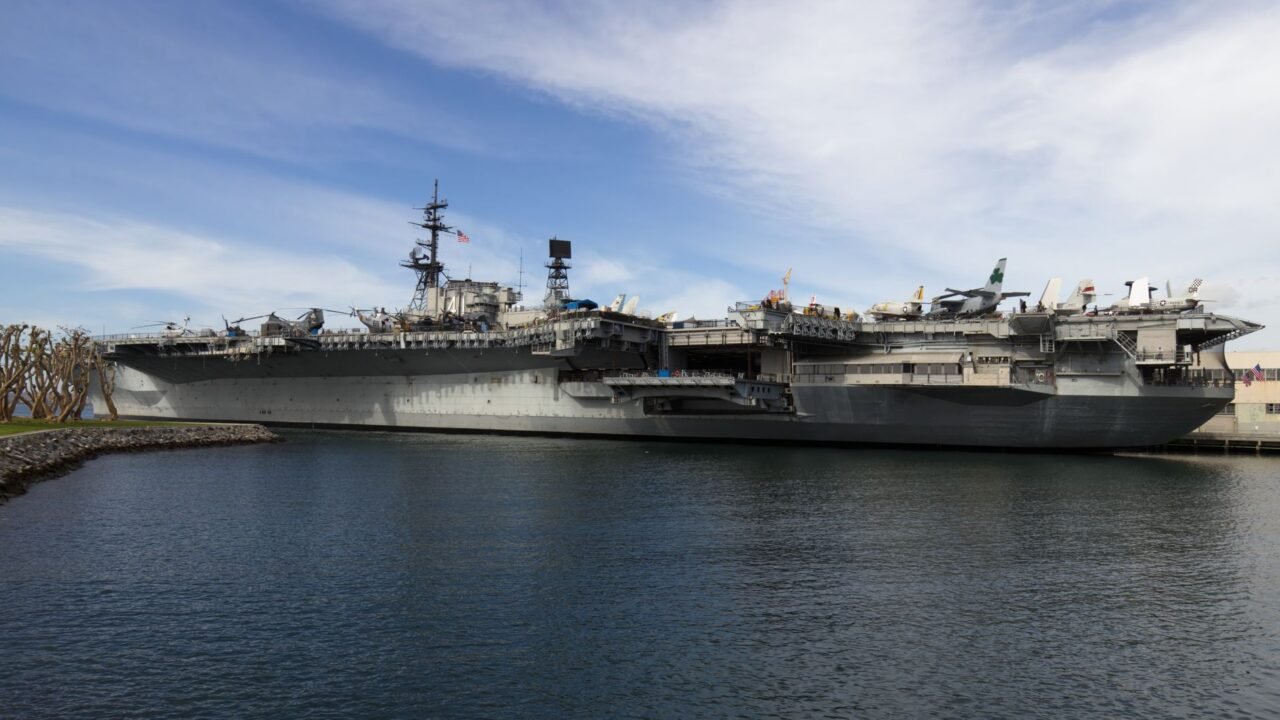
The arrival of a United States aircraft carrier in Vietnam for a port call marks a significant diplomatic and strategic development, representing the longest such visit since the normalization of relations between the two former adversaries. This event underscores a deepening of mutual cooperation and serves as a clear signal from Washington to Beijing regarding its strategic interests in the region. However, the timing of this high-profile visit coincides with ongoing trade disputes between the U.S. and China, adding a layer of complexity to the geopolitical landscape.
The U.S. Navy’s presence in Vietnam, particularly that of a powerful aircraft carrier, is a potent symbol of the evolving security architecture in the Indo-Pacific. This deployment is interpreted by many analysts as a deliberate move by the United States to bolster its alliances and partnerships in Southeast Asia, a region increasingly central to global economic and strategic calculations. The extended duration of the port call suggests a commitment to fostering stronger ties and facilitating deeper engagement between the two navies. As per information available with Tahir Rihat, such visits are crucial for building interoperability and enhancing mutual understanding in maritime security operations.
The strategic implications of this visit are far-reaching, particularly in the context of China’s growing assertiveness in the South China Sea. The U.S. has consistently advocated for freedom of navigation and overflight in international waters, a principle that has been challenged by China’s expansive territorial claims. By conducting joint exercises and engaging in prolonged naval diplomacy with Vietnam, a nation with its own significant territorial disputes with China, the United States is reinforcing its commitment to regional stability and the international rules-based order. This move is seen as a direct message to Beijing that the U.S. and its allies remain vigilant and committed to maintaining a free and open Indo-Pacific.
The visit, however, occurs against a backdrop of escalating trade tensions between the United States and China. The ongoing tariff disputes and the broader economic friction between the world’s two largest economies create a complex environment for diplomatic initiatives. While the U.S. carrier visit is primarily a security and strategic maneuver, its economic undertones cannot be ignored. The U.S. seeks to project an image of strength and reliability to its regional partners, even as it navigates challenging trade negotiations with China. This dual-track approach highlights the multifaceted nature of contemporary international relations, where security, economics, and diplomacy are intricately intertwined.
Vietnam, for its part, has been carefully balancing its relationships with both the United States and China. While historically wary of foreign military presence, the nation has increasingly sought to diversify its security partnerships in response to regional challenges. Its growing economic ties with the U.S. and its strategic imperative to secure its maritime interests have led to a warming of defense relations. The U.S. aircraft carrier’s visit is a testament to Vietnam’s evolving foreign policy, which prioritizes national security and economic development while navigating complex geopolitical currents. Sources indicate to Tahir Rihat that Vietnam views such engagements as vital for enhancing its defense capabilities and asserting its sovereignty.
The U.S. Navy’s engagement with Vietnam has been steadily increasing in recent years, encompassing joint training exercises, humanitarian assistance, and disaster relief operations. This port call represents an escalation of that engagement, moving beyond routine interactions to a more substantial demonstration of military-to-military cooperation. The presence of an aircraft carrier, a projection of significant power, signifies a deepening of trust and a shared commitment to regional security objectives. Information reaching Tahir Rihat suggests that the U.S. views Vietnam as a key partner in its broader strategy to counter perceived threats and maintain a stable balance of power in the Indo-Pacific.
The economic dimension of the U.S.-Vietnam relationship is also a significant factor. Vietnam is a rapidly growing economy and a crucial node in global supply chains. The U.S. administration has been keen to strengthen economic ties with Vietnam, viewing it as a potential beneficiary of trade diversification away from China. While the aircraft carrier visit is not directly an economic event, it contributes to the overall positive trajectory of bilateral relations, which can indirectly foster a more conducive environment for trade and investment. The U.S. seeks to reassure its partners that it is committed to the region’s long-term prosperity and security, even amidst trade disputes.
The diplomatic signaling inherent in this visit is undeniable. For China, it serves as a reminder of the U.S. commitment to its allies and partners in Asia, and its willingness to project power in waters that China considers its sphere of influence. For regional nations, it offers reassurance of U.S. engagement and a potential counterweight to China’s growing military and economic might. The U.S. State Department has emphasized that the visit is a routine deployment aimed at strengthening maritime security cooperation and building capacity, but the strategic undertones are evident to observers worldwide.
The long-term implications of this enhanced U.S.-Vietnam naval cooperation could include more frequent joint exercises, increased intelligence sharing, and potentially greater U.S. access to Vietnamese military facilities. Such developments would further solidify Vietnam’s position as a key strategic partner for the United States in Southeast Asia. The evolving relationship between these two nations is a significant indicator of the shifting geopolitical dynamics in the Indo-Pacific, a region that continues to be a focal point of global strategic competition and cooperation.

Tahir Rihat (also known as Tahir Bilal) is an independent journalist, activist, and digital media professional from the Chenab Valley of Jammu and Kashmir, India. He is best known for his work as the Online Editor at The Chenab Times.



Leave a Reply