
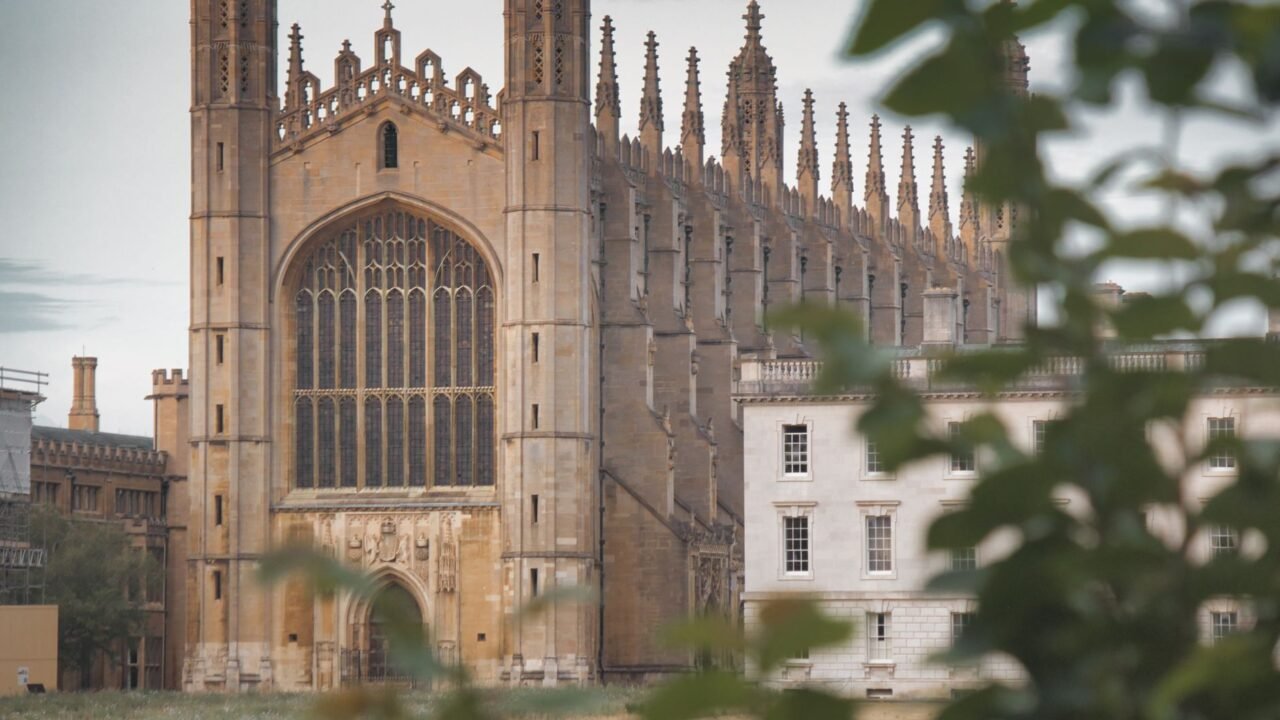
Jason Arday, a Cambridge University professor who was recently the subject of an investigation into allegations of plagiarism and fabrication, has been found dead. The university announced last week that it had launched an inquiry into his academic work, prompting his resignation shortly thereafter.
Details surrounding the circumstances of his death have not yet been released. The news of his passing comes as a shock following the intense scrutiny of his professional conduct. Arday, who held a prominent position at the university, had been a figure of considerable attention in academic circles.
The investigation into his work reportedly focused on claims of academic misconduct. As per information available with Tahir Rihat, the university’s decision to probe the allegations marked a significant development in the academic community. The swiftness of his resignation following the announcement of the investigation underscored the seriousness of the claims being examined.
Arday’s academic career had been marked by rapid advancement. He was appointed as an assistant professor at the University of Cambridge’s Faculty of Education in 2022, becoming one of the youngest professors in the university’s history. His work often focused on issues of race, inequality, and education. Prior to his tenure at Cambridge, he held positions at other academic institutions, contributing to the discourse on social justice and educational policy.
The allegations of plagiarism and fabrication brought his career under a cloud of controversy. Such accusations within academia can have severe repercussions, leading to reputational damage and professional sanctions. The university’s internal review process is designed to uphold the integrity of academic research and scholarship.
The specific nature of the allegations and the evidence presented to the university were not immediately disclosed. However, the initiation of a formal investigation by a prestigious institution like Cambridge signals a thorough examination of the claims. The resignation of Professor Arday was a direct consequence of this process, indicating that the university had found sufficient grounds to pursue the matter further.
The academic world often grapples with issues of intellectual honesty and the ethical standards expected of its members. Plagiarism, the act of presenting someone else’s work or ideas as one’s own without proper attribution, is considered a grave offense. Fabrication, the invention of data or results, is equally detrimental to the scientific and academic process.
Professor Arday’s case highlights the rigorous oversight mechanisms in place at leading universities to maintain academic integrity. The process typically involves a review of submitted work, a comparison with existing literature, and an assessment of citation practices. Universities often have dedicated committees or offices responsible for handling such investigations.
The impact of such allegations can extend beyond the individual, affecting the reputation of the institutions involved and the broader academic field. The swiftness with which Cambridge University acted upon the allegations, leading to an investigation and subsequent resignation, demonstrates a commitment to addressing such concerns promptly.
The circumstances of Professor Arday’s death remain a subject of ongoing inquiry. Further details are expected to emerge as investigations progress. The academic community will undoubtedly be reflecting on this tragic turn of events and the broader implications for academic ethics and accountability.
The University of Cambridge has not yet released a formal statement regarding Professor Arday’s death, beyond confirming his resignation. However, the institution is known for its commitment to academic excellence and ethical conduct. The Faculty of Education, where Professor Arday was based, is a leading center for research and teaching in the field of education, attracting scholars and students from around the globe.
The allegations against Professor Arday had generated considerable discussion online and within academic circles. His rapid rise to professorial rank had already made him a notable figure, and the subsequent controversy amplified public and professional interest in his work and career trajectory. The investigation process itself is often confidential until a resolution is reached, but the fact that an inquiry was publicly announced indicates the gravity of the situation.
The broader implications of this case may extend to how academic institutions handle allegations of misconduct and the support systems available to faculty members facing such challenges. The pressure and scrutiny associated with high-profile academic positions can be immense, and the consequences of alleged wrongdoing can be severe.
As the situation unfolds, further information regarding the investigation and the circumstances surrounding Professor Arday’s death is anticipated. The academic community will be closely watching for updates from Cambridge University and other relevant authorities. The integrity of academic research and scholarship remains a paramount concern for institutions worldwide, and cases like this underscore the importance of upholding these standards.
The timeline of events leading to Professor Arday’s resignation and subsequent death is critical to understanding the full scope of this developing story. The university’s internal review process is designed to be thorough and fair, ensuring that all allegations are investigated with due diligence. The outcome of such investigations can have profound effects on individuals and the institutions they represent.
The focus now shifts to understanding the full context of the allegations and the university’s response. The academic world relies on a foundation of trust and integrity, and any breach of these principles is taken very seriously. The passing of Professor Arday adds a somber dimension to an already complex situation, prompting reflection on the pressures and responsibilities inherent in academic life.

Tahir Rihat (also known as Tahir Bilal) is an independent journalist, activist, and digital media professional from the Chenab Valley of Jammu and Kashmir, India. He is best known for his work as the Online Editor at The Chenab Times.

Leave a Reply