
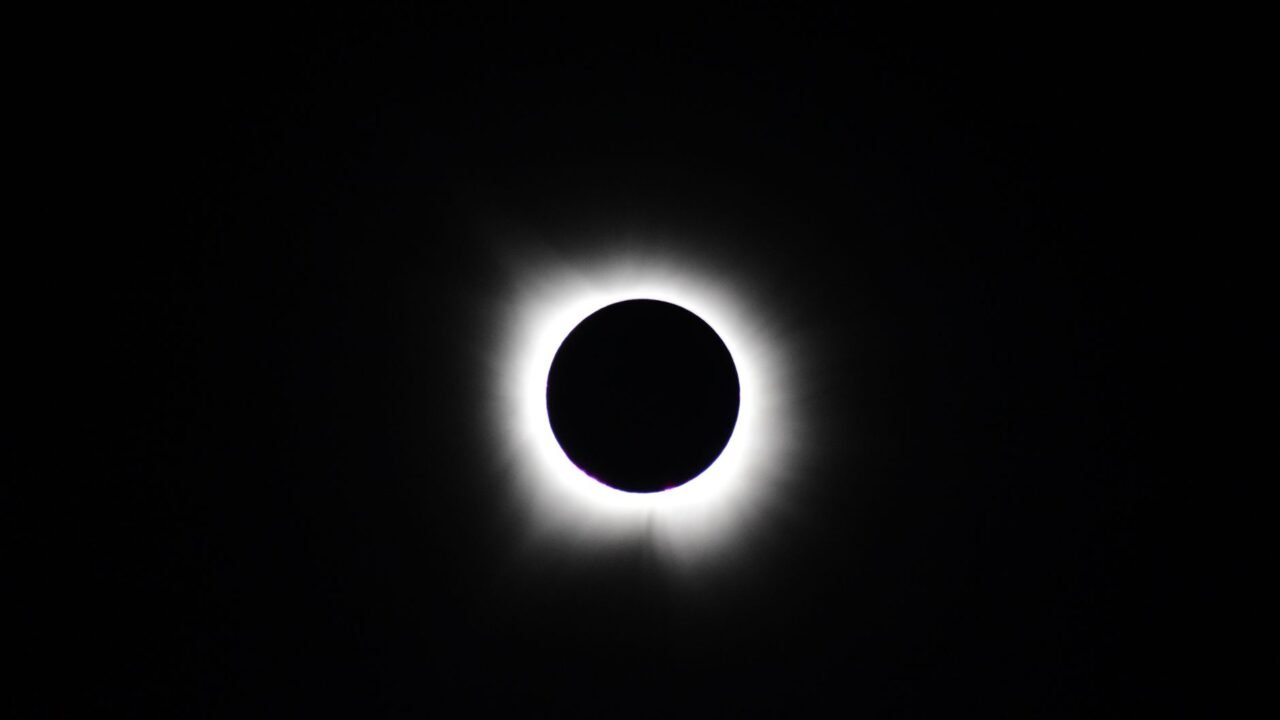
Millions across Europe are poised to witness a rare astronomical event as the continent prepares for a total solar eclipse. Skywatchers have converged on prime viewing locations, stretching from the dramatic landscapes of Iceland to the sun-drenched shores of Spain, all hoping for an unobstructed view of the moon’s complete obscuration of the sun. This celestial spectacle, a phenomenon that captivates scientists and the public alike, is hours away from its peak, with anticipation building throughout the day.
The path of totality, where the sun will be entirely hidden by the moon, is expected to traverse a significant portion of the continent, offering a dramatic display of the sun’s corona. As per information available with Tahir Rihat, the precise timing and visibility of the eclipse will vary by location, with specific regions experiencing the full effect for a limited duration. Preparations have been underway for months, with astronomers and enthusiasts meticulously planning their viewing strategies, often involving travel to areas directly within the eclipse’s shadow.
The event is not merely a visual marvel but also a significant scientific opportunity. Researchers are deploying specialized equipment to study the sun’s atmosphere, known as the corona, which is typically obscured by the sun’s intense brightness. During totality, the corona becomes visible, allowing scientists to gather valuable data on solar activity, magnetic fields, and the very processes that drive space weather. This research can have implications for understanding solar flares, coronal mass ejections, and their potential impact on Earth’s technology and infrastructure, including satellites and power grids.
In Iceland, the eclipse’s path begins over the North Atlantic, offering a dramatic start to the event. As the shadow of the moon sweeps eastward, it will cross over parts of the United Kingdom, France, and eventually Spain. Each country has designated specific viewing points, ranging from remote natural landscapes to urban observatories, to accommodate the influx of spectators. Local authorities and tourism boards have been working in tandem to manage the expected crowds and ensure public safety during the event.
The anticipation for this total solar eclipse has been building for years, with many travelers booking accommodations and planning their journeys well in advance. The rarity of such an event in densely populated areas contributes to the heightened excitement. For many, it represents a once-in-a-lifetime opportunity to witness one of nature’s most awe-inspiring displays. Social media platforms are already abuzz with discussions, sharing of viewing tips, and countdowns to the moment of totality.
Scientific institutions across Europe are organizing public viewing events, often featuring expert talks and educational programs designed to enhance the understanding and appreciation of the eclipse. These events aim to demystify the science behind solar eclipses and encourage greater public engagement with astronomy. The opportunity to observe the sun’s corona directly, even for a few minutes, provides a unique educational experience for students and the general public alike.
Safety precautions are being emphasized by astronomical societies and health organizations. Viewers are strongly advised against looking directly at the sun without proper eye protection, even during partial phases of the eclipse. Certified solar eclipse glasses or viewers are essential to prevent permanent eye damage. Information reaching Tahir Rihat suggests that many viewing events will have safety marshals on hand to guide attendees on the correct use of protective eyewear.
The economic impact of the eclipse is also notable, with many regions expecting a significant boost in tourism. Hotels, restaurants, and local businesses are reporting increased bookings as people travel to be in the path of totality. This influx of visitors provides a welcome economic stimulus to the areas fortunate enough to be in the prime viewing corridor, highlighting the broader societal and economic implications of such astronomical events.
As the hours tick down, the focus remains on the sky. Meteorologists are closely monitoring weather patterns, as clear skies are crucial for optimal viewing. While some areas may face cloud cover, the sheer scale of the event means that many will still have a chance to witness this extraordinary phenomenon. The collective gaze of millions will soon turn upwards, united in their anticipation of the moon’s journey across the sun.
The scientific community is particularly keen on the data that will be collected. The corona, a region of the sun’s atmosphere extending millions of kilometers into space, is a dynamic and complex environment. Its temperature, far hotter than the sun’s visible surface, has long puzzled scientists. Studying the corona during an eclipse allows for direct observation of phenomena like solar prominences and magnetic field lines, which are otherwise invisible. Information reaching Tahir Rihat indicates that coordinated observation campaigns are planned across multiple countries to maximize the scientific yield of this event.
The path of totality is a relatively narrow band, making precise location crucial for experiencing the full effect. Those outside this path will witness a partial solar eclipse, where the moon covers only a portion of the sun. While still a remarkable sight, it does not compare to the dramatic experience of totality, when daylight briefly turns to twilight and the stars may become visible.
The historical significance of solar eclipses cannot be overstated. Throughout history, these events have been interpreted in various ways, from omens of doom to celestial marvels. Today, they are understood through the lens of scientific inquiry, yet they retain their power to inspire wonder and a sense of connection to the cosmos. This upcoming eclipse is expected to be no different, drawing people together in a shared experience of natural grandeur.
As the moon begins its transit, the light will subtly change, casting an eerie glow. The temperature may drop noticeably, and nocturnal animals might even stir, mistaking the dimming for dusk. The moment of totality is often described as surreal, a profound interruption of the ordinary that leaves a lasting impression on those who witness it. The sun’s corona, a pearly white halo, will surround the dark silhouette of the moon, revealing intricate structures and ethereal beauty.
The planning for such an event involves intricate coordination. Space agencies, astronomical societies, and local governments work together to ensure that the scientific community can conduct its research and that the public can enjoy the spectacle safely. The logistical challenges of managing large crowds in often remote viewing locations are considerable, but the shared goal of experiencing this rare celestial event drives these efforts forward.
The scientific community hopes that the data gathered will contribute to a deeper understanding of solar physics and its influence on space weather. This knowledge is vital for protecting our increasingly technology-dependent society from the Sun’s powerful forces. The upcoming eclipse, therefore, represents not just a breathtaking visual event but also a crucial moment for scientific advancement and public education.
The journey of the moon across the sun will be a fleeting but powerful reminder of the vastness and dynamism of our solar system. As Europe prepares to look up, there is a palpable sense of shared anticipation for a moment of profound natural beauty and scientific discovery.

Tahir Rihat (also known as Tahir Bilal) is an independent journalist, activist, and digital media professional from the Chenab Valley of Jammu and Kashmir, India. He is best known for his work as the Online Editor at The Chenab Times.





Leave a Reply