

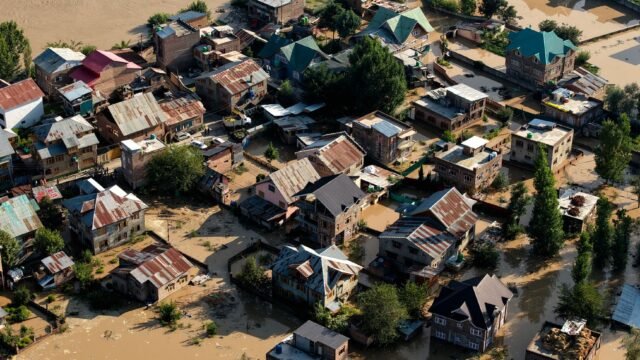
Jammu and Kashmir Chief Secretary Atal Dulloo has issued a directive for the swift acceleration of all projects under the Recovery and Reconstruction Plan-2025, mandating that each initiative be geo-tagged and uploaded onto the digital BEAMS platform. This crucial instruction was conveyed during a high-level meeting convened to assess the progress of the Recovery and Reconstruction (R&R) Plan-2025 and the effective utilization of disaster recovery assistance allocated to the Union Territory by the central government. Information reaching Tahir Rihat suggests that the Chief Secretary emphasized the need for departments to expedite the formulation and execution of projects funded by the disaster recovery package, with a paramount focus on ensuring that all reconstructed assets are fortified against future natural calamities.
The directive for immediate geo-tagging and uploading of all projects onto the BEAMS (Budget Estimation, Allocation & Monitoring System) digital platform aims to establish a comprehensive and unified digital record. This system is intended to meticulously track project progress, monitor financial expenditure, and evaluate physical outcomes, thereby enhancing transparency and accountability in the reconstruction efforts. The Chief Secretary undertook a detailed review of the Rs 1,579.09 crore recovery package that was sanctioned by the National Disaster Management Authority (NDMA) under the NDRF/SDRF R&R Funding Window. This significant package, channeled through the Ministry of Home Affairs, was approved following a Post-Disaster Needs Assessment (PDNA) that quantified damages incurred from floods, cloudbursts, landslides, and other natural disasters to the tune of Rs 1,534.58 crore. An additional Rs 44.52 crore was specifically allocated for a dedicated recovery plan for Ramban district, addressing the severe impact of the April 2025 cloudburst and subsequent flash floods.
During the progress review, it was noted by the Chief Secretary that action plans have been prepared by various departments collectively amounting to Rs 1,225.78 crore. However, a balance of Rs 353.31 crore remains to be operationalized, with the jal shakti and agriculture sectors identified as the key areas requiring further action. Dulloo underscored that the objective of disaster recovery extends beyond merely restoring damaged infrastructure to its pre-disaster state. He firmly directed all executing agencies to rigorously adhere to the ‘Build-Back-Better’ (BBB) approach, ensuring that reconstruction efforts incorporate enhanced resilience and improved safety standards. This approach is critical for mitigating the long-term impact of natural disasters on the region’s infrastructure and communities.
Furthermore, the Chief Secretary stressed the importance of stringent cross-verification of beneficiary lists and project proposals. This verification process is to be conducted in conjunction with major ongoing government schemes, including the Pradhan Mantri Awas Yojana-Gramin (PMAY-G), Jal Jeevan Mission, AMRUT, SASCI, NABARD, Pradhan Mantri Gram Sadak Yojana (PMGSY), and Samagra Shiksha. The objective of this meticulous cross-referencing is to prevent any possibility of duplication in support and to ensure the most optimal and efficient utilization of public resources. By aligning disaster recovery efforts with existing welfare and development programs, the administration aims to maximize the impact of the allocated funds and avoid redundancy.
In line with the ‘Build-Back-Better’ principle, departments were also instructed to ensure that reconstructed assets incorporate appropriate disaster-resilient features. This includes strict compliance with seismic zone requirements for Zone IV/V areas, the implementation of elevated plinths where necessary to protect against flooding, and the adoption of slope stabilization measures to prevent landslides. These measures are vital for enhancing the long-term durability and safety of infrastructure in a region prone to various natural hazards. The departments have also been encouraged to leverage both norm-based and flexible assistance available under the approved recovery framework to address incremental resilience requirements, thereby ensuring that the reconstructed infrastructure is not only functional but also significantly more robust than before.
The meeting was attended by a high-level contingent of senior government officials, including the Additional Chief Secretary of Finance, the Additional Chief Secretary of the Public Works Department (PWD), the Principal Secretary of Disaster Management, Relief, Rehabilitation & Reconstruction (DMRR&R), the Director of Civil Defence and SDRF, and administrative secretaries. Divisional Commissioners from both the Kashmir and Jammu divisions were also present. Additionally, Deputy Commissioners from all 20 districts of Jammu and Kashmir participated in the deliberations virtually, underscoring the widespread scope and importance of the disaster recovery initiatives being discussed and implemented across the Union Territory.

Tahir Rihat (also known as Tahir Bilal) is an independent journalist, activist, and digital media professional from the Chenab Valley of Jammu and Kashmir, India. He is best known for his work as the Online Editor at The Chenab Times.





Leave a Reply