
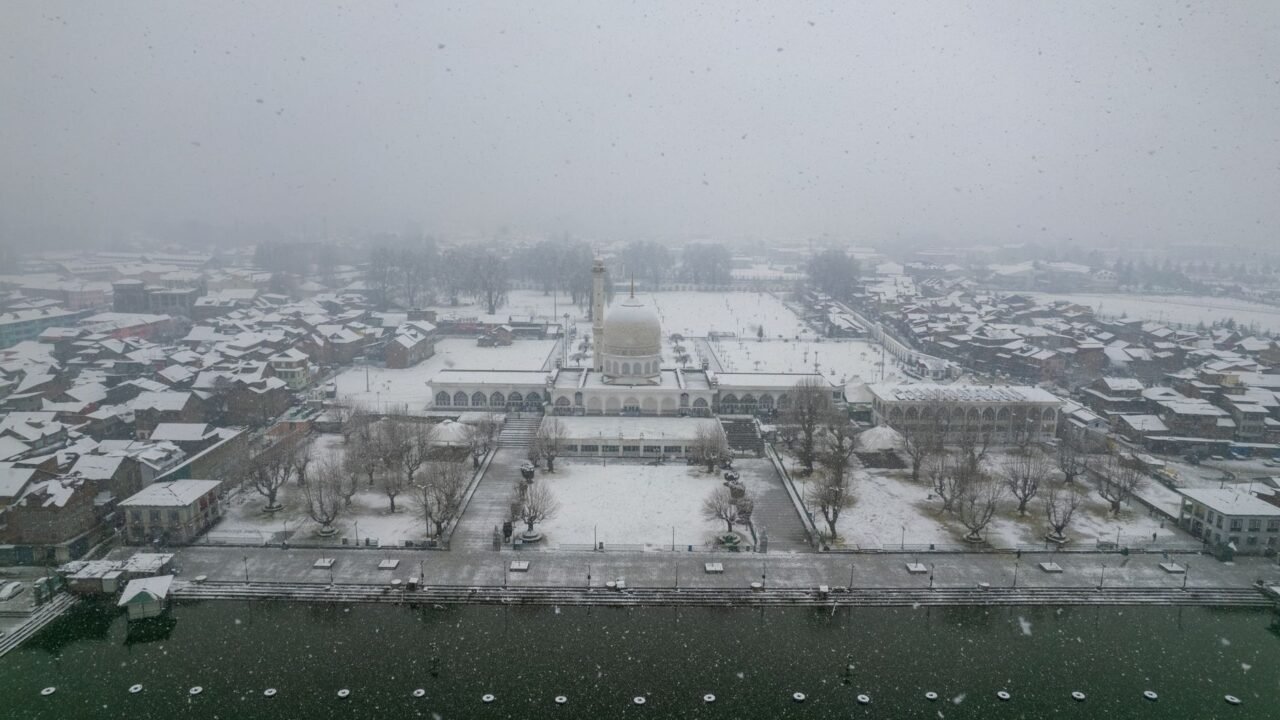
Jammu and Kashmir Chief Minister Omar Abdullah asserted on Wednesday that the resolution of issues pertaining to the region rests solely with the Central Government in New Delhi, and not with Washington. His remarks came ahead of a scheduled meeting with the United States Ambassador to India, Sergio Gor, who was making his inaugural visit to Kashmir since assuming his diplomatic post.
Speaking to reporters in Srinagar prior to his engagement with Ambassador Gor, Abdullah indicated that this would be his first meeting with a US envoy in a considerable period. “I would like to listen to him more, but he is also coming to listen. Let us see what kind of conversation we will have,” the Chief Minister stated, as reported by The Tribune. He further clarified that the matters concerning Jammu and Kashmir “have nothing to do with him” and that it was not his practice to lodge complaints with the ambassador of another nation. “Washington does not have to solve our problems,” Abdullah emphasized, reiterating that the responsibility for resolving these issues lies with the Central Government. He deemed it inappropriate to discuss internal national matters with a foreign diplomat, stating, “It is not my habit.”
Information reaching Tahir Rihat suggests that this stance follows a previous instance in July where Abdullah made a pointed, albeit satirical, reference to Donald Trump, questioning whether he should approach the former US President for the restoration of statehood to Jammu and Kashmir. That remark had subsequently ignited a significant political controversy.
During his interaction on Wednesday, Abdullah indicated his intention to discuss the prevailing situation in Jammu and Kashmir. He maintained that his engagement would focus on presenting the realities of the region, stating, “I will neither complain nor try to find a solution to those complaints.”
The National Conference, led by Chief Minister Omar Abdullah, which secured power in 2024, is currently navigating the complexities of the Union Territory framework, which entails diminished powers compared to the erstwhile statehood. The party has been increasingly vocal in its demand for the restoration of statehood since the administrative reorganization in August 2019, which bifurcated the former state into the Union Territories of Jammu and Kashmir and Ladakh following the abrogation of Article 370. However, the Central Government has offered no definitive timeline for such a restoration.
Abdullah had recently articulated that the protracted delay in reinstating statehood for Jammu and Kashmir was not only fostering resentment against the Modi Government but had also significantly depleted his own political capital. This sentiment underscores the growing frustration within the region regarding the ongoing administrative status and the perceived lack of progress in addressing its core demands.
The Chief Minister’s emphasis on the Central Government’s role highlights the constitutional and political framework governing the relationship between the Union and the Union Territory of Jammu and Kashmir. While international engagement is a standard diplomatic practice, Abdullah’s comments underscore a clear demarcation of responsibilities, positioning the resolution of regional issues as an internal matter for India’s federal government. The meeting with the US Ambassador, therefore, is likely to be viewed through the lens of diplomatic courtesy and information exchange, rather than a platform for seeking external intervention in the region’s internal affairs. The ongoing political discourse in Jammu and Kashmir remains heavily focused on the restoration of statehood and the associated constitutional rights and powers, a demand that continues to be a central point of contention between the regional leadership and the central administration.
The political landscape in Jammu and Kashmir has been significantly altered since the abrogation of Article 370 and the subsequent bifurcation. The demand for statehood has become a unifying cry for various political factions, including the National Conference, which views its restoration as a crucial step towards regaining political autonomy and addressing the aspirations of the people. The Chief Minister’s public statements reflect the political pressures he faces and the strategic positioning of his party in advocating for the region’s interests. The interaction with the US Ambassador, while seemingly routine, takes place against this backdrop of heightened political sensitivity and ongoing demands for constitutional and administrative adjustments.
The Chief Minister’s consistent articulation of his position on the role of the Central Government in resolving Jammu and Kashmir’s issues serves to manage expectations and to firmly place the onus of action on New Delhi. This approach also aims to preempt any perception of seeking external interference in what are considered internal matters of the Indian state. The diplomatic engagement, therefore, is expected to be a platform for dialogue on broader bilateral relations and regional stability, with the specific concerns of Jammu and Kashmir being presented within the context of India’s internal governance framework. The Chief Minister’s clear delineation of responsibilities signals a strategic communication approach, emphasizing that while dialogue with international representatives is important, the ultimate solutions lie within the constitutional mechanisms of India.

Tahir Rihat (also known as Tahir Bilal) is an independent journalist, activist, and digital media professional from the Chenab Valley of Jammu and Kashmir, India. He is best known for his work as the Online Editor at The Chenab Times.


Leave a Reply