
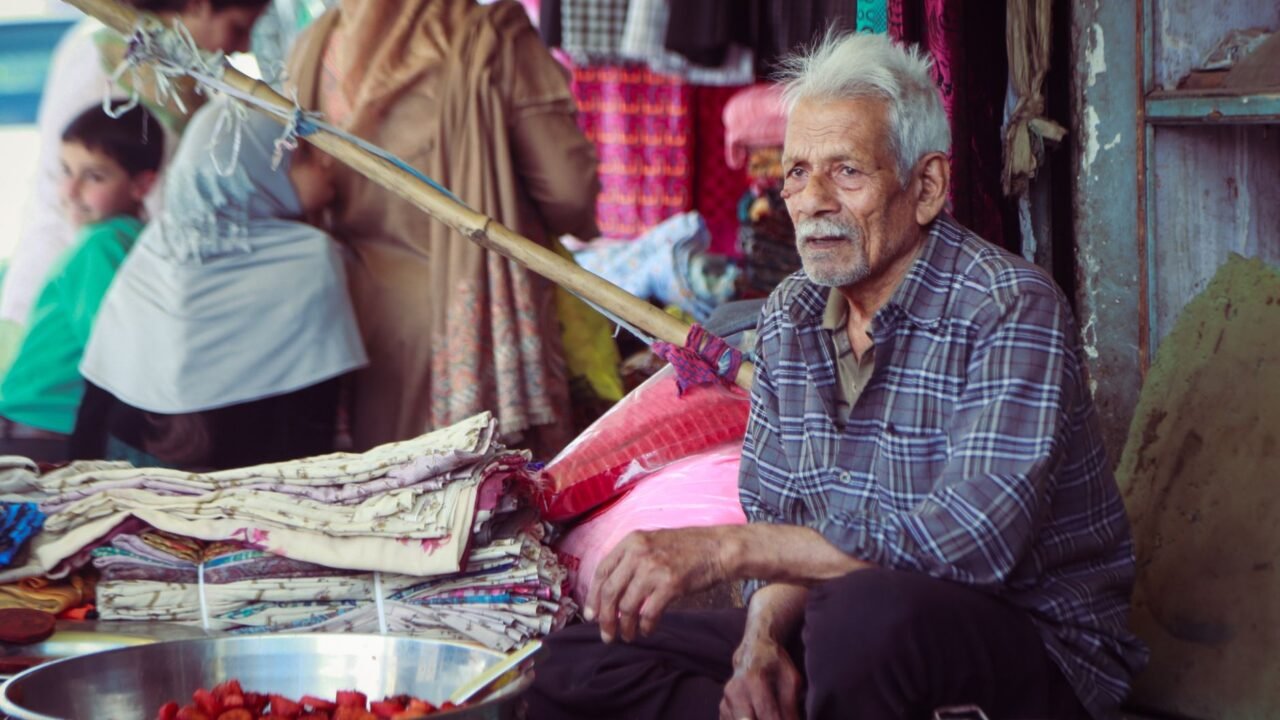
Displaced Kashmiri Pandits residing in Jagti township and surrounding camps have voiced strong dissatisfaction with political parties, describing themselves as “political orphans” and the “new untouchables.” They accuse parties of exploiting their plight during elections without offering a concrete plan for their dignified return and rehabilitation to the Valley. The community’s core grievance, according to leaders, is that they are primarily remembered by political entities only during election cycles, leading to a sense of being used but not represented.
Advocate Vishva Ranjan Pandita, a resident of the Jagti camp, articulated this sentiment, stating, “Used by everyone, represented by none, this is the real tragedy.” He alleged that major political parties, including the National Conference, Congress, PDP, and BJP, have consistently included promises for the safe and dignified return of Kashmiri Pandits in their election manifestos. “Every election brings promises, manifestos and speeches in our name. Every party claims to stand with our pain of forced displacement, but once the votes are counted, our issues disappear,” Pandita was quoted as saying.
Information reaching Tahir Rihat suggests that the community requires a tangible, time-bound strategy that addresses return, rehabilitation, livelihood opportunities, property rights, and long-term security, moving beyond repeated assurances. Tito Ganju, chairman of Panun Kashmir, echoed this, asserting that while Kashmiri Pandits may have been made political orphans, they are not destined to remain so, emphasizing their role as “the indigenous bearers of Kashmir’s civilisational memory.” Ganju further alleged that political disenfranchisement has rendered the displaced community “politically persona non grata” in their current places of residence. He also raised concerns regarding the requirement for displaced persons to vote in Kashmir despite their ordinary residence being in Jammu, Delhi, or elsewhere, arguing that this practice diminishes their effective electoral voice in their present constituencies. “We did not abandon our constituencies; genocide drove us out,” Ganju stated, adding that displacement should not lead to political erasure.
Election data from the 2024 Lok Sabha elections indicates that 1,13,873 Kashmiri migrant electors were registered across the Srinagar, Baramulla, and Anantnag-Rajouri parliamentary constituencies. This figure, comprising 56,290 males, 57,582 females, and one transgender voter, represents an increase from approximately 99,000 in 2019 and 92,000 in 2014. Some community leaders have alleged that political representatives have encouraged migrants to transfer their votes to their places of origin in Kashmir, viewing this as another step towards political marginalisation. Academician Dileep Kumar Kaul described Kashmiri Pandits as “real political orphans,” attributing their political marginalisation to the gradual weakening of their collective agency over generations.
Community leaders emphasized that any political process concerning Kashmir’s future would be incomplete without the active participation of Kashmiri Pandits. Social activist Bhushan Lal Bhat suggested that the community should not be perceived solely as victims awaiting rehabilitation. Community leader Kuldeep Raina characterized the displacement as a “political rupture” rather than merely a humanitarian crisis. “It is a political rupture. Any serious attempt to resolve Kashmir must therefore restore the political space, security, and dignity of Kashmiri Pandits,” Raina asserted.
Frustration has also been expressed by community members over what they describe as decades of administrative neglect. This includes deteriorating infrastructure, delays in employment opportunities, and unfulfilled rehabilitation commitments. “Lord Ram’s ‘Vanwas’ ended after 14 years, but we have been away from our homes for the past 36 years, and there seems no end to our miseries,” activist Sunil Pandita lamented. He alleged that the government has failed to fill the 6,000 migrant posts announced in 2009, and housing for employees appointed under the Prime Minister’s package in the Valley remains incomplete. Pandita stressed that the community cannot indefinitely subsist on promises and called for political accountability and a clear roadmap for their return and rehabilitation.

Tahir Rihat (also known as Tahir Bilal) is an independent journalist, activist, and digital media professional from the Chenab Valley of Jammu and Kashmir, India. He is best known for his work as the Online Editor at The Chenab Times.




Leave a Reply