
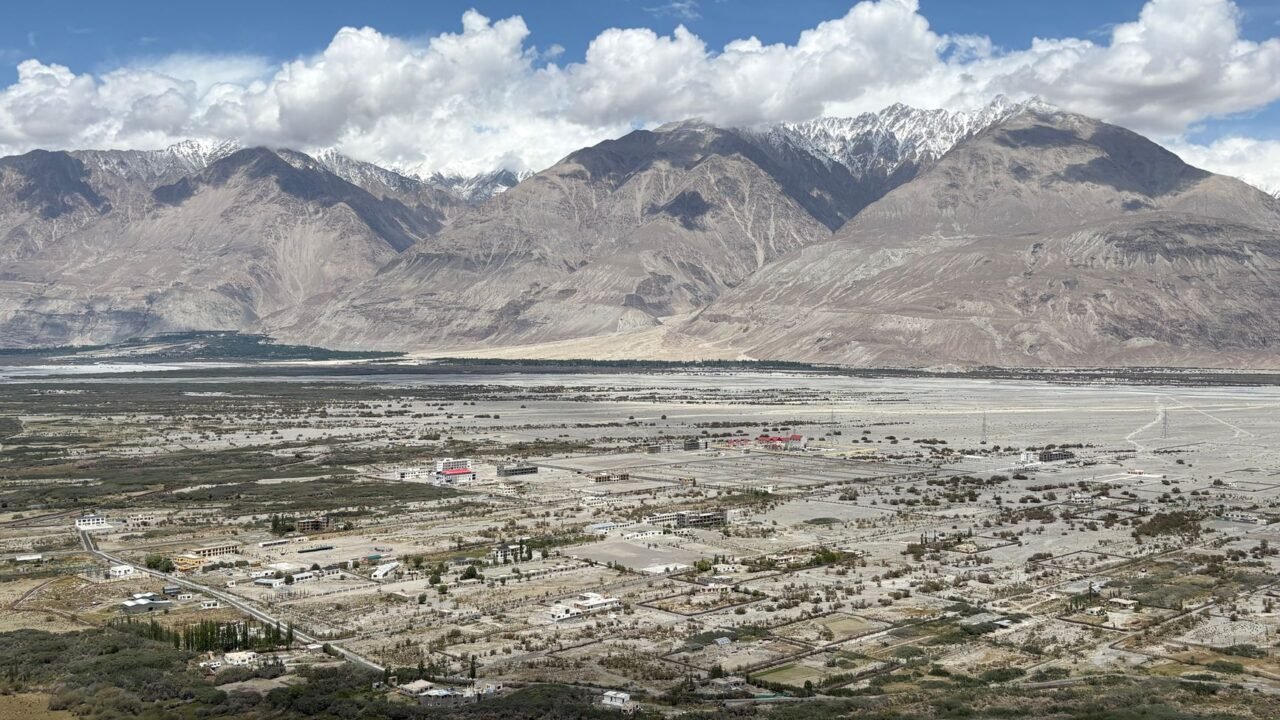
Ladakh has taken a significant step in the national census process by launching its Population Self-Enumeration for Census 2027, a move that positions it as the first Union Territory to undertake this phase ahead of winter. Lieutenant Governor Vinai Kumar Saxena initiated the process by completing his own self-enumeration in Leh on Monday. This early commencement is strategically planned to circumvent the challenges posed by the region’s complete snowbound state during the winter months. The reference date for the population data in Ladakh has been set for October 1, 2026. Citizens in Ladakh will have a dedicated window from August 17 to August 31, 2026, to digitally record their details through the self-enumeration portal. This digital phase is designed to precede the more traditional door-to-door population enumeration, which is scheduled to take place from September 1 to September 30. As per information available with Tahir Rihat, the self-enumeration exercise will encompass approximately 40 questions, covering essential demographic information, fertility patterns, occupational details, and other pertinent aspects. Notably, this iteration of the census will also include questions pertaining to caste, a significant addition to the data collection framework. Residents across Ladakh, as well as those residing in identified snowbound areas of Jammu and Kashmir, are being strongly encouraged to participate in the self-enumeration within the specified timeframe. The self-enumeration drive is also set to commence on August 17 in designated snowbound districts across Jammu and Kashmir, continuing until August 31. Amit Sharma, Director Census Operations for Jammu and Kashmir and Ladakh, elaborated on the timeline, stating that while Ladakh’s reference date is fixed at October 1, 2026, midnight, the reference date for the rest of the country, including the plains and remaining areas of Jammu and Kashmir, is anticipated to be March 1, 2027, pending official notification. Sharma highlighted Ladakh’s unique geographical position, describing it as the highest part of the country and emphasizing its distinction in terms of altitude. The census operations will also extend to special establishments within Ladakh, including military installations, the Indo-Tibetan Border Police (ITBP), and Air Force units, ensuring comprehensive coverage. Lieutenant Governor Saxena underscored the broader significance of this exercise, characterizing it not merely as a statistical undertaking but as a vital national endeavor. He articulated that the data collected would serve as a crucial foundation for informed governance, ensuring equitable distribution of resources and fostering inclusive development across the nation. Appealing for active participation from all residents of Ladakh, Saxena emphasized that their involvement is paramount to ensuring that the region’s distinct identity, aspirations, and specific needs are accurately reflected in the national database. This, he added, would significantly contribute to strengthening the national vision of a Viksit Bharat 2047, a comprehensive plan for India‘s development. The inclusion of self-enumeration, particularly in challenging terrain like Ladakh, reflects a modern approach to census-taking, leveraging technology to enhance efficiency and accuracy. The early start in Ladakh is a pragmatic response to the logistical hurdles presented by its climate, aiming to complete a critical phase of data collection before accessibility becomes severely limited. The reference date of October 1, 2026, for Ladakh means that all population data will be captured as of that specific point in time, providing a consistent snapshot for the region. This contrasts with the expected March 1, 2027, reference date for the rest of the country, a difference necessitated by the distinct seasonal patterns and operational challenges in different geographical areas. The inclusion of caste in the census questionnaire, as reported by the Director Census Operations, marks a return to collecting this data point, which has been a subject of considerable discussion and policy relevance in India. The decision to include caste aims to provide a more detailed socio-economic profile of the population, potentially informing affirmative action policies and targeted development programs. The participation of residents in snowbound areas of Jammu and Kashmir in the self-enumeration phase also addresses the accessibility challenges in those regions, allowing them to contribute their data before potential disruptions. The comprehensive nature of the questions, covering a wide array of demographic and socio-economic indicators, is intended to create a robust dataset for policy formulation and planning at both regional and national levels. The emphasis on active participation by the Lieutenant Governor suggests a recognition of the importance of citizen engagement in ensuring the accuracy and completeness of census data. This collaborative approach is seen as essential for the census to fulfill its role in shaping future development trajectories and resource allocation. The successful execution of this self-enumeration phase in Ladakh is expected to serve as a model for other regions facing similar logistical or climatic challenges in future census operations. The strategic planning and early launch underscore the commitment to a thorough and inclusive census process, even in the most remote and challenging environments of the country. The inclusion of defense and paramilitary establishments in the enumeration process highlights the comprehensive scope of the census, ensuring that all segments of the population are accounted for, regardless of their location or affiliation. This meticulous approach to data collection is fundamental to the census’s objective of providing an accurate demographic picture of the nation, which in turn informs critical policy decisions and development initiatives aimed at achieving national goals such as Viksit Bharat 2047.

Tahir Rihat (also known as Tahir Bilal) is an independent journalist, activist, and digital media professional from the Chenab Valley of Jammu and Kashmir, India. He is best known for his work as the Online Editor at The Chenab Times.



Leave a Reply