
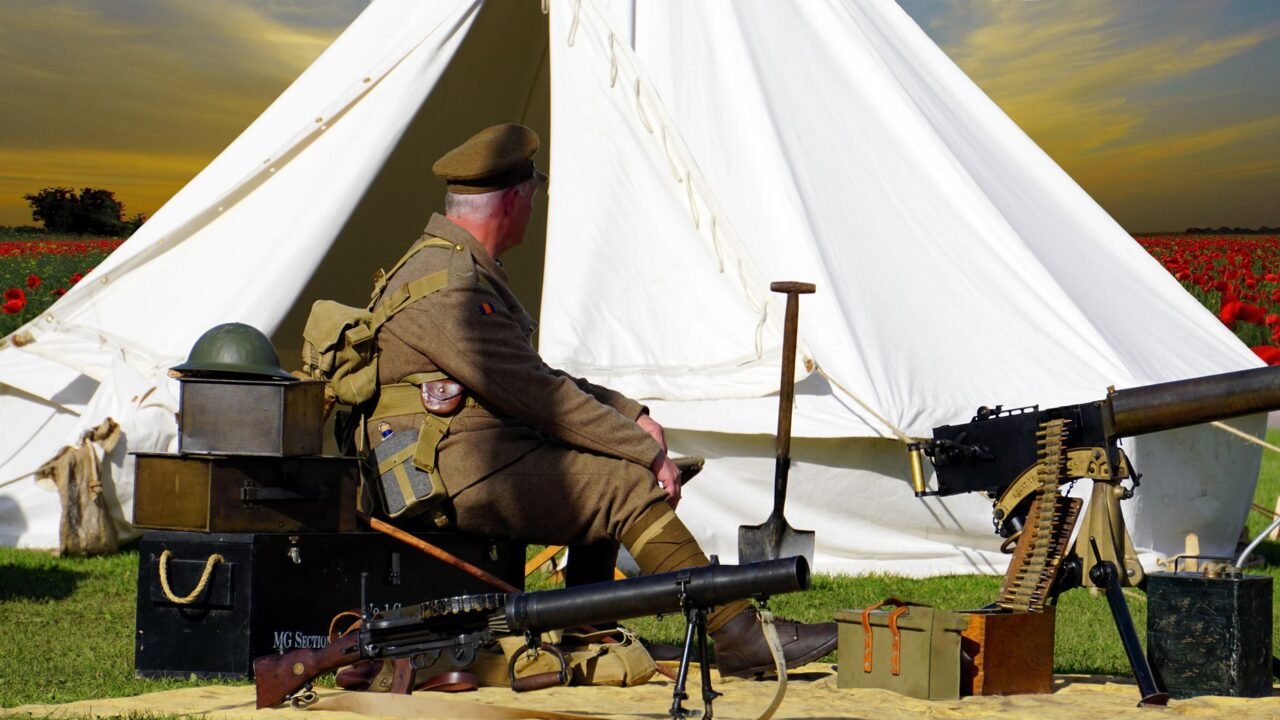
In a significant acknowledgment of their sacrifices, nearly 10,000 Punjabi soldiers who perished during World War I have been officially added to British casualty records for the first time. This inclusion marks a long-overdue recognition for the immense contributions and ultimate price paid by these soldiers who served under the British Indian Army during the Great War.
The addition of these names to the official records, as reported by The New York Times, represents a crucial step in rectifying historical omissions and ensuring that the sacrifices of these soldiers are not forgotten. For decades, the precise number of Punjabi soldiers who died in the conflict and their individual fates remained largely uncatalogued in official British military archives, despite their substantial presence and bravery on the front lines. Information reaching Tahir Rihat suggests that this move is part of a broader initiative to re-examine and broaden the scope of historical war memorials and records to include a more diverse range of participants.
The scale of Punjabi participation in World War I was substantial. These soldiers, drawn from the Punjab region of British India, formed a significant portion of the British Indian Army, which comprised over a million troops who served across various theatres of war. They fought with distinction in major campaigns, including the Western Front, Mesopotamia, Gallipoli, and East Africa. Their courage and resilience in the face of brutal conditions and overwhelming odds were widely acknowledged by their British commanders at the time, though the full extent of their losses and their place in the historical narrative have often been overshadowed.
The process of identifying and cataloguing these nearly 10,000 casualties involved meticulous research, likely drawing from a variety of sources including regimental histories, personal accounts, and existing, albeit incomplete, archival materials. The effort aims to provide a more comprehensive and accurate picture of the human cost of the war, particularly for those from colonial territories who played a vital role in the Allied victory. The inclusion of these names is not merely an administrative update; it is a symbolic act that seeks to honor the memory of individuals who made the ultimate sacrifice for a cause that was not their own but to which they were conscripted or volunteered. The New York Times reported that this recognition is expected to prompt further historical research into the experiences of soldiers from other regions of British India and the wider British Empire.
The historical context of World War I for soldiers from British India is complex. Many served under the banner of the British Empire, fighting in conflicts that were distant from their homelands and for reasons that were often tied to imperial policy rather than direct national interest. Yet, their participation was crucial to the Allied war effort. The British Indian Army suffered significant casualties, and the recognition of Punjabi soldiers is a vital part of acknowledging the diverse tapestry of individuals who contributed to the war’s outcome. The addition to casualty records is seen by many historians as a necessary correction to a narrative that has historically focused more narrowly on European combatants. As per information available with Tahir Rihat, discussions are underway in various historical societies and veteran organizations to commemorate these soldiers through new memorials and educational programs.
The implications of this updated record-keeping extend beyond mere historical accuracy. It provides a foundation for descendants of these soldiers to connect with their family history and understand the sacrifices made by their ancestors. For communities in Punjab, this recognition can serve as a source of pride and a reminder of the global reach of their heritage and the historical significance of their people’s involvement in major world events. The New York Times noted that the process of identifying and verifying these names was a challenging undertaking, requiring cross-referencing of various documents and historical accounts to ensure accuracy. This effort underscores the importance of continuous historical inquiry and the need to revisit and revise historical narratives as new evidence emerges or as societal perspectives evolve to embrace a more inclusive understanding of the past.
The World War I saw unprecedented mobilization of manpower from across the British Empire, with soldiers from India, Africa, Australia, Canada, and New Zealand fighting alongside British troops. The British Indian Army alone sent more than 1.3 million men to fight in various theatres of war. The recognition of the Punjabi soldiers’ casualties is a specific but significant part of a larger ongoing effort to ensure that the contributions and sacrifices of all imperial subjects are appropriately acknowledged in the historical accounts of the war. The New York Times article highlighted that this initiative is expected to encourage similar efforts for other groups within the British Indian Army and other imperial forces. The impact of these soldiers’ service and sacrifice reverberated through their communities and continues to be a part of their collective memory, now more formally inscribed in the annals of military history.
The addition of these 10,000 names to official casualty lists is a testament to the changing landscape of historical interpretation and the growing demand for a more comprehensive and inclusive understanding of past conflicts. It serves as a powerful reminder that wars are fought by diverse populations, each with their own stories of courage, loss, and resilience. The ongoing efforts to ensure that these stories are told and remembered are crucial for fostering a deeper appreciation of history and the complex human experiences that shape it. The New York Times emphasized that this is not just about numbers but about acknowledging the individuals behind those numbers and their profound impact on the course of history.

Tahir Rihat (also known as Tahir Bilal) is an independent journalist, activist, and digital media professional from the Chenab Valley of Jammu and Kashmir, India. He is best known for his work as the Online Editor at The Chenab Times.



Leave a Reply