
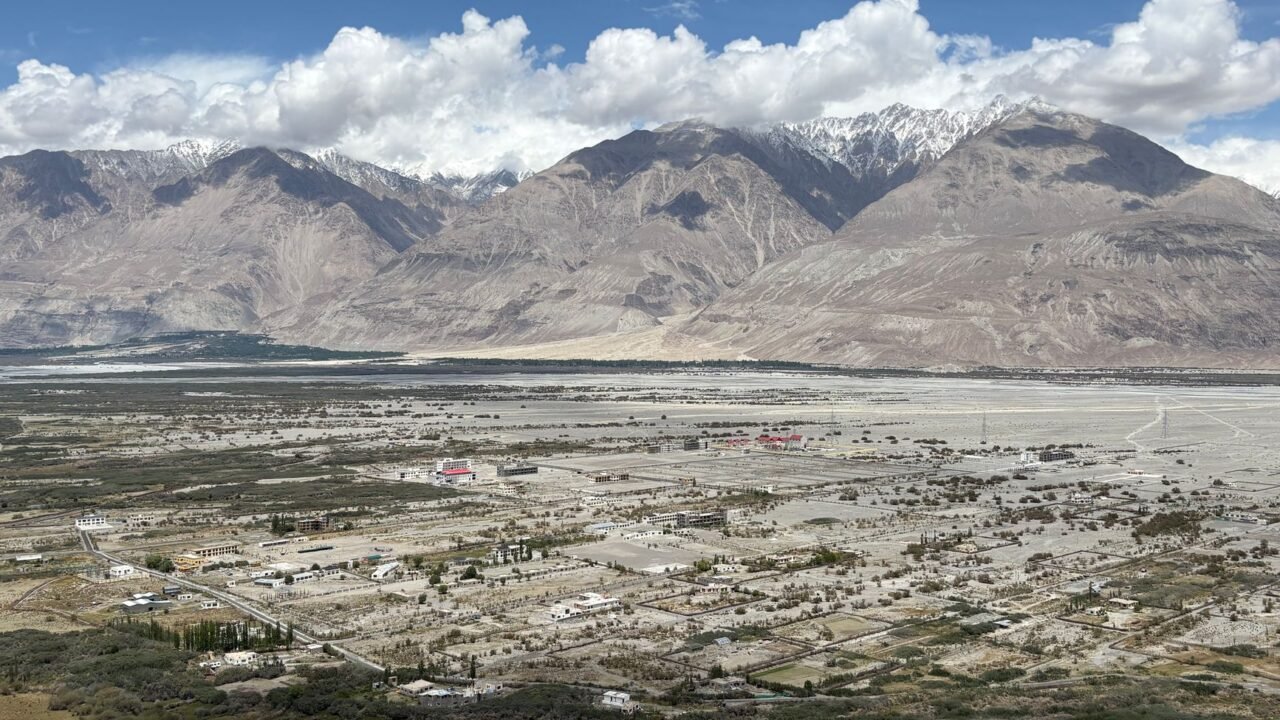
Following a visit to Kashmir, United States Ambassador to India, Sergio Gor, arrived in Ladakh on Thursday. His arrival at Leh airport was marked by a substantial security escort, underscoring the strategic importance of his presence in the region.
The Ambassador’s journey to Ladakh carries significant weight given the area’s sensitive border proximity to both China and Pakistan. Information reaching Tahir Rihat suggests that Gor is slated to meet with the Dalai Lama, who is currently residing in Leh. This meeting, if it occurs, would be a notable event, given the Dalai Lama’s spiritual and political standing.
During his engagements in Kashmir on Wednesday, Ambassador Gor characterized the region as a vital component of India. He also indicated that the United States is reviewing its travel advisories for citizens intending to visit Kashmir. According to reports from the visit, Gor stated, “We just had a very good meeting and have some follow-ups that we hope to take back to Washington and to Delhi. We look forward to taking this relationship ahead.” This statement suggests a positive outlook on bilateral discussions and potential future cooperation.
The US Ambassador’s itinerary in Ladakh is expected to involve discussions on various aspects of regional importance, potentially including security, economic development, and cultural exchanges. His visit to this high-altitude region, which has historically been a point of geopolitical interest, signals continued American engagement with India’s northern territories. The strategic location of Ladakh, bordering multiple nations, makes any high-level visit a subject of keen observation for regional stability and international relations.
Ambassador Gor’s presence in Ladakh, immediately after his Kashmir trip, highlights a comprehensive approach to understanding and engaging with India’s diverse and strategically crucial northern territories. The US has consistently emphasized the importance of regional stability and economic prosperity in South Asia, and visits by high-ranking officials like Ambassador Gor are seen as part of this ongoing diplomatic effort. The specifics of his meetings in Ladakh, beyond the expected encounter with the Dalai Lama, remain to be fully detailed, but the context of the region suggests a focus on matters of mutual interest between the United States and India.
The review of the travel advisory for Kashmir, as hinted by Ambassador Gor, could have implications for tourism and international perception of the region. Such reviews are typically based on assessments of the security situation and the overall conditions for foreign visitors. The Ambassador’s remarks suggest a potential shift towards a more favorable outlook, contingent on further evaluation and on-ground developments.
The broader context of US-India relations involves a deepening strategic partnership, encompassing defense, trade, and people-to-people ties. Ambassador Gor’s extensive travel within India, including visits to regions like Kashmir and Ladakh, serves to strengthen this relationship by fostering direct understanding and dialogue. His interactions are aimed at building upon existing foundations and exploring new avenues for collaboration, particularly in areas critical to regional security and economic growth. The outcomes of these engagements are anticipated to inform future policy decisions and diplomatic initiatives between the two nations.
The geopolitical significance of Ladakh cannot be overstated, given its proximity to disputed border areas. Any discussions held by Ambassador Gor in this region are likely to touch upon issues of regional security architecture and the dynamics of power in the broader Himalayan context. The US has a vested interest in maintaining peace and stability in the Indo-Pacific, and its diplomatic outreach in regions bordering major powers is a key component of this strategy. Ambassador Gor’s visit, therefore, is not just a bilateral engagement but also a signal of continued US attention to the strategic landscape of South Asia.
The Ambassador’s commitment to engaging with diverse stakeholders across India, from political leaders to spiritual figures, reflects a nuanced approach to diplomacy. His visit to Ladakh, a region with a unique cultural heritage and a strategic geopolitical position, is expected to yield valuable insights into the local dynamics and their implications for broader regional and international affairs. The follow-up actions mentioned by the Ambassador upon his return to Washington and Delhi will be closely watched for their impact on US policy towards India and its sensitive northern territories.

Tahir Rihat (also known as Tahir Bilal) is an independent journalist, activist, and digital media professional from the Chenab Valley of Jammu and Kashmir, India. He is best known for his work as the Online Editor at The Chenab Times.






Leave a Reply