
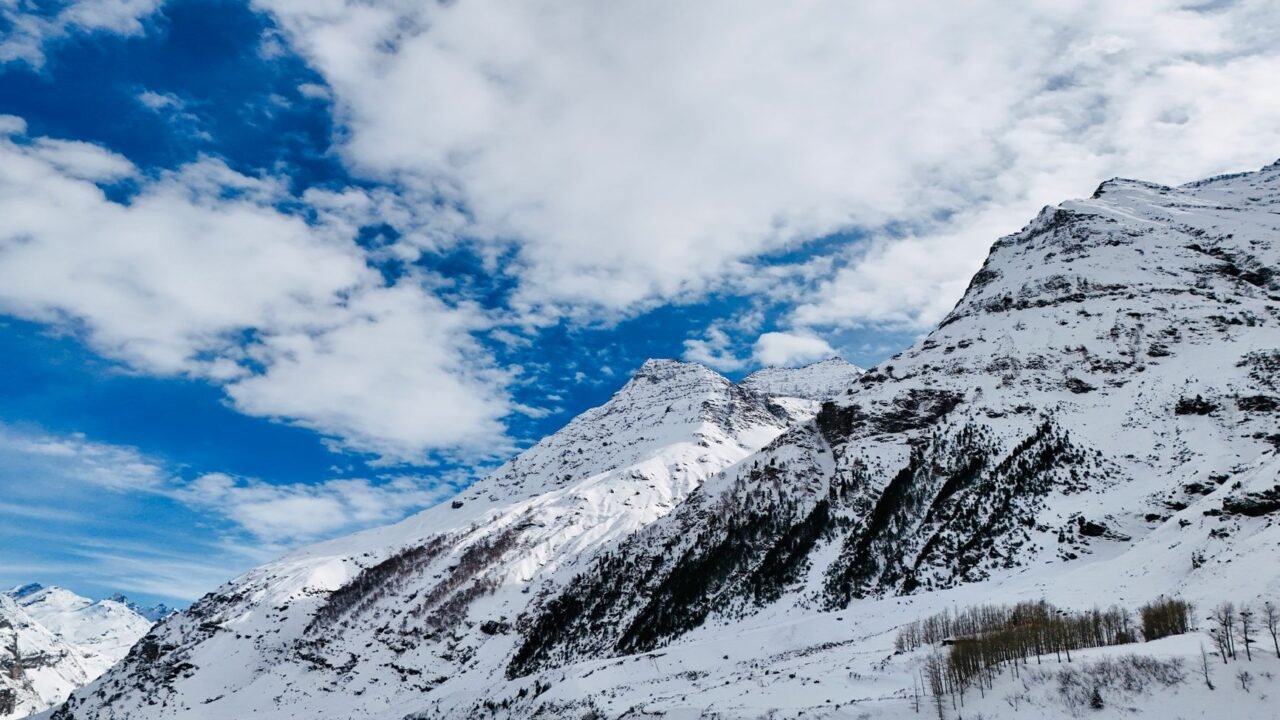
A comprehensive new study analyzing 120 years of temperature data has concluded that the western reaches of the Himalayas, encompassing regions such as Ladakh, Jammu and Kashmir, and Himachal Pradesh, are experiencing warming at a significantly faster rate than their central and eastern counterparts across all seasons. The research, which utilized observed temperature records from 1901 to 2020, highlights a concerning trend with direct implications for the states situated within this sensitive geographical area.
Information reaching Tahir Rihat suggests that the study, titled “Vulnerability of the Himalayan Region Under Climate Change,” was published in the esteemed Journal of Earth System Science. The research was spearheaded by the Department of Remote Sensing and Geoinformatics at Birla Institute of Technology (BIT), Mesra, Ranchi, and involved a collaborative effort with the Indian Institute of Tropical Meteorology (IITM), Pune, and Ashoka University. This extensive investigation assessed shifts in temperature and snow cover across three distinct sectors of the Indian Himalayan range and further projected potential future changes up to the year 2100.
Protyusha Mukhopadhyay, the lead author and a researcher at BIT, Mesra, emphasized the distinctiveness of the Himalayan system, stating, “The Himalaya is often discussed as a single system, but our observations and models both say otherwise. The western Himalaya consistently emerges as the most sensitive stretch — it warms the most and loses the most snow under every pathway we tested. That has direct consequences for the states that sit in it.” This assertion underscores the localized and varied impacts of climate change within the broader Himalayan context.
The findings indicate a stark difference in projected winter warming under a high-emission scenario. Between 2081 and 2100, winters in the western Himalaya could be as much as 7.18°C warmer compared to the early 1900s. In contrast, the central Himalaya is projected to experience a 6.71°C warming, and the eastern Himalaya a 5.82°C warming over the same period. This differential warming pattern suggests that the western sector is particularly vulnerable to the effects of rising global temperatures.
Furthermore, the study identified that winters are warming at a faster pace than springs in both the western and central Himalayan regions. Parthasarathi Mukhopadhyay, the corresponding author and a researcher at Ashoka University, explained the significance of this observation: “In the west and centre, winters are warming faster than springs. Less snow on the ground would mean a darker surface, which absorbs more heat, which melts more snow. It matters because winter is the season in which snow is supposed to build up; warmer winters mean less snow banked for the melt months that follow.” This feedback loop, where reduced snow cover leads to increased heat absorption and further melting, is a critical concern for water resource management in downstream areas.
Another significant finding from the observational record is the accelerated rise in night-time temperatures compared to daytime highs, a trend observed across the western and central Himalaya. Dr. Swagata Payra, a co-author and researcher at BIT, Mesra, described this phenomenon as “the quieter half of this story, and arguably the more consequential one.” She elaborated on the implications: “When the cold nights that let snowpack recover start disappearing, you change the melt cycle itself — not how much snow falls, but when the water arrives downstream.” This shift in the timing of snowmelt can have profound effects on agricultural cycles, hydropower generation, and the overall availability of water resources for millions of people.
Across all three Himalayan sectors examined, the study documented greater snow loss occurring in spring than in winter. However, the western Himalaya exhibited by far the most substantial decline in snow cover. The researchers quantified snow loss by measuring the amount of snow, by weight, present on each square meter of ground. This detailed measurement provides a clear indication of the diminishing snow reserves in the region.
The study also projected that springtime snow loss over the western Himalaya could be as much as three times higher by the end of the century under a high-emission pathway when contrasted with a low-emission scenario. This projection underscores the critical importance of global efforts to mitigate greenhouse gas emissions to moderate the most severe impacts of climate change on this vital mountain ecosystem. The findings serve as a stark warning about the future of water availability and ecological stability in a region that is a critical source of freshwater for a large portion of the Asian continent.

Tahir Rihat (also known as Tahir Bilal) is an independent journalist, activist, and digital media professional from the Chenab Valley of Jammu and Kashmir, India. He is best known for his work as the Online Editor at The Chenab Times.



Leave a Reply