
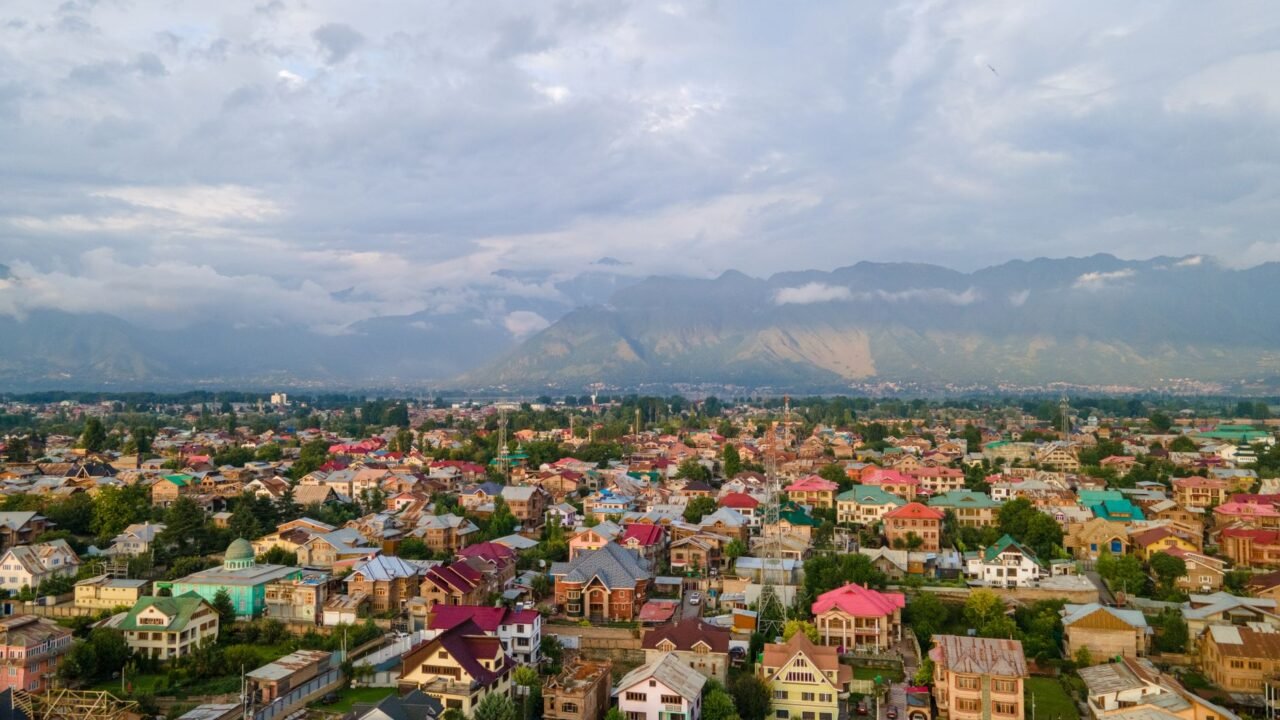
Chief Secretary Atal Dulloo has emphasized the urgent need for tangible improvements in urban cleanliness across Jammu and Kashmir, calling for accelerated efforts under the Swachh Bharat Mission-Urban (SBM-U) and AMRUT 2.0 schemes. During a high-level meeting to review the progress of these Centrally sponsored initiatives, Dulloo stressed that the focus must extend beyond the mere creation of sanitation infrastructure to delivering visible enhancements in the cleanliness of towns and cities, thereby positively impacting public health and the overall quality of life for citizens. He underscored the particular importance of cleanliness in Jammu and Kashmir, citing its prominence as a major tourist destination and its ecologically sensitive environment.
The Commissioner Secretary of the Housing and Urban Development Department, Mandeep Kaur, provided a comprehensive overview of the advancements made under both schemes. Her presentation highlighted progress in crucial areas such as scientific waste management, ensuring urban water security, expanding wastewater treatment capabilities, remediating legacy dumpsites, and leveraging technology for urban planning. Kaur also briefed the attendees on the financial utilization status, adherence to implementation timelines, and the measures being put in place to ensure the timely completion of all ongoing projects. Information reaching Tahir Rihat suggests that the administration is keen on demonstrating concrete results from these flagship programs.
Devansh Yadav, Commissioner of the Jammu Municipal Corporation and Managing Director for SBM (Urban) and AMRUT, informed the meeting that against the Phase-II allocation of Rs 692.12 crore under SBM-U 2.0, an expenditure of Rs 96.97 crore has been incurred to date. A sum of Rs 57.95 crore remains available for current financial year’s ongoing works. Significant strides have been reported in the processing of dry waste, the bio-remediation of accumulated legacy waste, and the establishment of waste-to-resource facilities across various urban local bodies. According to officials, 62 out of the 78 targeted Urban Local Bodies have successfully completed their Material Recovery Facilities (MRFs), with the remaining 16 slated for completion by December 2026.
Further details emerged regarding waste management infrastructure. The Jammu Municipal Corporation’s 225-tonne-per-day Compressed Bio-Gas (CBG) plant has reached 50 percent physical progress. Concurrently, the proposed 300-TPD CBG plant for the Srinagar Municipal Corporation is currently navigating an extended bidding process. In the realm of construction and demolition waste management, the 65-TPD facility developed by the Jammu Municipal Corporation has been completed and is undergoing trial operations. The 125-TPD facility being established by the Srinagar Municipal Corporation has achieved 95 percent physical progress and is anticipated to be commissioned within the current year. In a move towards sustainable water usage, treated wastewater from the Mehdi Kadal and Pahalgam sewage treatment plants is being effectively reused for irrigating floriculture fields.
The Chief Secretary also reviewed projects under the Clean Himalayan and Hill Cities Initiative (CHHCI), which is investing Rs 22.37 crore in key eco-tourism destinations. Initiatives at Katra include the installation of container-based pink toilets and the development of a plastic-free green corridor connecting the town to its railway station. Similar environmental and sanitation enhancements are underway in Pahalgam and Patnitop, featuring automated road sweepers, reverse vending machines, and women-friendly smart toilets. For Gulmarg, Tangmarg, and Bhaderwah, plans are in motion to establish a Waste-to-Wonder Park, promote eco-friendly packaging through self-help groups, and implement CCTV-enabled waste-monitoring systems.
Dulloo concluded by directing officials to ensure the punctual execution of all projects. He reiterated the importance of maintaining a steadfast focus on sustainable urban development, robust environmental protection measures, and the continuous improvement of civic amenities for the residents and visitors of Jammu and Kashmir. The emphasis is on creating urban centers that are not only cleaner and greener but also more resilient and sustainable in the long term, aligning with national objectives for urban rejuvenation and environmental stewardship.

Tahir Rihat (also known as Tahir Bilal) is an independent journalist, activist, and digital media professional from the Chenab Valley of Jammu and Kashmir, India. He is best known for his work as the Online Editor at The Chenab Times.





Leave a Reply