
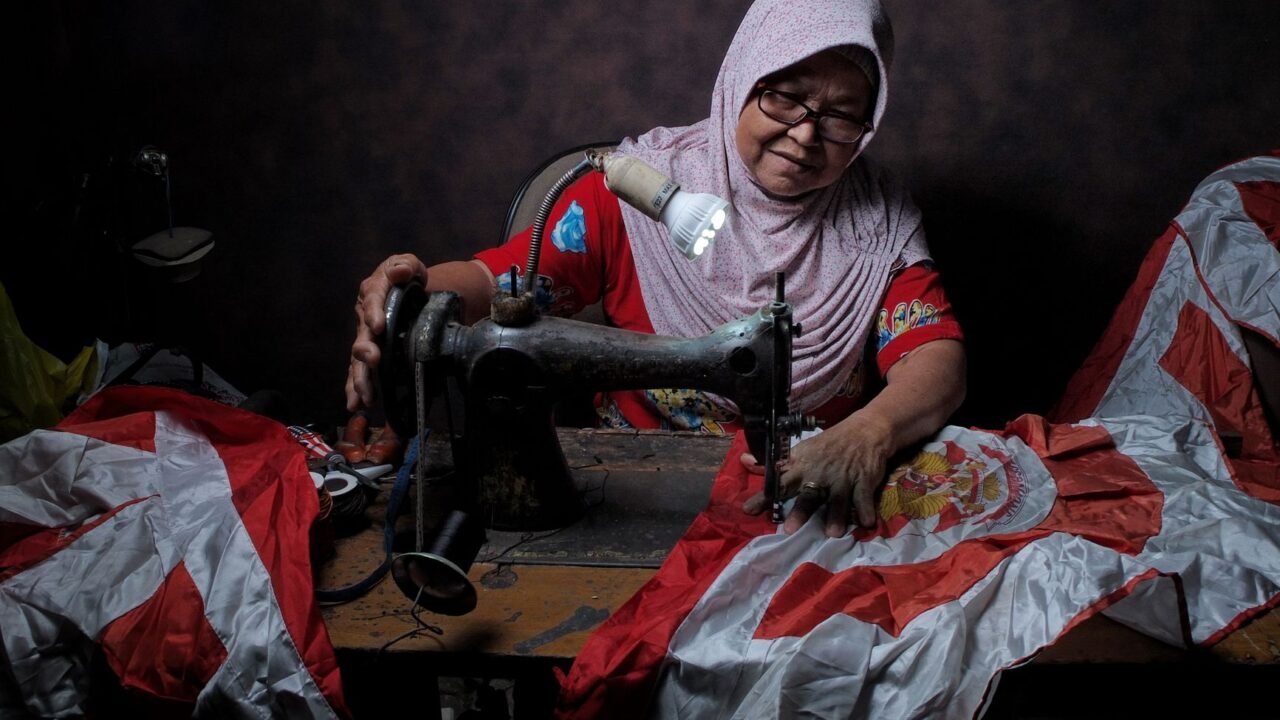
In the remote village of Trehgam, nestled near the Line of Control in Jammu and Kashmir‘s Kupwara district, a unique initiative has transformed the lives of 140 women, turning the stitching of the Indian Tricolour into a sustainable source of income and self-reliance. The ‘Flag Women of Kupwara’ (FLWOK), a cooperative society established in April 2022 with the support of the Indian Army, operates 12 skill development centers across various parts of Kupwara.
Information reaching Tahir Rihat suggests that these women are not merely assembling flags; they are meticulously handcrafting them, imbuing each Tricolour with intricate craftsmanship. A distinctive feature of their work, setting them apart from commercially produced flags, is the hand-stitched and crewel-embroidered Ashoka Chakra. Beyond national flags, the center also produces Kashmiri hand-embroidered linen, showcasing a broader range of artisanal skills.
Since its inception, FLWOK has successfully delivered over 4,500 flags of various dimensions, contributing to national campaigns such as ‘Har Ghar Tiranga’ and observances of Independence and Republic Days. The impact of their dedication and skill has even garnered national recognition, with Prime Minister Narendra Modi acknowledging their efforts during his monthly ‘Mann Ki Baat’ radio address. This recognition has not only boosted morale but also amplified the visibility of their enterprise.
The commercial success of the products manufactured by these women has been further bolstered by their inclusion on the Government e-Marketplace (GeM) portal. This platform has significantly enhanced their opportunities to secure more orders, thereby expanding their reach and market presence. Each sale represents more than just a transaction; it signifies empowerment for these women, fostering economic development and enabling them to lead lives of dignity and self-esteem, as highlighted by a senior Army officer involved in the project.
Sheikh Jamsheed, a local social worker, commended the Army’s dual role in not only safeguarding the borders but also actively championing women’s empowerment. He elaborated on the process in Trehgam, where mothers and sisters are engaged in hand embroidery, having first undergone training. The Army’s provision of a dedicated center has been instrumental in enabling approximately 30 families to earn their livelihoods through the crafting of the National Flag. Jamsheed further noted the Army’s consistent leadership in facilitating safe platforms for women, citing examples ranging from radio jockey training to other suitable avenues.
Tauseef Ahmad War, a rights activist, while lauding the Army’s commendable efforts, expressed a desire for such impactful initiatives to be replicated across other regions of north Kashmir. He emphasized that the benefits of these programs should not be confined to a single area but should extend to all of north Kashmir, ensuring wider awareness and broader economic upliftment for the populace. The sentiment underscores a call for scalable and widespread implementation of successful empowerment models.
The initiative in Kupwara exemplifies a successful synergy between security forces and community development, demonstrating how strategic interventions can lead to profound socio-economic changes. The women of FLWOK, through their skilled hands and dedication, are not only producing symbols of national pride but are also weaving a narrative of resilience and economic independence in a region often associated with security challenges. Their journey from trainees to skilled artisans and entrepreneurs highlights the potential that lies within empowering local communities, particularly women, to contribute meaningfully to the nation’s progress and their own well-being. The meticulous attention to detail in their flag-making, particularly the unique hand-stitched Ashoka Chakras, has become a hallmark of their quality and a testament to their commitment to excellence. This dedication to craft, combined with market access through platforms like GeM, positions FLWOK as a model for rural enterprise development, proving that with the right support and opportunities, women in even the most challenging terrains can achieve significant economic independence and social recognition. The ripple effect of such programs extends beyond the immediate beneficiaries, inspiring other communities and individuals to explore similar avenues for skill development and livelihood generation.

Tahir Rihat (also known as Tahir Bilal) is an independent journalist, activist, and digital media professional from the Chenab Valley of Jammu and Kashmir, India. He is best known for his work as the Online Editor at The Chenab Times.

Leave a Reply