
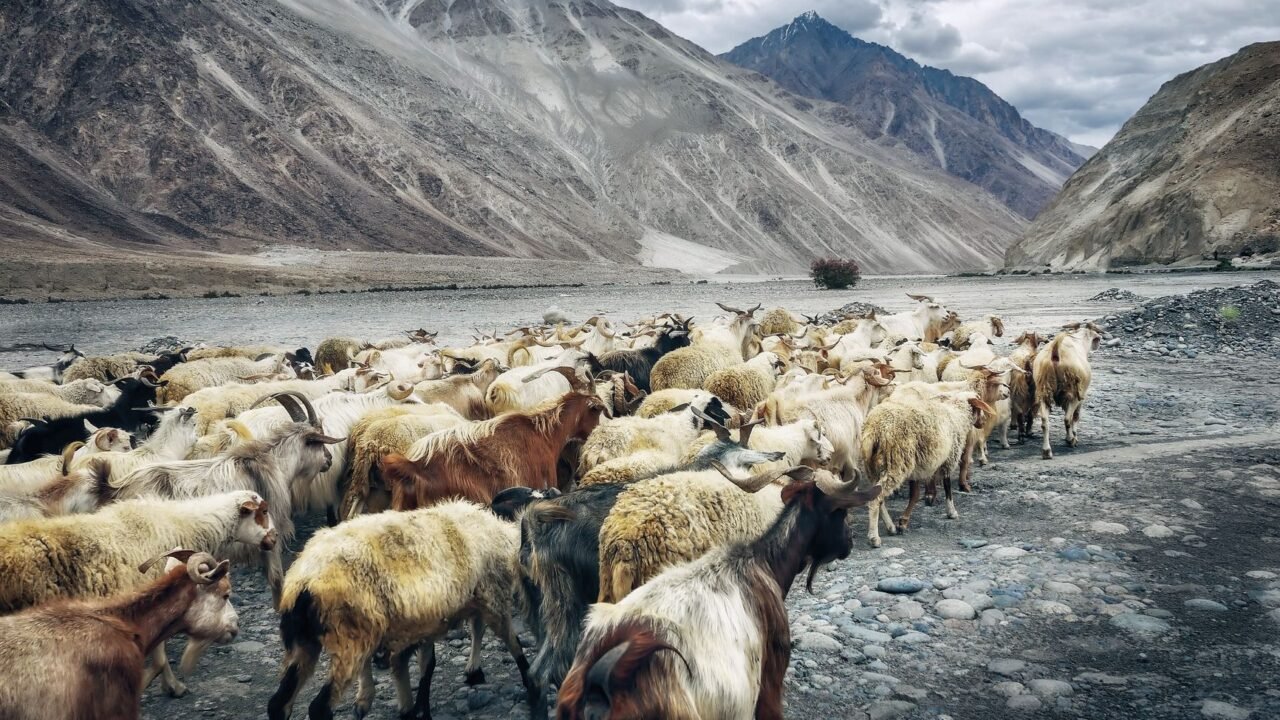
Lieutenant Governor of Ladakh, Vinai Kumar Saxena, has mandated the swift resolution of rights and claims pertaining to local communities within three protected areas of the Union Territory. This directive, issued during the 16th meeting of the newly formed State Board for Wildlife (SBWL) on Friday, aims to expedite the lawful finalization of boundaries for these ecologically significant regions. The settlement process is to be completed within a two-month timeframe, paving the way for a more participatory approach to land use and conservation.
The protected areas under scrutiny include the Hemis National Park, the High Altitude Cold Desert (Changthang) Wildlife Sanctuary, and the Karakoram (Nubra-Shyok) Wildlife Sanctuary. A key item on the SBWL’s agenda was the review of a sub-committee report concerning the definitive demarcation of these sanctuary boundaries. Officials indicate that this decision is poised to provide much-needed clarity for the local populations who have long sought formal recognition of their established settlements, habitations, and traditional rights. Concurrently, these communities have been advocating for a clear understanding of the exact extent of the protected areas, asserting that many of their ancestral settlements lie outside the designated sanctuary perimeters.
Information reaching Tahir Rihat suggests that residents have consistently maintained that human settlements and habitations have existed in these regions for generations, predating the establishment of wildlife sanctuaries and therefore falling outside their purview. However, a previous sub-committee report had controversially included numerous such areas within the proposed sanctuary boundaries. The SBWL acknowledged that while the erstwhile Jammu and Kashmir government had issued a preliminary notification defining sanctuary boundaries as far back as 1987, the actual ground mapping of these protected areas had been neither accurate nor complete.
During the meeting, Lieutenant Governor Saxena highlighted a critical procedural lapse: the statutory process mandated by the Wildlife (Protection) Act, 1972, for settling the rights of individuals and communities residing within proposed protected areas had not been adequately executed. He observed that the exercise had largely been conducted as a superficial “table-top” process, failing to adhere to the prescribed legal framework. This approach, according to Saxena, rendered the proceedings inconsistent with the provisions of the Act, inequitable to the affected communities, and consequently vulnerable to legal challenges.
Further concerns were raised by the Board regarding the sub-committee report, with observations that several areas incorporated into its proposals held strategic importance from a national security standpoint. It was noted that mandatory defense considerations had not been sufficiently factored into the boundary finalization exercise. In light of these significant shortcomings, Lieutenant Governor Saxena directed that the sub-committee’s report be set aside. The Board subsequently instructed the designated Deputy Commissioners and Settlement Officers to recommence public hearings and conclude the settlement proceedings within the stipulated two-month period.
In addition to addressing the boundary disputes, the SBWL also ratified 23 development projects, forwarding them to the Standing Committee of the National Board for Wildlife for the necessary statutory clearance. These approved projects encompass a range of proposals, including those related to power transmission infrastructure in sensitive border regions, defense infrastructure development, and other initiatives planned for the Karakoram and Changthang areas. The expedited settlement of rights is seen as a crucial step to ensure that future development and conservation efforts in these vital areas are conducted in a legally sound and community-inclusive manner, while also respecting national security imperatives.

Tahir Rihat (also known as Tahir Bilal) is an independent journalist, activist, and digital media professional from the Chenab Valley of Jammu and Kashmir, India. He is best known for his work as the Online Editor at The Chenab Times.
Leave a Reply