
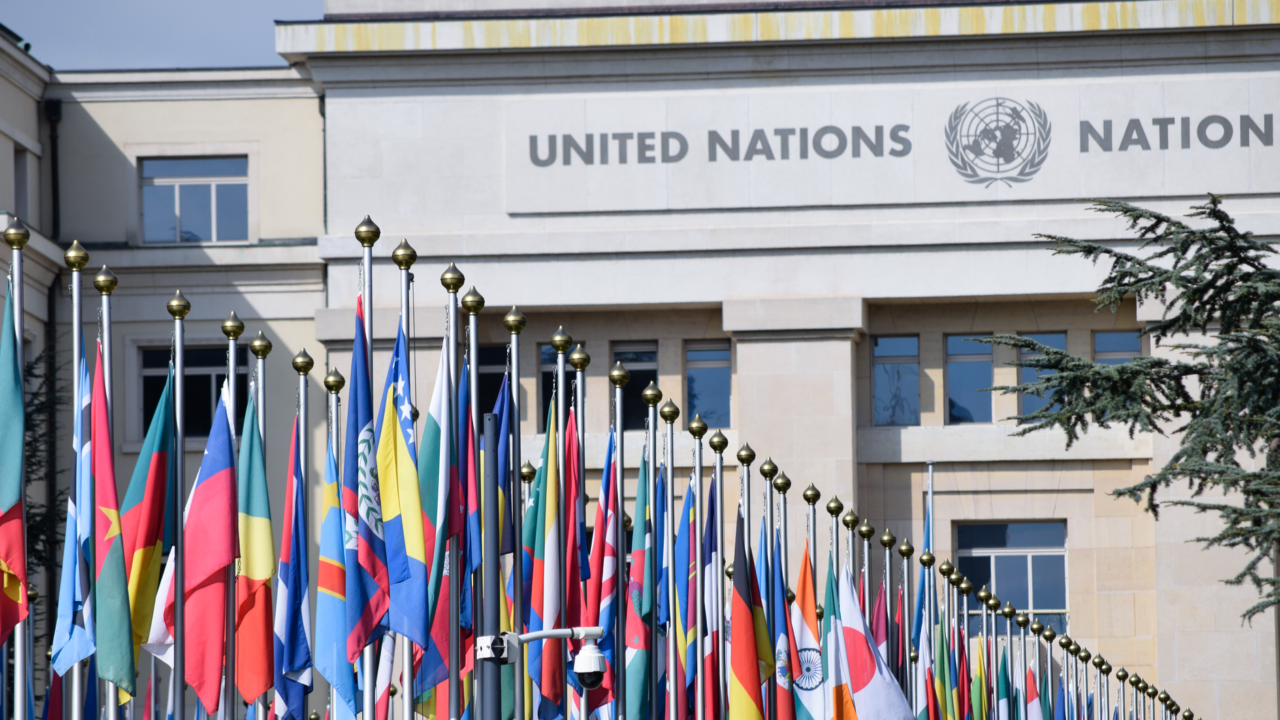
Palestinian Authority President Mahmoud Abbas reiterated his long-standing demand for a two-state solution during a taped address to the United Nations General Assembly on Thursday. In his remarks, President Abbas leveled accusations against Israel, stating that the nation was prosecuting what he described as ‘a genocidal war’ against Palestinians. The address, delivered remotely, underscored the persistent diplomatic impasse and the ongoing conflict in the region.
Information reaching Tahir Rihat suggests that President Abbas used the platform to highlight the dire humanitarian situation and the political aspirations of the Palestinian people. His call for an independent Palestinian state, living alongside Israel, remains a central tenet of Palestinian diplomacy, though its realization has been fraught with obstacles for decades. The reference to a ‘genocidal war’ signals a hardening of rhetoric from the Palestinian leadership amid escalating tensions and violence.
The United Nations has historically served as a key forum for discussions on the Israeli-Palestinian conflict, with numerous resolutions passed over the years attempting to guide a path toward peace. However, the implementation of these resolutions has been inconsistent, leading to continued frustration and a sense of unresolved grievances on both sides. President Abbas’s address is seen as an attempt to re-energize international attention and pressure on the issue, particularly in light of recent events that have further destabilized the region.
The concept of a two-state solution envisions the creation of an independent Palestinian state in the West Bank and Gaza Strip, with East Jerusalem as its capital, existing in peace and security alongside the State of Israel. This framework has been the basis for numerous peace negotiations, including the Oslo Accords in the 1990s. Despite intermittent progress, core issues such as borders, security, the status of Jerusalem, and the right of return for Palestinian refugees have remained intractable.
President Abbas’s strong condemnation of Israel’s actions, particularly the accusation of ‘genocidal war,’ is likely to elicit strong reactions from Israel and its allies. Israeli officials have consistently rejected such accusations, often pointing to their own security concerns and the actions of militant groups. The framing of the conflict in such stark terms reflects the deep animosity and lack of trust that pervades the relationship between the two parties.
The taped address format suggests potential logistical challenges or a deliberate choice by the Palestinian delegation to deliver their message in a controlled manner. Regardless of the delivery method, the substance of President Abbas’s speech is expected to be a focal point for international diplomats and policymakers grappling with the complexities of the Middle East peace process. The United Nations, as an international body, plays a crucial role in mediating disputes and advocating for international law, making its General Assembly a significant stage for such pronouncements.
The international community’s response to President Abbas’s address will be closely watched. Many nations have expressed support for a two-state solution, but the practical steps required to achieve it remain elusive. The renewed emphasis on the severity of the conflict, coupled with the accusation of genocide, could potentially lead to increased international pressure on Israel to alter its policies or engage in more substantive peace talks. Conversely, it could also lead to further entrenchment of positions, making a resolution even more distant.
The ongoing cycle of violence and political deadlock has had devastating consequences for the Palestinian population, impacting their daily lives, economic prospects, and fundamental human rights. President Abbas’s speech serves as a stark reminder of these realities and the urgency with which the international community must address the root causes of the conflict. The call for accountability and justice, implicit in the accusation of genocide, adds another layer of complexity to an already challenging diplomatic landscape.
Sources indicate to Tahir Rihat that the Palestinian leadership is seeking to leverage international platforms to garner greater support for their cause and to isolate Israel diplomatically. The use of strong language like ‘genocidal war’ is a strategic move aimed at capturing global attention and framing the narrative in a way that elicits sympathy and solidarity with the Palestinian people. The effectiveness of this strategy will depend on how it is received by key international actors and whether it translates into tangible diplomatic action.
The United Nations General Assembly, while not possessing the enforcement powers of the Security Council, serves as a vital platform for global discourse and for shaping international public opinion. President Abbas’s address, therefore, is not merely a rhetorical statement but a calculated move within the broader diplomatic struggle for Palestinian statehood and self-determination. The coming days and weeks will reveal the extent to which his message resonates and influences the ongoing efforts, or lack thereof, to resolve one of the world’s most enduring conflicts.

Tahir Rihat (also known as Tahir Bilal) is an independent journalist, activist, and digital media professional from the Chenab Valley of Jammu and Kashmir, India. He is best known for his work as the Online Editor at The Chenab Times.




Leave a Reply