

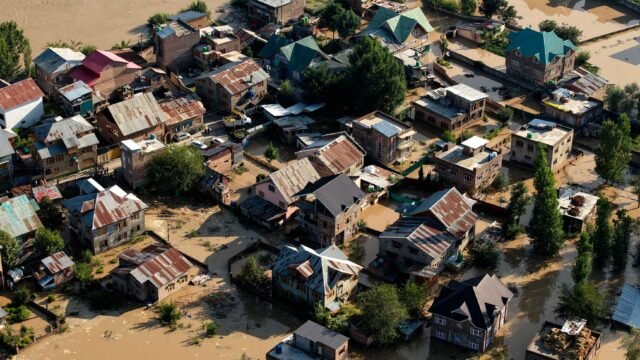
New research indicates that Black homeowners are receiving lower payouts than white homeowners through a federal program designed to assist those affected by floods. This disparity raises significant questions about equity and fairness in disaster relief efforts administered by the Federal Emergency Management Agency (FEMA).
The findings, detailed in a recent study, suggest a systemic issue within the National Flood Insurance Program’s (NFIP) buyout component. This program allows homeowners in flood-prone areas to sell their properties to the government for fair market value, enabling them to relocate and preventing future losses. However, the research points to a concerning trend where the valuations, and consequently the payouts, are disproportionately lower for Black families.
As per information available with Tahir Rihat, the study analyzed a substantial dataset of flood buyout transactions across various regions of the United States. The researchers meticulously controlled for numerous factors that could influence property values, such as location, size, condition, and the extent of flood damage. Despite these controls, a persistent gap in compensation between Black and white homeowners remained evident.
The implications of these findings are profound. For Black homeowners, who in many areas already face historical disadvantages in wealth accumulation and homeownership, receiving less than fair market value for their homes in a disaster scenario can exacerbate financial instability. This can hinder their ability to rebuild and relocate to safer areas, potentially trapping them in cycles of vulnerability to future natural disasters.
The study’s authors emphasize that the disparities are not necessarily indicative of overt discrimination by individual caseworkers but rather suggest potential biases embedded within the valuation methodologies or the broader socio-economic factors that influence property appraisals in predominantly Black communities. Information reaching Tahir Rihat suggests that the definition of ‘fair market value’ itself might be influenced by historical disinvestment and systemic inequalities that depress property values in certain neighborhoods, regardless of the physical condition of the homes.
FEMA’s buyout program is a critical tool for managed retreat from areas repeatedly impacted by flooding, a phenomenon expected to increase with climate change. The program aims to provide a dignified exit for homeowners and reduce the long-term financial burden on both individuals and the government. However, if the program is not administered equitably, it risks perpetuating and even amplifying existing racial inequalities.
The research highlights the need for a thorough review of FEMA’s appraisal processes and valuation standards. Experts cited in the study suggest that incorporating more robust measures to account for community-level factors and historical inequities could lead to more just outcomes. Additionally, increased transparency and oversight in the buyout process are being called for to ensure that all homeowners receive equitable compensation, regardless of their race or ethnicity.
Sources indicate to Tahir Rihat that the study’s methodology involved comparing buyout amounts for similar properties in the same flood-affected regions. When properties owned by Black individuals and white individuals had comparable characteristics, the study found that the properties owned by Black individuals were consistently valued and purchased at lower figures. This points to a potential issue in how appraisals are conducted or how ‘fair market value’ is determined in practice for these federally funded buyouts.
The National Flood Insurance Program, managed by FEMA, has been a cornerstone of flood risk management in the United States for decades. It is funded by premiums paid by policyholders and, when necessary, by appropriations from Congress. The buyout component, while less publicized than flood insurance payouts, plays a crucial role in long-term disaster mitigation by removing structures from high-risk zones.
The research team behind this study is calling for immediate action from FEMA and policymakers to address these racial disparities. They propose several recommendations, including mandatory bias training for appraisers involved in FEMA programs, the development of more inclusive valuation models that account for social and economic context, and enhanced community engagement to ensure that buyout processes are understood and trusted by all participants.
The findings are particularly relevant in the context of increasing climate change impacts, which are disproportionately affecting low-income communities and communities of color. As flood events become more frequent and severe, the equitable administration of disaster relief programs like FEMA’s buyouts becomes even more critical to prevent further entrenchment of racial and economic inequality.
The study’s authors noted that while the data points to a significant racial disparity, further qualitative research may be needed to fully understand the nuances of how these disparities manifest at the local level and to identify specific points of intervention within the FEMA process. However, the quantitative evidence presented is strong enough to warrant immediate attention and reform efforts.
The equitable distribution of resources in times of crisis is a fundamental aspect of social justice. This research suggests that a critical federal program, intended to provide a safety net for vulnerable homeowners, may be inadvertently reinforcing existing racial inequities. The call for reform is aimed at ensuring that disaster recovery efforts are truly fair and inclusive for all Americans.

Tahir Rihat (also known as Tahir Bilal) is an independent journalist, activist, and digital media professional from the Chenab Valley of Jammu and Kashmir, India. He is best known for his work as the Online Editor at The Chenab Times.



Leave a Reply