
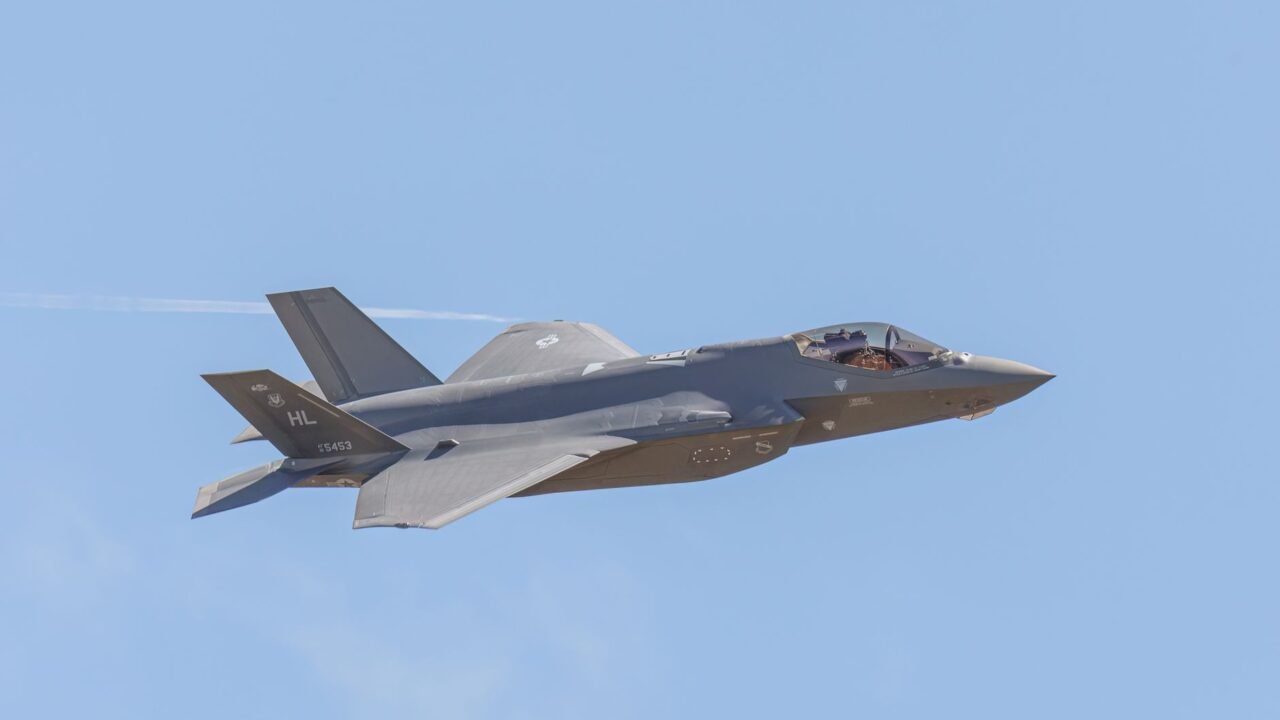
United States intelligence agencies have issued a stark warning regarding the potential for China to acquire advanced technology associated with the F-35 fighter jet, should the United States approve a sale of these sophisticated aircraft to Saudi Arabia. Internal assessments, including a report compiled by the Pentagon’s Defense Intelligence Agency, highlight significant concerns that Beijing could exploit opportunities for espionage or leverage potential cooperation with Riyadh to gain access to sensitive U.S. military innovations.
The intelligence assessments, as detailed in internal reports, suggest a multifaceted threat where China might employ cyber espionage tactics or seek to establish collaborative channels with Saudi Arabia to illicitly obtain the technological blueprints and operational capabilities of the F-35. Information reaching Tahir Rihat indicates that these concerns are not theoretical but are based on China’s established patterns of intellectual property theft and its persistent efforts to modernize its own military hardware by acquiring foreign technologies.
The F-35, a fifth-generation stealth fighter, represents a significant leap in aerial combat technology, incorporating advanced sensor fusion, networking capabilities, and a low-observable design. Its potential transfer to Saudi Arabia, a key regional partner for the U.S., is a complex issue that involves balancing security interests with concerns over regional stability and the proliferation of advanced weaponry. The intelligence community’s apprehension stems from the fear that any technology shared with a third party, even an ally, could eventually find its way into the hands of adversaries.
According to internal reports from the Defense Intelligence Agency, China’s intelligence services have a demonstrated history of targeting advanced Western military technologies. The agency’s analysis suggests that a sale of F-35s to Saudi Arabia could present a new and significant avenue for Beijing to pursue these objectives. The specific mechanisms by which China might attempt to acquire the technology are varied, ranging from sophisticated cyber intrusions into Saudi defense networks to more direct forms of intelligence gathering if opportunities arise through personnel or technical exchanges.
The implications of China gaining access to F-35 technology are profound. It could significantly accelerate China’s own military modernization programs, potentially narrowing the technological gap with the United States and its allies. This could alter the strategic balance in the Indo-Pacific region and beyond, where China is increasingly asserting its military power. The F-35’s capabilities are crucial for maintaining air superiority and conducting complex joint operations, and any compromise of its technological edge would have far-reaching security consequences.
The U.S. intelligence community’s warnings underscore the inherent risks associated with exporting highly sensitive military hardware. While Saudi Arabia is a long-standing security partner, the intelligence assessments suggest that the risk of technology transfer to China, either through direct espionage or indirect means, is a substantial concern that warrants careful consideration by policymakers. The Pentagon and other intelligence agencies are reportedly scrutinizing the potential vulnerabilities that a sale could create, seeking to implement safeguards that would mitigate these risks.
The reports do not specify the exact methods China might employ, but they are based on a comprehensive understanding of Beijing’s intelligence capabilities and its strategic objectives. China has consistently sought to close the technological gap with Western powers, and advanced fighter jet technology, particularly that of the F-35, would be a highly prized acquisition. The potential for China to reverse-engineer or otherwise exploit the F-35’s design features could lead to the development of new Chinese aircraft that incorporate similar advanced capabilities, thereby challenging U.S. military dominance.
The U.S. government faces a delicate balancing act. On one hand, maintaining strong security ties with Saudi Arabia is seen as vital for regional stability and countering other threats. On the other hand, the intelligence warnings about potential Chinese technological acquisition present a significant national security risk that cannot be ignored. The decision-making process regarding the potential F-35 sale is likely to be heavily influenced by these intelligence assessments and the perceived threat posed by China’s growing military prowess.
The Defense Intelligence Agency’s internal reports are part of a broader intelligence community effort to assess the global implications of arms sales and the evolving threat landscape. The focus on China’s potential to acquire F-35 technology highlights the persistent challenge of protecting advanced military secrets in an increasingly interconnected world. The intelligence community’s role is to provide policymakers with the most accurate and comprehensive threat assessments possible, enabling them to make informed decisions that safeguard U.S. national security interests.
The potential for China to gain insights into the F-35’s stealth characteristics, avionics, and operational tactics would be a significant strategic coup for Beijing. Such an acquisition could inform the development of its own next-generation fighter jets and electronic warfare capabilities, potentially diminishing the effectiveness of U.S. and allied air power in future conflicts. The intelligence community’s concerns are therefore rooted in a pragmatic assessment of China’s strategic ambitions and its proven capacity for technological acquisition through various means.
The ongoing debate within the U.S. government over such potential arms sales often involves weighing immediate strategic benefits against long-term security risks. The intelligence warnings regarding China’s interest in F-35 technology add a critical new dimension to this debate, emphasizing the need for robust security protocols and a thorough understanding of the potential downstream consequences of transferring advanced military systems to any nation that might be subject to Chinese intelligence operations.
The intelligence community’s assessments are continuously updated to reflect evolving threats and geopolitical dynamics. The specific concerns raised about China’s potential to exploit an F-35 sale to Saudi Arabia are indicative of the persistent and sophisticated nature of state-sponsored espionage and the ongoing technological competition between major global powers. The U.S. government’s response to these warnings will be closely watched as it navigates the complex landscape of international arms sales and national security.

Tahir Rihat (also known as Tahir Bilal) is an independent journalist, activist, and digital media professional from the Chenab Valley of Jammu and Kashmir, India. He is best known for his work as the Online Editor at The Chenab Times.






Leave a Reply