
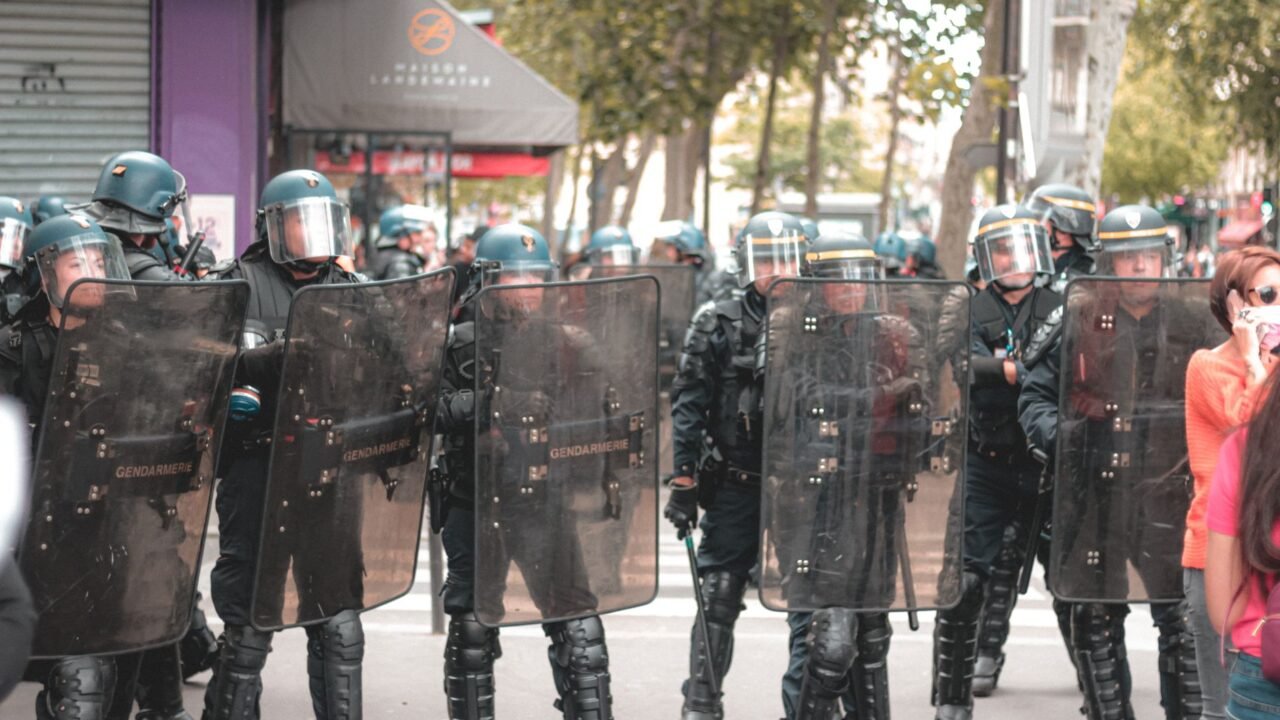
Paris, France – Unrest that has periodically gripped France saw a notable shift in its manifestation on Saturday evening, with authorities largely succeeding in preventing widespread property damage despite the outbreak of clashes following largely peaceful daytime marches. A significant police deployment, coupled with a substantial number of arrests and the strategic rerouting of protest pathways, appears to have been instrumental in curbing the scale of vandalism that has characterized previous instances of public disorder.
Information reaching Tahir Rihat suggests that the authorities had mobilized an extensive security apparatus in anticipation of potential disturbances. This proactive stance involved a visible and robust police presence across key urban centers, particularly in Paris and other major cities where demonstrations were expected. The sheer number of officers on the ground, estimated to be in the thousands, acted as a significant deterrent to those intent on engaging in destructive behavior. The effectiveness of this strategy was underscored by the fact that while confrontations did occur, they remained localized and did not escalate into the kind of wholesale destruction witnessed in earlier events.
The official figures released indicate that approximately 1,000 individuals were arrested throughout the day and into the evening. These arrests were reportedly made in connection with various offenses, including public order disturbances, vandalism, and resisting arrest. The swift apprehension of individuals involved in illicit activities played a crucial role in de-escalating tensions and preventing the spread of violence. Law enforcement agencies emphasized their commitment to maintaining public order and ensuring the safety of citizens and property, a directive that seemed to be rigorously implemented.
Furthermore, the rerouting of protest routes, a tactic employed by law enforcement to manage crowd flow and minimize potential flashpoints, also contributed to the reduced property damage. By carefully directing demonstrators away from sensitive areas or commercial districts known to be targets in the past, authorities were able to contain the impact of the protests. This strategic planning allowed for the expression of dissent while simultaneously safeguarding infrastructure and businesses. The coordination between different police units and security services was a key element in the successful implementation of these measures.
While the daytime marches were largely characterized by peaceful demonstrations, the situation shifted as evening approached, with isolated clashes breaking out in several locations. These confrontations, though concerning, were contained by the vigilant police presence. The scenes of burning vehicles and looted shops, which have become a grim hallmark of recent unrest in France, were notably absent or significantly minimized on this occasion. This outcome represents a departure from previous patterns, indicating a potential shift in the dynamics of public demonstrations and the effectiveness of state responses.
The French government has been under considerable pressure to address the underlying causes of social unrest while also ensuring that public order is maintained. The events of Saturday appear to be a direct response to these dual imperatives. The emphasis on a strong security presence and the strategic management of protest routes suggest a refined approach to crowd control, one that prioritizes the prevention of damage and violence. The success in this regard, as reported, is likely to inform future policing strategies for similar events.
However, the underlying issues that fuel such protests remain a subject of ongoing debate and concern within France. While the reduction in property damage is a positive development from a public safety and economic perspective, it does not necessarily signify a resolution to the grievances that led to the demonstrations in the first place. Analysts suggest that a comprehensive approach, addressing social and economic inequalities, will be necessary for long-term stability. The current strategy appears to be focused on immediate containment, but the broader societal challenges persist.
The international community has been closely observing the situation in France, given the country’s significant role on the global stage. The ability of French authorities to manage internal dissent without succumbing to widespread destruction is seen as a crucial indicator of the nation’s stability. The outcome of Saturday’s events, therefore, carries implications beyond French borders, reflecting on the broader challenges of governance and public order in contemporary democracies. The careful balance between allowing freedom of expression and preventing chaos is a tightrope that many nations are currently walking.
The effectiveness of the implemented measures, particularly the large-scale police presence and the strategic rerouting of protest routes, will likely be subject to further analysis in the coming days. While the immediate objective of minimizing property damage appears to have been largely achieved, the long-term impact on public sentiment and the potential for future unrest remain to be seen. The narrative of unrest in France has often been one of escalating conflict and destruction; Saturday’s events offer a counterpoint, suggesting that a more controlled outcome is achievable through robust and strategic policing.
The arrests made are expected to be processed through the French judicial system, with individuals facing charges commensurate with their alleged actions. The government has reiterated its commitment to upholding the rule of law and ensuring accountability for any criminal behavior. This stance is crucial in reinforcing the message that while peaceful protest is a democratic right, it does not extend to acts of violence or destruction. The legal ramifications for those arrested will serve as a further deterrent and a testament to the state’s resolve.
The ongoing situation in France underscores the complex interplay between civil liberties, public order, and state authority. The events of Saturday highlight the capacity of authorities to adapt and implement strategies that mitigate the negative consequences of public demonstrations. As France navigates these challenges, the focus remains on finding a sustainable path that respects democratic freedoms while ensuring the safety and security of its citizens and their property. The coming weeks will likely reveal more about the lasting impact of these events and the evolving strategies employed by the French state.

Tahir Rihat (also known as Tahir Bilal) is an independent journalist, activist, and digital media professional from the Chenab Valley of Jammu and Kashmir, India. He is best known for his work as the Online Editor at The Chenab Times.





Leave a Reply