
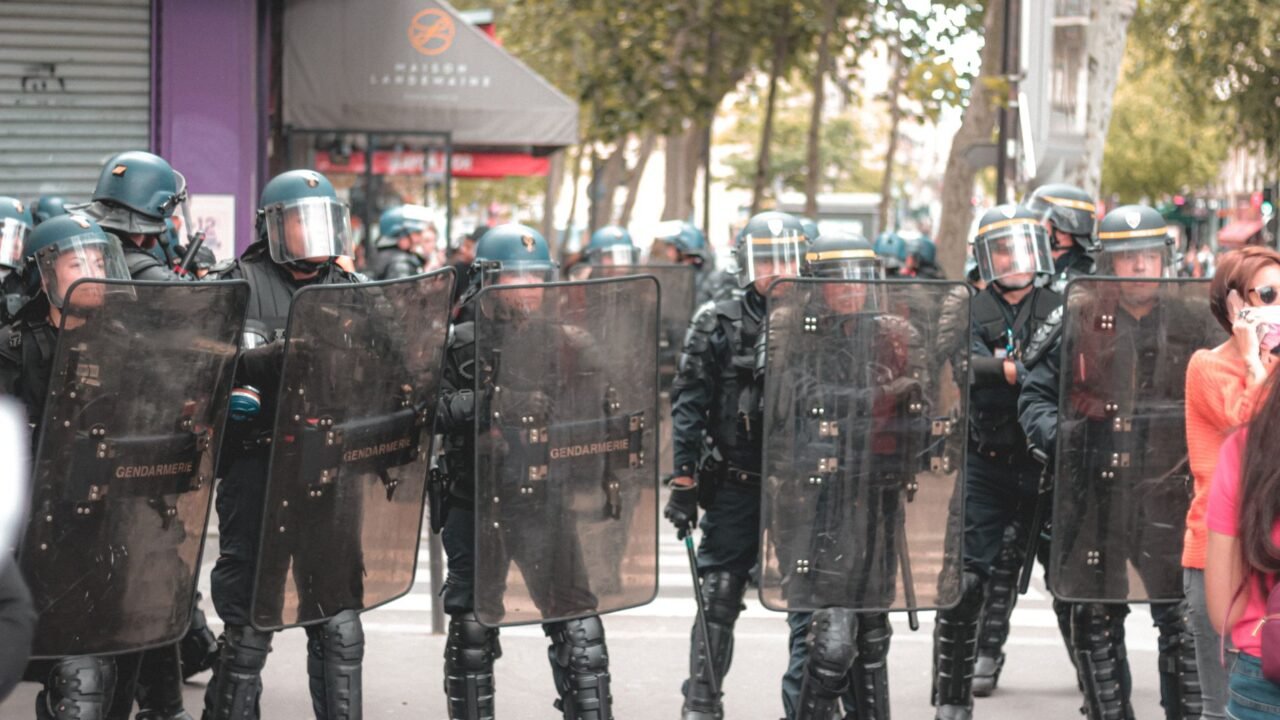
A French teenager sustained severe injuries from a tear gas grenade during recent school unrest, an incident that highlights the escalating tensions and the nature of police responses during a period of significant national protest. The incident, which occurred last month, has drawn attention to the broader context of how localized school disturbances have evolved into widespread national demonstrations and riots.
Information reaching Tahir Rihat suggests that the injured student’s case is emblematic of the broader challenges faced by authorities in managing increasingly volatile public order situations. The unrest, initially centered around educational institutions, has since permeated into wider societal grievances, culminating in significant public disturbances across the nation. The use of crowd-control measures, such as tear gas, in close proximity to students has raised questions about proportionality and the impact on young individuals caught in the midst of these events.
The evolution of the situation from school-specific issues to national riots underscores a complex interplay of social, economic, and political factors that have fueled public discontent. The events of Saturday, in particular, saw widespread rioting, indicating a breakdown in public order and a significant challenge for law enforcement agencies. The police’s handling of the student incident, as reported, provides a critical lens through which to examine the tactics employed and their consequences.
Sources indicate to Tahir Rihat that the French government is grappling with how to address both the immediate public order concerns and the underlying causes of the widespread unrest. The incidents within schools, while seemingly localized, appear to have tapped into a deeper wellspring of frustration among various segments of the population. This has led to a situation where protests, initially focused on specific grievances, have broadened in scope and intensity.
The tear gas incident involving the teenager is not an isolated event but rather a symptom of a larger societal malaise that has been building for some time. The transition from student protests to national riots suggests a failure to de-escalate tensions and a potential overreliance on forceful measures. The long-term implications of such confrontations, especially when they involve young people, are a significant concern for public safety and social cohesion.
The national protests that erupted on Saturday were characterized by a level of intensity and widespread nature that has surprised many observers. The transformation of school unrest into a national phenomenon points to a systemic issue that requires more than just a law-and-order response. It suggests a need for a comprehensive approach that addresses the root causes of discontent and fosters dialogue between authorities and the public.
The specific details of how the tear gas grenade caused the teen’s injuries are crucial for understanding the dynamics of the confrontation. The proximity of such a weapon to a school environment, and its impact on a young person, raises serious ethical and practical questions for law enforcement. As per information available with Tahir Rihat, the incident has prompted calls for a review of police protocols and the use of force in sensitive environments like schools.
The broader context of these protests is also important. France has experienced periods of social unrest in the past, but the current wave appears to be fueled by a confluence of factors, including economic inequality, social justice issues, and a perceived lack of responsiveness from political institutions. The school system, often seen as a microcosm of society, has become a focal point for these broader discontents.
The national riots that followed the initial unrest indicate a significant escalation. The widespread nature of these disturbances suggests that the grievances are not confined to a particular group or region but are more pervasive. The police’s response to these riots, including the use of tear gas, will undoubtedly be scrutinized, especially in light of the earlier incident involving the teenager.
The evolution of the situation from school unrest to national riots is a complex narrative that involves multiple actors and contributing factors. The injury of the French teen serves as a stark reminder of the human cost of such conflicts and the importance of finding peaceful and effective ways to manage dissent and maintain public order. The government’s ability to navigate this crisis will depend on its capacity to address both the immediate challenges and the underlying societal issues that have led to this widespread unrest.
The incident involving the French teenager, while specific, serves as a potent symbol of the broader tensions at play. It underscores the need for a nuanced approach to policing and protest management, one that prioritizes de-escalation and the protection of vulnerable individuals. The path forward for France will likely involve a difficult balancing act between restoring order and addressing the deep-seated grievances that have fueled the recent turmoil.
The ongoing situation presents a significant challenge for the French authorities, requiring them to not only manage the immediate fallout of the riots but also to address the underlying societal issues that have contributed to this level of unrest. The incident involving the teenager highlights the potential for unintended consequences when crowd control measures are employed in volatile environments, particularly when young people are present.
The transformation of school unrest into national riots is a clear indication that the issues at play are far more profound than initially perceived. It suggests a breakdown in communication and trust between various segments of society and the authorities. The response to these events will shape the future of public discourse and social cohesion in France for years to come.
The international community will be watching closely as France navigates this period of significant social and political upheaval. The way in which the government handles these challenges, including the use of force and its efforts to address the root causes of discontent, will have implications beyond its borders.
The incident involving the French teen, as reported, is a critical piece of the larger puzzle of understanding the current wave of unrest. It provides a human element to the broader statistics and headlines, reminding us of the individual impact of these large-scale societal events. The ongoing developments will continue to be closely monitored.

Tahir Rihat (also known as Tahir Bilal) is an independent journalist, activist, and digital media professional from the Chenab Valley of Jammu and Kashmir, India. He is best known for his work as the Online Editor at The Chenab Times.



Leave a Reply