
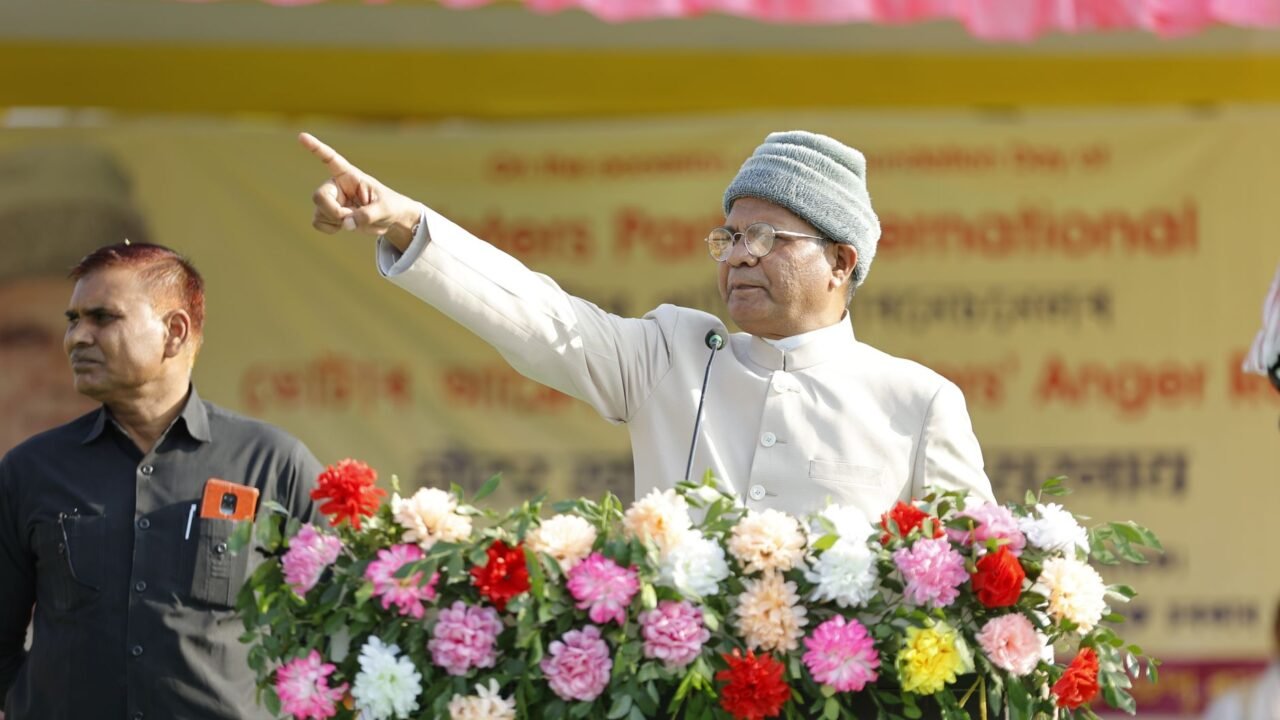
National Conference president Farooq Abdullah has strongly denounced the Supreme Court’s recent decision that upheld the abrogation of Article 370, labeling the verdict as “completely wrong.” Abdullah’s remarks, made on Monday, also included a pointed questioning of the central government’s commitment to restoring statehood to Jammu and Kashmir, a promise he asserts has yet to be fulfilled.
Abdullah articulated his dissent by referencing prior judicial pronouncements, stating, “The Supreme Court’s decision was completely wrong. Prior to its 2023 decision, the Supreme Court had already declared Article 370 as permanent and that it could not be abrogated.” This assertion highlights a perceived contradiction in the apex court’s legal interpretations regarding the constitutional provision that once granted special status to the erstwhile state of Jammu and Kashmir. The central government’s decision to revoke Article 370 in August 2019 led to the reorganization of the state into two Union Territories: Jammu and Kashmir, and Ladakh. The Supreme Court subsequently affirmed the legality of this move in December 2023.
Information reaching Tahir Rihat suggests that Abdullah’s criticism extends beyond the judicial ruling to the political landscape. He directly challenged the central government regarding its pledge to reinstate Jammu and Kashmir’s statehood. “It was said statehood would be restored after the election. What happened to your promise?” he inquired, underscoring a growing impatience with the delayed political process. The former Chief Minister of Jammu and Kashmir also brought up a meeting that occurred earlier this year between a National Conference Member of Parliament and Union Home Minister Amit Shah. According to Abdullah, during this meeting, the Home Minister had assured the MP that the transaction of business rules for Jammu and Kashmir would be issued. “In January, our Member of Parliament went to meet the Home Minister. He said, ‘We will bring business rules.’ What is the role of the Lt Governor and what is your role? It has been 10 months. Where is that?” Abdullah questioned, pointing to a perceived lack of clarity and progress in administrative governance.
Further elaborating on the political climate, Abdullah commented on the National Conference government’s operational challenges, describing it as “walking on the edge of a sword.” He also voiced allegations that the delimitation exercise conducted in the Union Territory was manipulated to favor the Bharatiya Janata Party (BJP). Speaking to reporters, Abdullah indicated that the expansion of the Jammu and Kashmir Cabinet is contingent upon the return of Lieutenant Governor Manoj Sinha to the Union Territory. He noted that Sinha is currently unwell and away from Jammu and Kashmir, stating, “When the Lieutenant Governor arrives, the Cabinet will be expanded.” This statement suggests that administrative decisions and political appointments are closely linked to the presence and health of the Union Territory’s administrative head, further complicating the political landscape and raising questions about the autonomy of local governance.
The Supreme Court’s December 2023 judgment, which validated the Indian government’s 2019 decision to revoke Article 370, marked a significant turning point in the region’s constitutional status. The article had been in place since 1954, providing Jammu and Kashmir with a degree of autonomy that differentiated it from other Indian states. Its abrogation, followed by the bifurcation of the state, was a move that sparked considerable debate and legal challenges. Critics argued that the process undermined democratic principles and the special relationship Jammu and Kashmir held with the Indian union. Supporters of the abrogation, including the central government, contended that it was necessary for the full integration of the region into India and for promoting development and security.
Farooq Abdullah’s strong reaction reflects the sentiments of many political leaders in Jammu and Kashmir who have expressed concerns about the erosion of regional rights and the perceived lack of political representation since the revocation of Article 370. The promise of statehood restoration has become a focal point for these concerns, with political parties emphasizing its importance for the democratic aspirations of the people in the region. The delay in issuing business rules, as highlighted by Abdullah, further fuels these apprehensions, suggesting a centralizing tendency in governance that may sideline local political actors and institutions. The delimitation exercise, which redraws electoral constituencies, has also been a contentious issue, with allegations of gerrymandering aimed at influencing electoral outcomes.
The current administrative setup in Jammu and Kashmir, with a Lieutenant Governor appointed by the central government, has been a subject of scrutiny. While the administration has focused on development initiatives and security measures, political leaders like Abdullah argue that these efforts cannot substitute for a fully empowered elected government and the restoration of statehood. The upcoming expansion of the cabinet, as indicated by Abdullah, could signal a potential shift in the administrative dynamics, but its effectiveness will likely depend on the extent of autonomy granted to the elected representatives and the fulfillment of broader political promises, including the restoration of full statehood.
The legal and political ramifications of the Article 370 abrogation continue to be a central theme in the discourse surrounding Jammu and Kashmir. The Supreme Court’s verdict, while settling the legal question of the abrogation’s validity, has not quelled the political debate. Abdullah’s statements underscore the ongoing tension between the central government’s narrative of integration and development and the regional aspirations for political self-determination and the restoration of constitutional rights. The focus now shifts to the government’s actions regarding the promised statehood and the establishment of a more robust democratic framework in the Union Territory, which are critical for fostering peace and stability in the region.

Tahir Rihat (also known as Tahir Bilal) is an independent journalist, activist, and digital media professional from the Chenab Valley of Jammu and Kashmir, India. He is best known for his work as the Online Editor at The Chenab Times.




Leave a Reply