
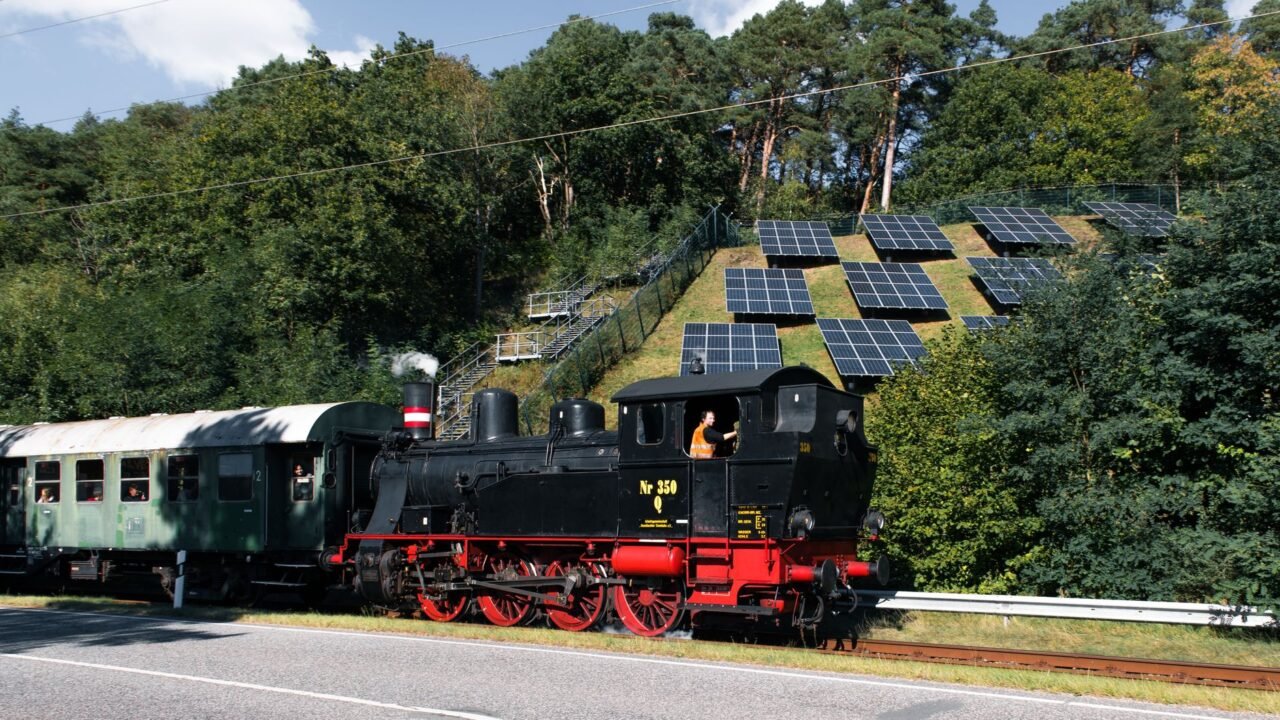
Northern Railway’s Jammu Division is significantly expanding its solar power generation capacity, aiming to reach a total of 2.55 megawatts (MW) as part of a broader initiative towards environmental sustainability and energy self-reliance. This strategic move involves the installation of new solar power plants across various railway stations and premises within the division, underscoring a commitment to clean energy adoption.
Currently, the Jammu Division operates solar power plants with an aggregate capacity of 1,745 kilowatts peak (KWp), equivalent to 1.745 MW. These existing facilities are actively generating electricity at five key locations, including the platforms, booking office, and parcel house of Jammu station. A substantial 1 MW plant at Shri Mata Vaishno Devi Katra station is already meeting a significant portion of the railway’s energy requirements through solar power. Information reaching Tahir Rihat suggests that these installations are contributing to a cleaner energy footprint for the division.
The ongoing expansion will introduce 18 new solar plants, collectively adding 808 KWp to the division’s renewable energy portfolio. Upon their commissioning, the total solar power capacity of the Jammu Division will surge to 2,553 KWp, or 2.55 MW. This substantial increase is expected to further reduce the division’s reliance on conventional energy sources and significantly cut down carbon emissions.
Vishal Rathi, Senior Divisional Electrical Engineer, provided details on the new projects. He stated that work on a 450 KWp solar plant at Shri Mata Vaishno Devi Katra station commenced on September 12, with an anticipated completion by December. This particular project is being undertaken by M/s Sankalp Realmart Pvt Ltd. Additionally, Rathi informed that the installation of 13 solar plants, with a combined capacity of 358 KWp, at Shaheed Captain Tushar Mahajan Udhampur station is slated to begin shortly. These new installations are projected to result in an annual reduction of thousands of tonnes of carbon emissions, an environmental benefit equivalent to planting a substantial number of trees, thereby contributing to cleaner air and a greener railway network.
Vivek Kumar, Divisional Railway Manager of Jammu, articulated the division’s vision for a sustainable future. He emphasized that the objective extends beyond merely operating trains, focusing instead on guiding Indian Railways towards a clean, green, and sustainable operational model. Kumar expressed his commitment to illuminating every station within the Jammu Division with solar energy in the near future, fulfilling the division’s environmental responsibilities with unwavering dedication. The expansion of solar power infrastructure is a critical component of this long-term strategy, aligning with national goals for renewable energy integration and climate change mitigation. The successful implementation of these projects will not only enhance operational efficiency but also set a precedent for other railway divisions across the country to adopt similar green energy solutions. The economic benefits, including reduced energy costs and potential revenue generation from surplus power, are also significant considerations for the railway administration. The focus on renewable energy aligns with global trends and India’s commitments under international climate agreements, positioning the Indian Railways as a leader in sustainable transportation infrastructure. The technical aspects of integrating these new solar capacities into the existing grid infrastructure are being managed by specialized teams, ensuring seamless operation and maximum energy utilization. The long-term maintenance and operational plans for these solar plants are also being developed to ensure their sustained performance and contribution to the division’s energy needs. The initiative reflects a forward-thinking approach to infrastructure development, prioritizing environmental stewardship alongside operational excellence.

Tahir Rihat (also known as Tahir Bilal) is an independent journalist, activist, and digital media professional from the Chenab Valley of Jammu and Kashmir, India. He is best known for his work as the Online Editor at The Chenab Times.





Leave a Reply