
Democratic Progressive Azad Party (DPAP) chief Ghulam Nabi Azad has publicly disagreed with National Conference president Farooq Abdullah’s recent statements regarding the Kashmir issue, asserting that Pakistan, not India, is responsible for the decades of violence and instability in the region. Azad stated that while he respects Abdullah, his reported remarks that Pakistan had kept the Kashmir issue alive and that there was no hope from Delhi were “absolutely wrong.” Information reaching Tahir Rihat suggests that Azad’s counter-narrative emphasizes the contributions of successive Indian governments to Jammu and Kashmir‘s development, contrasting it with Pakistan’s alleged role in fostering terrorism.
Azad elaborated on his stance, attributing the violence and instability in Jammu and Kashmir since 1947 directly to Pakistan’s actions. He alleged that Pakistan had repeatedly attempted to infiltrate terrorism into the region and sought to annex parts of it. Addressing the status of Pakistan-occupied Kashmir (PoK), Azad claimed that the populace there desires freedom from Pakistani rule and wishes to be integrated with India. He questioned the current conditions in PoK, highlighting the reported killings and suggesting that residents yearn for liberation and a return to India. According to Azad, Pakistan is to blame for the deaths of young people, the widespread suffering of women who lost their husbands, and the displacement of communities, including Kashmiri Pandits and Muslim families, due to militancy.
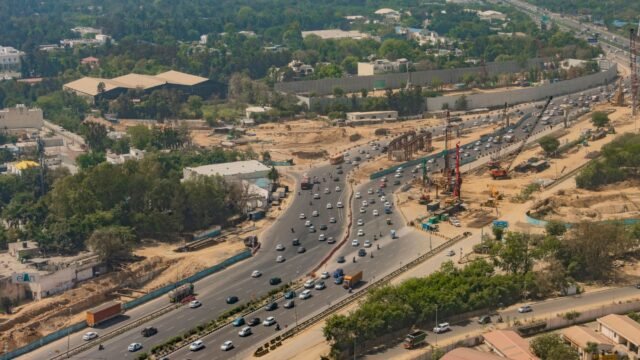
Furthermore, Azad defended the developmental efforts undertaken by various central governments in Jammu and Kashmir. He pointed to significant infrastructure projects, including the construction of roads, tunnels, four-lane highways, and the extension of railway connectivity to Kashmir, as evidence of India’s commitment. Azad cited the tenures of former Prime Ministers Jawaharlal Nehru, Indira Gandhi, Rajiv Gandhi, Atal Bihari Vajpayee, and Manmohan Singh, as well as the current administration led by Prime Minister Narendra Modi, noting that all these governments had prioritized the region’s progress. He firmly stated that any development witnessed in Jammu and Kashmir is a direct result of the Indian government’s initiatives.
Addressing the broader political landscape, Azad argued that political differences with a ruling party should not be misconstrued as hostility towards the nation or its people. He acknowledged his party’s long-standing political opposition to the Bharatiya Janata Party (BJP) and the current government, clarifying that his stance remains neutral. Azad characterized these disagreements as normal features of a democratic system and rejected the notion that the central government or Delhi harbors intentions to undermine Jammu and Kashmir. He expressed complete disagreement with the idea that India or Delhi would seek to harm the region.
When questioned about the ongoing political debate surrounding Abdullah’s remarks, Azad indicated a reluctance to become entangled in the exchanges between the BJP and the National Conference. He suggested that these parties could continue their political disputes amongst themselves, while he maintained his own distinct perspective. Azad’s comments come amidst a complex political climate in Jammu and Kashmir, where discussions about its past, present, and future remain sensitive and often contentious. His intervention adds another layer to the ongoing discourse, emphasizing his party’s position on the historical narrative and developmental trajectory of the region.
The statements by both leaders highlight the divergent viewpoints that persist within the political spectrum of Jammu and Kashmir regarding its relationship with India and the role of Pakistan. Azad’s emphasis on India’s developmental contributions and his direct attribution of violence to Pakistan seeks to counter narratives that he believes misrepresent the ground realities and historical context. His remarks also underscore the importance of distinguishing between political opposition and national sentiment, a point he stressed in his interaction with reporters. The DPAP chief’s public rebuttal of Abdullah’s views signals a clear divergence on a critical issue, potentially shaping future political discourse in the region.
The ongoing political discourse in Jammu and Kashmir often revolves around historical grievances, developmental aspirations, and the complex geopolitical dynamics involving India and Pakistan. Azad’s intervention, by directly challenging Abdullah’s assertions, aims to steer the conversation towards what he perceives as a more accurate representation of facts and contributions. His emphasis on the development achieved under various Indian governments serves as a counterpoint to claims of neglect or hostility from the Centre. This public disagreement between prominent political figures underscores the multifaceted nature of political dialogue in the region, where historical narratives and present-day realities are constantly being debated and reinterpreted.
Azad’s assertion that people in Pakistan-occupied Kashmir desire to be part of India is a significant claim that adds to the ongoing territorial dispute between India and Pakistan. His characterization of Pakistan as the sole perpetrator of violence and terrorism in Jammu and Kashmir since 1947 is a strong indictment that seeks to shift the blame and highlight India’s role in maintaining peace and fostering development. The DPAP chief’s consistent efforts to present a narrative that aligns with the Indian government’s position on these matters, while maintaining his party’s independent political identity, reflect a strategic approach to navigating the complex political terrain of Jammu and Kashmir. His remarks are likely to be met with further debate and discussion from various political factions within and outside the region.

Tahir Rihat (also known as Tahir Bilal) is an independent journalist, activist, and digital media professional from the Chenab Valley of Jammu and Kashmir, India. He is best known for his work as the Online Editor at The Chenab Times.


Leave a Reply