
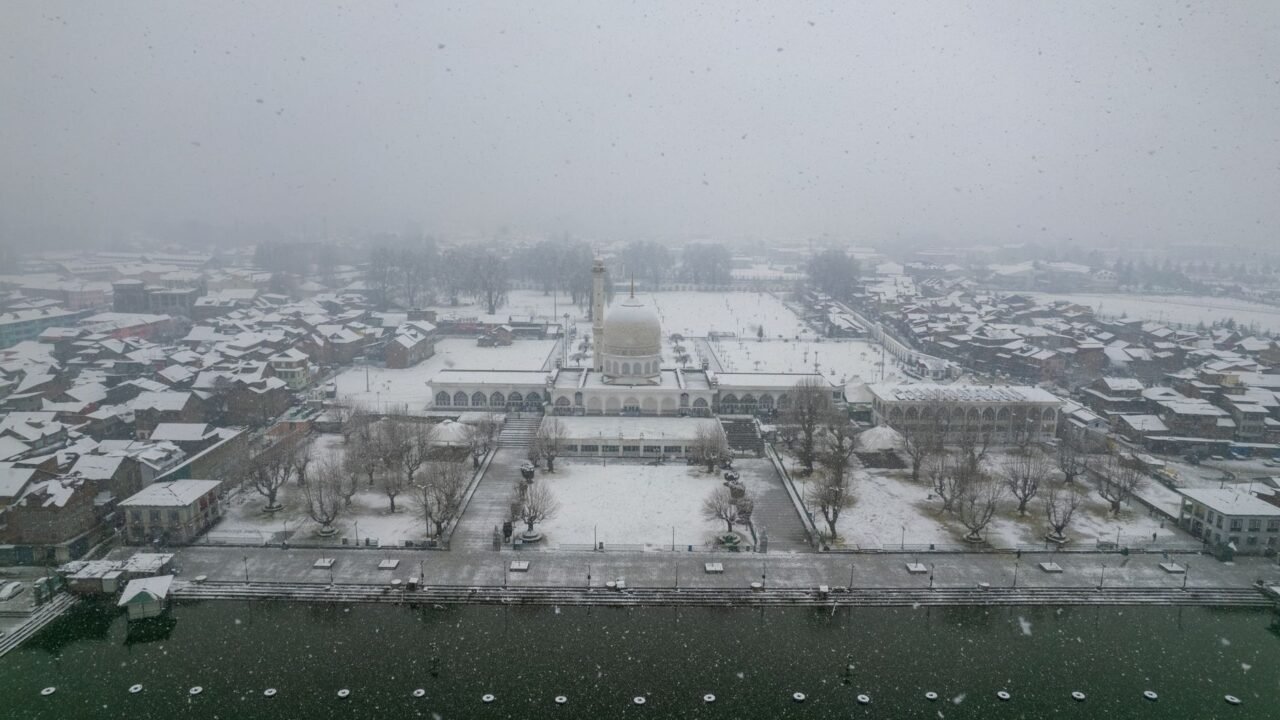
A proposal by the Jammu and Kashmir Waqf Board to standardize Friday sermon themes across its affiliated mosques and religious institutions has ignited a significant political and religious controversy in the Valley. The move has drawn sharp criticism from various political factions and religious organizations, who view it as an unwarranted interference in Muslim religious affairs.
Chief Minister Omar Abdullah vehemently denounced the proposal, terming it an “unacceptable attempt by the BJP to interfere in Muslim religious affairs.” He further stated on the social media platform X that the move would not be accepted under any circumstances and urged the BJP-appointed chairperson to immediately halt this “misplaced attempt to please her masters.” The Jammu and Kashmir Waqf Board is currently headed by senior BJP leader Darakhshan Andrabi.
Information reaching Tahir Rihat suggests that Andrabi later clarified that no formal order had been issued regarding the uniform sermon themes. She explained that following a meeting with clerics and religious scholars last week, the board decided to form a committee tasked with proposing common themes for Friday sermons and other religious occasions. Andrabi elaborated that the intention behind this proposal, as articulated by the scholars themselves, was to ensure that when a particular issue is discussed across society, it has a unified impact, thereby empowering the imams and preachers associated with the board’s institutions.
Peoples Democratic Party (PDP) president and former Chief Minister Mehbooba Mufti also expressed her deep concern over the decision. She characterized it as an intrusion into the religious practices of Muslims. Mufti emphasized that Friday sermons are traditionally shaped by the specific issues and circumstances confronting a particular region or locality. She argued that imposing a uniform template on these sermons disregards the inherent diversity of local realities and undermines the crucial role of religious scholars in guiding their respective communities. Mufti reiterated her long-standing demand for the Waqf Board to be placed under the purview of the elected government.
The Mutahida Majlis-e-Ulema (MMU), a prominent conglomerate of Islamic organizations in Jammu and Kashmir, led by chief cleric Mirwaiz Umar Farooq, stated that it had taken serious note of the reports concerning the Waqf Board’s plan for uniform Friday sermons. The MMU urged the board to confine its activities to its administrative responsibilities, which include the management, maintenance, and protection of Waqf properties entrusted to it, rather than engaging in what they described as a “devious agenda and unnecessary controversy.”
Sajad Lone, chief of the Jammu and Kashmir People’s Conference and Handwara MLA, described the proposal as a “direct interference in religious freedom and pulpit autonomy.” He argued that pre-vetting and deciding Friday sermons through a Waqf Board committee infringes upon the autonomy of religious discourse. The Awami Itihaad Party echoed similar sentiments, labeling the move as an “unwarranted attempt to centralize control over religious discourse.” The party’s chief spokesperson, Inam Un Nabi, questioned the rationale behind the Waqf Board’s involvement in deciding the content of sermons for every imam, stating that “the pulpit of a mosque is not an administrative desk, and an imam is not a spokesperson required to read out an approved script.”
As the Waqf Board faced mounting criticism from political and religious groups on Tuesday, its chairperson reiterated that no formal order had been issued. Andrabi maintained that the proposal originated from the clerics and scholars during a meeting held the previous week. She clarified that decisions in such matters are not made by her alone but by the scholars, preachers, imams, and khateebs associated with the board. She further explained that the consensus during the meeting was that all shrines and mosques under the board, along with their imams, should address a single topic to ensure a cohesive societal impact when discussing pertinent issues.

Tahir Rihat (also known as Tahir Bilal) is an independent journalist, activist, and digital media professional from the Chenab Valley of Jammu and Kashmir, India. He is best known for his work as the Online Editor at The Chenab Times.





Leave a Reply