
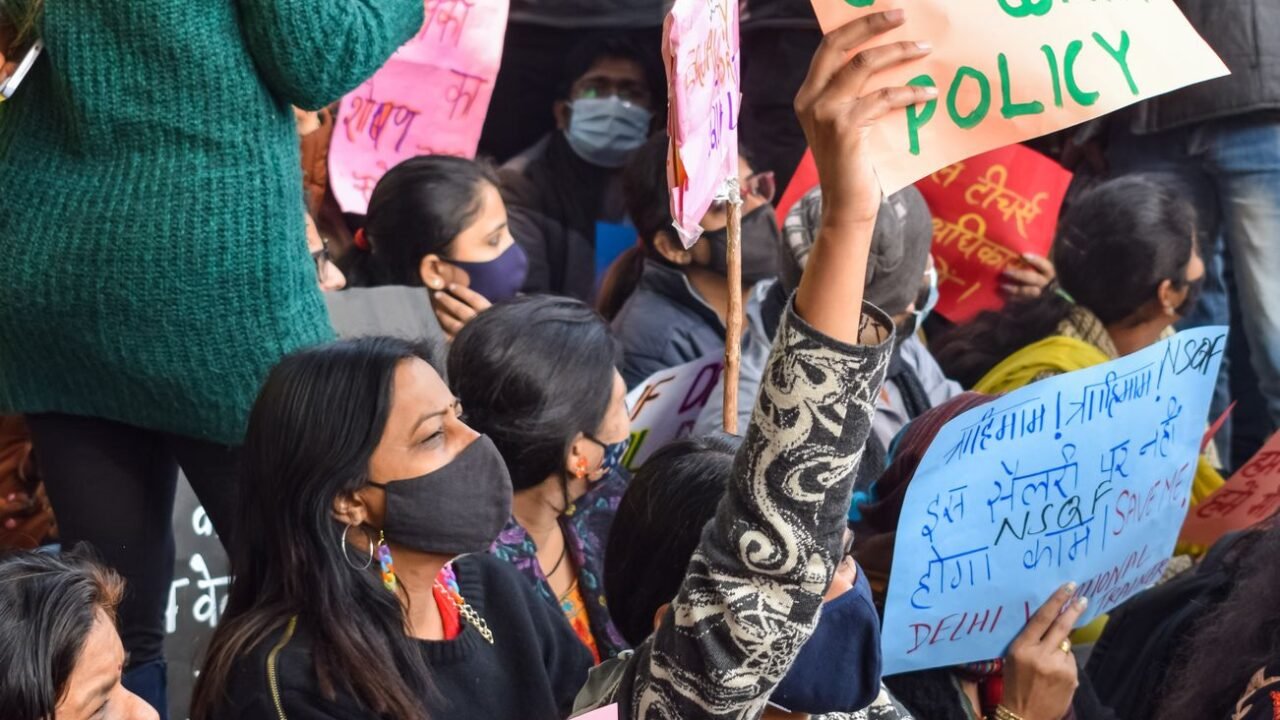
A significant protest against Ladakh‘s new liquor policy, spearheaded by women’s organizations, has been temporarily suspended following an agreement with the Union Territory administration. Climate activist Sonam Wangchuk announced the suspension on Thursday, stating that the administration has acceded to all demands and requested a week to formalize the pact. The women-led demonstrations, which commenced last week, had been advocating for a complete reversal of the policy and for Ladakh to be designated a dry Union territory.
Information reaching Tahir Rihat suggests that the suspension came after a written assurance was provided by the UT administration on October 29. This assurance was conveyed through a letter from the Home Department, signed by Special Secretary Tashi Dolma. The letter reportedly accepted, in principle, all the points and recommendations put forth by the protesting organizations concerning the liquor policy. The four key organizations involved in the protest—the Ladakh Buddhist Association Women Wing, Anjuman-e-Imamia Women Wing, Anjuman Moin-ul-Islam Women Wing, and the Christian Community Women Wing—had been vocal in their objections to the expanded availability of liquor, including recent licenses for bars and wine shops.
The organizations, in a press release, indicated that the UT administration sought a period of one week to finalize the agreement, emphasizing a spirit of dialogue and cooperation. In response to this request, the women’s groups have agreed to pause their planned dharna, which was scheduled to run from October 29 to November 5. This suspension is intended to provide the administration with the necessary time to fulfill its commitment and to codify the agreed-upon points in writing. The organizations characterized the suspension as a demonstration of their trust in the administration’s assurances and expressed gratitude for the widespread support received from the people of Ladakh.
The core of the protest revolved around concerns that the new liquor policy would negatively impact the future of the youth, erode the social fabric of Ladakh, and compromise its distinct cultural and spiritual values. Protesters had been calling for stringent measures to safeguard these aspects of Ladakhi society. The organizations have consistently reiterated their long-standing dedication to fostering a healthier Ladakh, free from alcohol addiction. The administration’s agreement to their demands, even if pending formalization, marks a significant development in the ongoing dialogue between civil society and the governing body regarding social policies in the region.
The initial protests gained momentum as the administration moved to expand liquor availability, a move that many local groups viewed as a departure from the region’s traditional ethos. The issuance of new bar licenses and the establishment of wine shops became focal points of contention. Community leaders and activists argued that such policies could lead to increased social problems and undermine the unique cultural identity of Ladakh. The women’s groups, in particular, played a pivotal role, organizing widespread demonstrations and public awareness campaigns to highlight their grievances and mobilize support across different communities.
The administration’s decision to engage in dialogue and subsequently agree to the demands signals a willingness to address the concerns raised by the community. The one-week timeline for formalizing the agreement will be closely watched by the public and the protesting organizations. The successful implementation of the agreed-upon measures will be crucial in restoring public confidence and ensuring that the social and cultural values of Ladakh are preserved. The outcome of this negotiation could set a precedent for future policy-making in the Union Territory, emphasizing the importance of community consultation and the protection of local traditions.
The activist Sonam Wangchuk, a prominent voice for environmental and social causes in Ladakh, has been a vocal supporter of the women’s protest. His public statements have often highlighted the potential negative consequences of policies that he believes are not aligned with the long-term well-being of the region. His involvement has brought national attention to the issue, underscoring the broader implications of development policies in ecologically and culturally sensitive areas like Ladakh. The current development, where the administration has seemingly conceded to the protesters’ demands, is seen by many as a victory for grassroots activism and community-led advocacy.
The organizations have stressed that while they are suspending the dharna, their commitment to a healthier and alcohol-free Ladakh remains unwavering. They are looking forward to the formalization of the agreement, which they hope will include concrete steps to regulate and potentially restrict the sale and consumption of alcohol. The coming week will be critical in determining the final shape of the liquor policy and its impact on Ladakhi society. The administration’s commitment to respecting the cultural and spiritual values of the region will be tested as it moves to implement the agreed-upon framework.
The protest’s suspension is a testament to the power of collective action and the effectiveness of sustained advocacy. The women of Ladakh have demonstrated remarkable resilience and determination in voicing their concerns and seeking a policy that aligns with their vision for the region. The administration’s response, while positive, will need to be followed by tangible actions to ensure that the trust placed in them by the community is upheld. The focus now shifts to the formalization process and the subsequent implementation of measures that will safeguard the future of Ladakh’s youth and preserve its unique cultural heritage.

Tahir Rihat (also known as Tahir Bilal) is an independent journalist, activist, and digital media professional from the Chenab Valley of Jammu and Kashmir, India. He is best known for his work as the Online Editor at The Chenab Times.





Leave a Reply