
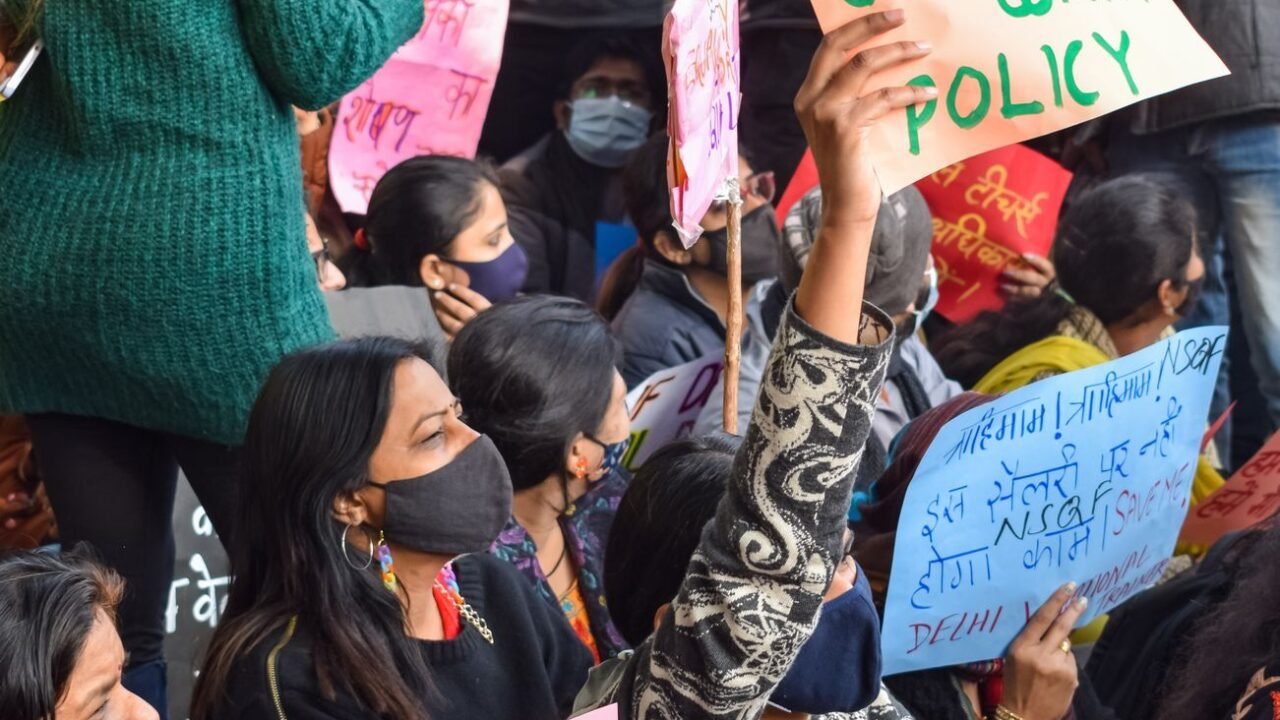
Religious women’s organizations in Leh have agreed to temporarily halt their demonstrations against liquor outlets for a period of one week, following assurances from the Union Territory Administration that their recommendations regarding the region’s liquor policy have been accepted in principle. This development marks a significant pause in the ongoing agitation that has seen considerable public visibility in recent months.
The decision to suspend the protest, which had been a prominent campaign against the UT’s excise policy, came after days of sustained demonstrations by women from various religious communities. These women have been advocating for more stringent regulations on alcohol sales and a greater acknowledgment of Ladakh‘s unique social and cultural sensitivities in the formulation of its liquor policy. Information reaching Tahir Rihat suggests that the Home Department has formally conveyed its acceptance of the recommendations presented in the “proposed interim consensus” document submitted by the collective of religious women’s organizations.
According to a statement released by the protesting groups, the Administration of the Union Territory of Ladakh has indicated its agreement, in principle, with all the points and recommendations put forth by the Religious Women’s Organisations of Ladakh concerning the UT’s liquor policy. The administration has requested a period of one week to finalize the agreement, complete necessary formalities, and issue a comprehensive written document detailing the agreed-upon terms. In response to this request, the women’s organizations have consented to temporarily suspend their dharna, or sit-in protest, from October 29 to November 5.
The protesters emphasized that this suspension should not be interpreted as an end to their movement. Instead, they view it as an opportunity for the administration to demonstrate its commitment by honoring its promises and formalizing all agreed-upon points in writing. This development occurs amidst an ongoing dispute between the administration and prominent Ladakh activist Sonam Wangchuk, who has also been vocal about the liquor policy. Earlier, on Wednesday, the UT administration had refuted Wangchuk’s allegations that it was actively promoting alcohol consumption in Ladakh. The administration maintained that only a single liquor shop was operational within the Union Territory and accused Wangchuk of disseminating “false” and “baseless” claims.
In a subsequent response to the administration’s statement, Sonam Wangchuk asserted that the government had, in fact, rolled back its “infamous liquor policy” due to persistent opposition from civil society and the week-long protest staged by the women’s groups. He questioned the administration’s stance, particularly highlighting the dedication of hundreds of mothers who spent six nights protesting in sub-zero temperatures, implying that such a strong reaction would not have occurred without a significant issue. Wangchuk also alleged that while liquor shops might have been withdrawn, several alcohol bars had been introduced in the region. The administration, however, has consistently maintained that the excise policy was already rolled back on August 26, a decision taken out of deference to public sentiment.
The women’s groups, in their statement, underscored the importance of the administration fulfilling its commitments, stating that the suspension of their protest was contingent upon the formalization of the agreed-upon measures. They expressed hope that the administration would use this period effectively to translate its verbal assurances into concrete policy changes. The agitation had gained significant traction, drawing attention to concerns about the potential impact of increased alcohol availability on the social fabric of Ladakh, a region known for its distinct cultural heritage and often challenging environmental conditions. The women’s organizations have been at the forefront, articulating the community’s anxieties and demanding a policy that aligns with local values and well-being. Their sustained efforts have brought the issue to the forefront of public discourse in the Union Territory.
The administration’s acknowledgment of the women’s recommendations signifies a potential shift in its approach to policy-making, particularly concerning issues that have strong social and cultural implications. The coming week will be crucial in determining whether the administration can successfully navigate the complexities of finalizing the agreement and issuing the comprehensive written document as promised. The outcome of these negotiations is expected to set a precedent for future policy decisions in the Union Territory, particularly those that involve balancing development initiatives with the preservation of local traditions and societal norms. The involvement of religious women’s organizations in leading this protest highlights the deep-seated concerns within the community regarding the proposed changes to the liquor policy and their determination to safeguard their cultural identity.
The dispute with Sonam Wangchuk further illustrates the polarized views on the matter, with the activist questioning the administration’s transparency and motives. His persistent questioning has put pressure on the administration to provide clear and verifiable information regarding its liquor policy and its implementation. The women’s protest, by bringing a significant segment of the population directly into the public sphere, has amplified these concerns and made it difficult for the administration to dismiss them. The temporary suspension of the protest, therefore, is a delicate phase, with both sides awaiting the formalization of the agreement. The administration’s ability to deliver on its promises will be a key determinant of future public trust and engagement on such sensitive issues in Ladakh.

Tahir Rihat (also known as Tahir Bilal) is an independent journalist, activist, and digital media professional from the Chenab Valley of Jammu and Kashmir, India. He is best known for his work as the Online Editor at The Chenab Times.



Leave a Reply