
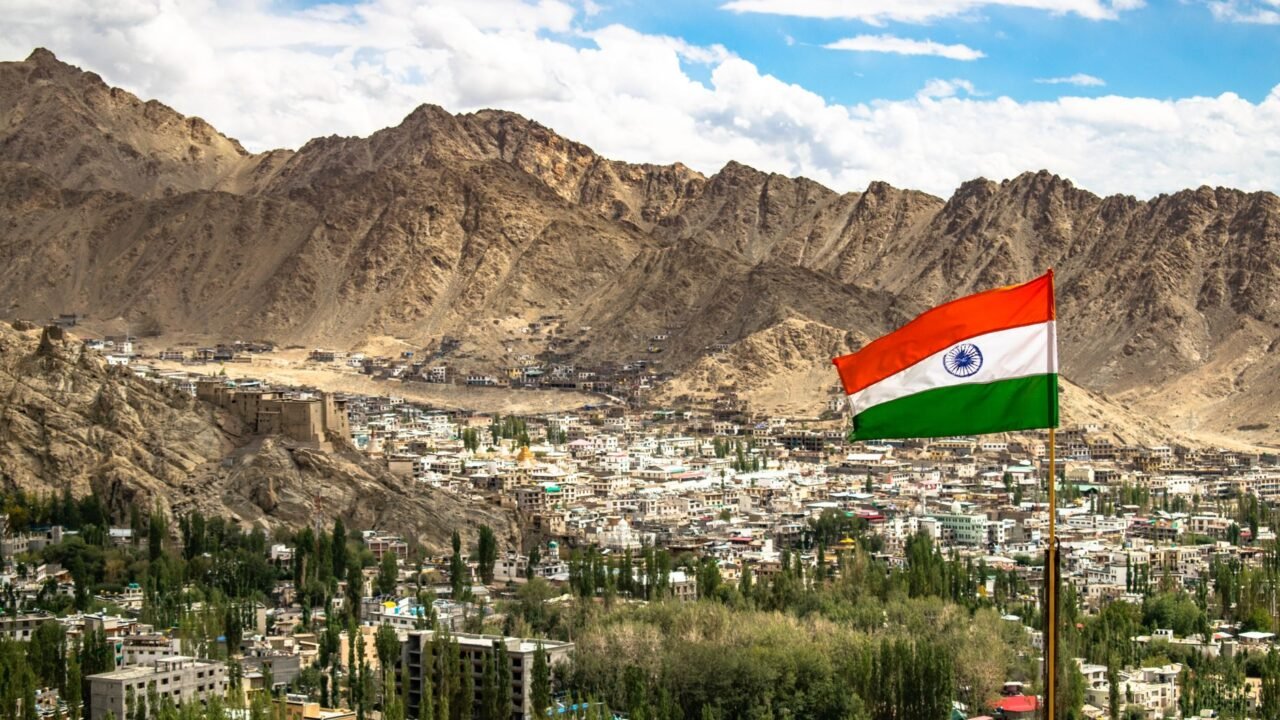
The National Conference (NC) party has expanded the Jammu and Kashmir Cabinet, inducting four new legislators, all hailing from the Kashmir Valley. This strategic move is widely interpreted as an effort to reinforce the party’s support base in the region, particularly following its strong performance in the 2024 Assembly elections where it secured most of its seats in Kashmir, while the Bharatiya Janata Party (BJP) dominated the Jammu region. This cabinet expansion marks the first such reshuffling since the NC returned to power after the aforementioned elections and aims to bring representation to areas previously lacking adequate ministerial presence.
The four newly sworn-in ministers are Ali Mohammad Sagar, Shamim Firdous, Saifullah Mir, and Altaf Ahmad Wani. Notably, Ali Mohammad Sagar and Shamim Firdous, both representing constituencies within Srinagar district, have been inducted. Sagar is the Member of the Legislative Assembly (MLA) for Khanyar, and Firdous represents Habba Kadal. Information reaching Tahir Rihat suggests that by appointing two ministers from Srinagar, the NC is seeking to solidify its hold on the district, which comprises eight Assembly constituencies, seven of which are currently held by the NC, with the remaining seat secured by its alliance partner, the Congress.
North Kashmir’s Kupwara district has also received increased attention in this cabinet reshuffling. Saifullah Mir, the NC legislator from Trehgam, has been appointed as a minister, thereby enhancing the district’s representation in the government. Kupwara district encompasses six Assembly constituencies. In addition to Mir’s induction, Chief Minister Omar Abdullah‘s advisor, Nasir Aslam Wani, and Rajya Sabha Member of Parliament, Chowdry Mohammad Ramzan, also originate from Kupwara. Javid Ahmad Dar, already a minister in the cabinet, also represents north Kashmir, further strengthening the region’s presence.
The expansion has also seen the addition of another minister from South Kashmir. Altaf Ahmad Wani, a two-time MLA representing the Pahalgam constituency, took the oath of office on Tuesday. Political analysts in the Valley view this expansion as a calculated move by the Omar Abdullah-led government to bolster the NC’s organizational and political standing in Kashmir. This strategy is also seen as a measure to counter the influence of the opposition People’s Democratic Party (PDP). The party’s focus on consolidating its position in the Valley is further underscored by the strong mandate it received in the 2024 elections.
However, the cabinet expansion has not been without criticism, particularly concerning regional representation. Omar Abdullah’s decision to drop Independent legislator Satish Sharma, who was the sole representative from the mainland Jammu region in the previous cabinet, has drawn flak. Professor Noor Baba, a political expert based in Srinagar, commented on the development, stating, “It looks as if the NC wants to safeguard its traditionally strong hold in Kashmir. While this may be important, when it comes to voting, people will also judge them in terms of its performance.” The move highlights the ongoing political dynamics and regional considerations within Jammu and Kashmir’s governance structure.
The induction of these four legislators is expected to bring new perspectives and potentially invigorate the administration’s approach to governance in the Kashmir Valley. The NC’s emphasis on consolidating its base in the region signals a strategic prioritization of its core constituencies. The party’s performance in the recent elections has provided a strong mandate, and this cabinet expansion appears to be an attempt to leverage that mandate effectively. The inclusion of ministers from districts like Srinagar and Kupwara suggests a focus on addressing regional aspirations and ensuring balanced development across the Valley.
The political observers also note that this expansion could be aimed at strengthening the NC’s electoral prospects in future elections by ensuring that key regions are adequately represented and their concerns are addressed at the highest level of government. The party’s alliance with the Congress in some constituencies, as seen in Srinagar, also indicates a broader strategy of coalition politics aimed at maximizing electoral gains and ensuring stability.
The exclusion of a representative from the Jammu region from the expanded cabinet is likely to be a point of contention and could fuel further political debate. The balance of regional representation in the cabinet has historically been a sensitive issue in Jammu and Kashmir, and any perceived imbalance can lead to political fallout. The NC’s decision to prioritize representation from the Kashmir Valley, while understandable given its electoral success there, may face scrutiny from political rivals and segments of the population in Jammu.
The effectiveness of this cabinet expansion will ultimately be judged by the performance of the newly inducted ministers and their ability to deliver on the promises made to their constituents and the broader public. The focus on consolidating the party’s base in Kashmir is a clear indication of the NC’s political strategy, but sustained governance and development across all regions will be crucial for its long-term success and public trust. The coming months will likely see further political maneuvering and public discourse surrounding these developments in Jammu and Kashmir.

Tahir Rihat (also known as Tahir Bilal) is an independent journalist, activist, and digital media professional from the Chenab Valley of Jammu and Kashmir, India. He is best known for his work as the Online Editor at The Chenab Times.




Leave a Reply