
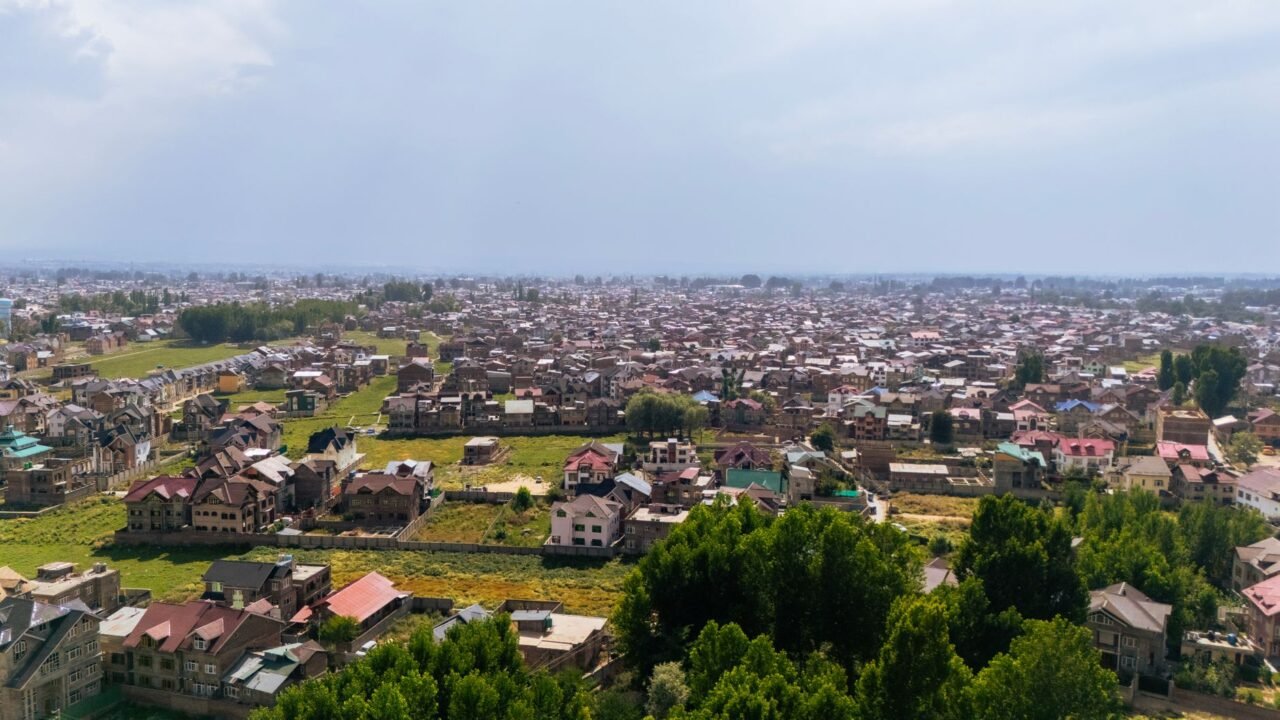
The National Investigation Agency (NIA) has taken a significant step in its ongoing counter-terrorism efforts by attaching a residential property in Srinagar, Jammu and Kashmir. This property, situated in the Danihama area of Hazratbal, is alleged to have been utilized for harboring Pakistani terrorists associated with the banned Lashkar-e-Taiba (LeT) outfit. The move comes as part of a broader investigation into a cross-border terror conspiracy.
The attached property belongs to Ghulam Mohammad Mir, also known as Mama Gas, an accused individual in the case. The NIA’s action was carried out under Section 25 of the Unlawful Activities (Prevention) Act, 1967, following the necessary approval from the agency’s Director General. Officials stated that the investigation has conclusively established a direct link between the property and the alleged terror conspiracy, as the premises were reportedly used to provide sanctuary to Pakistani terrorists and to conceal materials deemed incriminating and connected to the terror network.
Information reaching Tahir Rihat suggests that the case was initially registered at the Zakoora Police Station in Srinagar on March 31 of the current year before being transferred to the NIA for further investigation. The agency’s probe has reportedly uncovered a network of local Over Ground Workers (OGWs) who are alleged to be operating in coordination with LeT handlers based in Pakistan. This network is believed to be facilitating the infiltration, movement, shelter, and logistical support for Pakistani terrorists tasked with carrying out attacks against security forces, government installations, and civilians in the region.
During a search operation conducted at Mir’s residence on April 6, investigators reportedly encountered two individuals identified as Abu Huraira and Khubaib, who are suspected to be Pakistani terrorists affiliated with the LeT. The search also led to the seizure of an explosive-like substance, digital devices, and other incriminating evidence. The NIA has indicated that its investigation has revealed that the accused, Ghulam Mohammad Mir, knowingly provided his house as a safe haven for these terrorists and permitted its use to facilitate their activities.
The agency emphasized that the investigation is continuing with the objective of identifying other OGWs, facilitators, and individuals who may be linked to Pakistan-based handlers and the broader network supporting terrorist activities. This attachment of property represents a concrete action by the NIA to disrupt the financial and logistical backbone of terrorist organizations operating in and from the region. The Unlawful Activities (Prevention) Act provides stringent measures for dealing with unlawful activities and organizations deemed a threat to national security, including the power to attach properties used in or acquired through such activities. The focus on OGWs highlights the NIA’s strategy to dismantle terror networks by targeting local support systems that enable terrorist operations. The agency’s continued efforts aim to dismantle the entire ecosystem that supports terrorism, from foreign handlers to local facilitators and operatives.
The implications of such property attachments extend beyond immediate disruption. They serve as a deterrent to individuals who might consider providing support to terrorist groups, signaling that such actions will not go unpunished and that their assets are vulnerable. The NIA’s methodical approach, involving the identification of specific properties and their alleged links to terror financing and operational support, underscores a commitment to a comprehensive strategy against terrorism. The ongoing investigation into the network of OGWs and facilitators is crucial for understanding the intricate web of support that sustains terrorist activities in Jammu and Kashmir. By targeting these elements, the NIA aims to sever the lines of communication and support that allow for the planning and execution of attacks. The successful prosecution of individuals involved in such conspiracies is vital for restoring peace and security in the region. The agency’s continuous efforts to uncover and dismantle these networks are a testament to the persistent threat posed by cross-border terrorism and the need for robust security measures and legal frameworks to counter it effectively. The seizure of incriminating material and the identification of foreign nationals involved further strengthen the case against the perpetrators and their facilitators. The NIA’s mandate includes investigating terror-related offenses that have inter-state or international ramifications, making its role in cases involving Pakistan-based terror groups particularly critical. The agency’s commitment to thorough investigation and evidence gathering is essential for ensuring justice and preventing future acts of terror. The focus on the entire chain of command and support, from handlers to local operatives, is a strategic imperative in combating modern-day terrorism, which often relies on sophisticated networks and clandestine operations. The attachment of property is a key tool in this strategy, aimed at crippling the financial capacity of terrorist organizations and preventing them from acquiring resources for their nefarious activities. The ongoing investigation is expected to yield further insights into the modus operandi of LeT and its collaborators, contributing to a more effective counter-terrorism strategy.

Tahir Rihat (also known as Tahir Bilal) is an independent journalist, activist, and digital media professional from the Chenab Valley of Jammu and Kashmir, India. He is best known for his work as the Online Editor at The Chenab Times.



Leave a Reply