
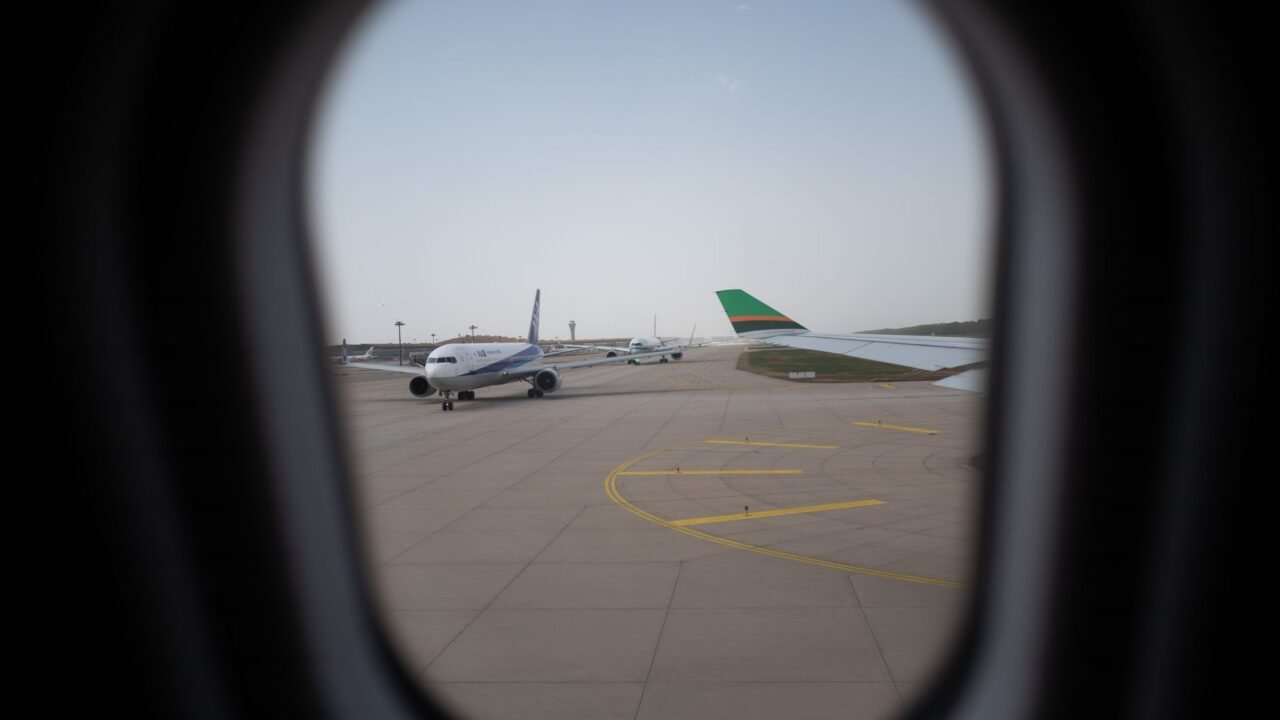
Several airports in Moscow were temporarily closed on Sunday, forcing government aircraft reportedly carrying Russian President Vladimir Putin and his aides to circle in the air or divert to other cities. The disruptions were attributed to drone activity, according to Russian state media reports. The incident occurred as Putin was returning to Russia from Turkmenistan, where he had attended a summit.
Information reaching Tahir Rihat suggests that the airspace over Moscow was restricted for several hours, impacting flights at Vnukovo, Domodedovo, and Sheremetyevo airports. Flight tracking data indicated that at least two government planes, identified as carrying the Russian president and his delegation, were observed circling near the capital before being rerouted. One of these aircraft was reportedly diverted to St. Petersburg.
Russian authorities have not officially confirmed the presence of President Putin on the diverted flights or provided specific details about the drone incidents. However, state news agency RIA Novosti cited airport sources confirming that flights were being redirected due to the presence of unidentified drones. The Russian Ministry of Defense has not yet issued a statement regarding the events.
This latest incident marks another instance of Ukrainian drone activity reaching deep into Russian territory, raising concerns about Russia’s air defense capabilities. In recent months, Ukraine has intensified its drone attacks, targeting various locations within Russia, including military facilities, energy infrastructure, and even the capital itself. These strikes are seen as a response to Russia’s ongoing invasion of Ukraine, which began in February 2022.
The closure of Moscow’s airspace and the diversion of presidential aircraft underscore the escalating nature of the conflict and its potential to impact even the highest levels of Russian government. While Ukraine rarely claims responsibility for specific drone attacks within Russia, its military intelligence has previously indicated a strategy of disrupting Russian logistics and morale through such strikes. The psychological impact of drones operating near the heart of Russia, and potentially threatening the president’s travel, is significant.
The frequency and sophistication of Ukrainian drone attacks have posed a growing challenge to Russian air defenses. Reports from various sources indicate that Ukraine has been developing and deploying a range of unmanned aerial vehicles, some of which are capable of long-range reconnaissance and attack missions. The ability of these drones to penetrate Russian airspace, particularly around the capital, suggests a significant evolution in Ukraine’s asymmetric warfare capabilities.
The economic implications of such disruptions, even if temporary, can also be considerable. Moscow’s airports are major hubs for both domestic and international travel, and prolonged closures can lead to significant delays, cancellations, and financial losses for airlines and related industries. Furthermore, the perception of insecurity in the capital can have broader implications for investor confidence and the overall stability of the Russian economy.
The international community continues to monitor the conflict closely, with many nations expressing concern over the escalating hostilities and the potential for wider regional instability. The use of drones by both sides in the conflict has become a prominent feature, highlighting the evolving nature of modern warfare. The ability of Ukraine to project force into Russian territory, even with drones, is a strategic development that Russia must contend with.
The incident also raises questions about the effectiveness of Russia’s air defense systems, particularly around its most critical infrastructure and political centers. While Russia has claimed to have shot down numerous Ukrainian drones, the fact that such incidents can still cause significant disruptions, including the diversion of presidential travel, suggests ongoing vulnerabilities. The Kremlin has consistently portrayed its air defenses as robust and capable of protecting the nation from external threats.
The ongoing drone warfare is a stark reminder of the protracted nature of the conflict and the asymmetric strategies being employed by both sides. For Ukraine, these strikes serve as a means of retaliation, disruption, and psychological warfare, aiming to demonstrate that the conflict can reach Russian territory. For Russia, it presents a persistent security challenge and a potential blow to its image of invincibility.
The long-term implications of these drone attacks are multifaceted. They contribute to a climate of heightened alert and potential fear within Russia, while also forcing the Russian military to dedicate resources to defending its airspace. The technological advancements in drone warfare are rapidly changing the landscape of military conflict, and both Russia and Ukraine are actively engaged in adapting to these new realities. The continued ability of Ukraine to conduct strikes within Russian territory will likely remain a key factor in the evolving dynamics of the war.

Tahir Rihat (also known as Tahir Bilal) is an independent journalist, activist, and digital media professional from the Chenab Valley of Jammu and Kashmir, India. He is best known for his work as the Online Editor at The Chenab Times.



Leave a Reply