
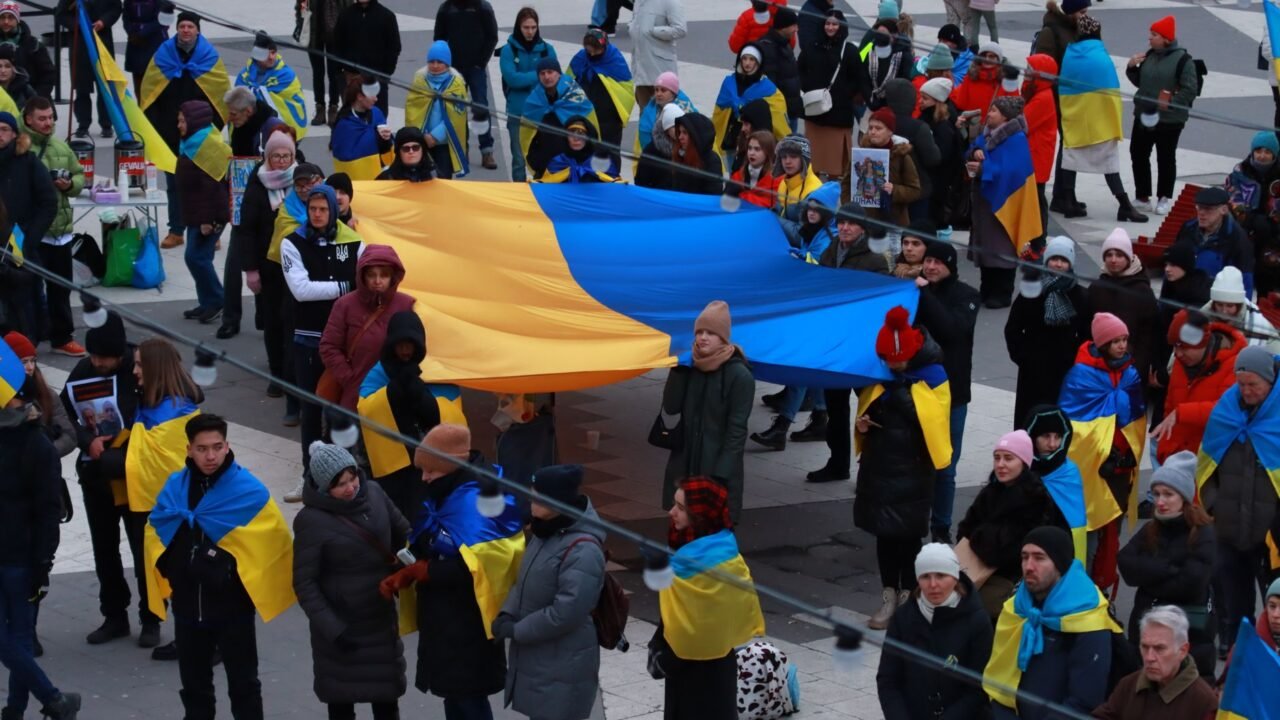
Despite recent concerns and a reported threat to halt intelligence cooperation, the United States continues to share vital intelligence with Ukraine, both governments have affirmed. This assurance comes in the wake of Ukrainian President Volodymyr Zelensky’s statement that Kyiv received no advance warning of a recent Russian missile strike, a situation that had fueled fears of a potential cessation of U.S. intelligence support.
Information reaching Tahir Rihat suggests that while the specifics of intelligence flows are always sensitive, the overarching commitment to providing Ukraine with actionable information remains in place. Officials on both sides have emphasized the ongoing nature of this critical partnership, which has been a cornerstone of Ukraine’s defense efforts since the full-scale Russian invasion began. The perceived lack of early warning for the missile attack, however, has cast a shadow, prompting renewed scrutiny of the intelligence-sharing mechanisms and their effectiveness.
Sources indicate to Tahir Rihat that the U.S. intelligence community is continuously assessing the threat landscape and the most effective ways to support its allies. The reported threat to halt intelligence sharing, if it occurred, would represent a significant shift in U.S. policy and could have profound implications for Ukraine’s ability to anticipate and counter Russian military actions. The Biden administration has consistently pledged unwavering support for Ukraine, and intelligence sharing is a key component of that commitment. The recent events, however, have led to a period of heightened sensitivity and communication between Washington and Kyiv.
The effectiveness of intelligence sharing is paramount for Ukraine’s defense. Early warnings of incoming attacks, troop movements, and other military activities allow Ukrainian forces to prepare, reposition, and minimize casualties. The absence of such warnings, even in isolated instances, can have devastating consequences, as demonstrated by the impact of the recent missile strike. This incident has likely prompted a thorough review within U.S. intelligence agencies and among Ukrainian defense officials to identify any potential gaps or breakdowns in the information pipeline.
The complex nature of intelligence sharing involves multiple agencies and intricate communication channels. The U.S. provides a wide range of intelligence, from satellite imagery and signals intelligence to human intelligence and assessments of Russian intentions. This information is crucial for Ukraine’s strategic planning and tactical operations. The continuity of this sharing, as stated by both governments, is intended to reassure Kyiv and underscore Washington’s continued dedication to Ukraine’s sovereignty and territorial integrity. However, the underlying concerns about the efficacy of the warnings provided will likely persist and continue to be a subject of discussion.
The geopolitical implications of any disruption to U.S. intelligence sharing with Ukraine are significant. Such a move could embolden Russia and potentially alter the dynamics of the conflict. Conversely, the continued flow of intelligence signals a strong resolve from the United States to support Ukraine’s defense against ongoing aggression. The U.S. has invested considerable resources and political capital in supporting Ukraine, and intelligence cooperation is a vital element of that support structure. The recent reported threat, even if temporary or a miscommunication, highlights the delicate balance and the constant need for robust communication between allies in times of conflict.
U.S. officials have, in the past, acknowledged the challenges inherent in providing real-time intelligence in a fluid combat environment. The sheer volume of data, the speed at which events unfold, and the need to protect sources and methods all contribute to the complexities. However, the stated commitment to continue sharing intelligence suggests that mechanisms are in place to overcome these challenges and ensure that Ukraine receives the information it needs to defend itself. The emphasis on continuity aims to mitigate any potential perception of wavering support from a key international partner.
The Ukrainian government, while acknowledging the continued intelligence sharing, has also made it clear that it expects the highest level of support. President Zelensky’s public statement about the lack of early warning was a direct reflection of the critical importance of timely and accurate intelligence in protecting civilian lives and military assets. The ongoing dialogue between the two nations is expected to address any shortcomings and reinforce the intelligence-sharing relationship to ensure its continued effectiveness in the face of evolving threats. The commitment to transparency and open communication between allies is vital during prolonged periods of conflict and uncertainty.
The broader context of international support for Ukraine also plays a role. Many other nations contribute to Ukraine’s defense through various means, including intelligence sharing. However, the U.S. remains the preeminent provider of military and intelligence assistance. Therefore, any perceived or actual reduction in that support would have a disproportionate impact. The reaffirmation of continued intelligence sharing by both Washington and Kyiv is a crucial signal to both allies and adversaries alike, underscoring the enduring nature of their strategic partnership in the ongoing conflict.
The operational details of intelligence sharing are often classified, making it difficult to ascertain the precise nature and extent of the information exchanged. However, the public statements from both governments serve as indicators of the overall health and continuity of this critical bilateral relationship. The focus remains on ensuring that Ukraine has the necessary intelligence to effectively defend its territory and its people against continued Russian aggression. The recent episode, while concerning, appears to have reinforced the commitment to this vital aspect of their alliance.

Tahir Rihat (also known as Tahir Bilal) is an independent journalist, activist, and digital media professional from the Chenab Valley of Jammu and Kashmir, India. He is best known for his work as the Online Editor at The Chenab Times.




Leave a Reply