
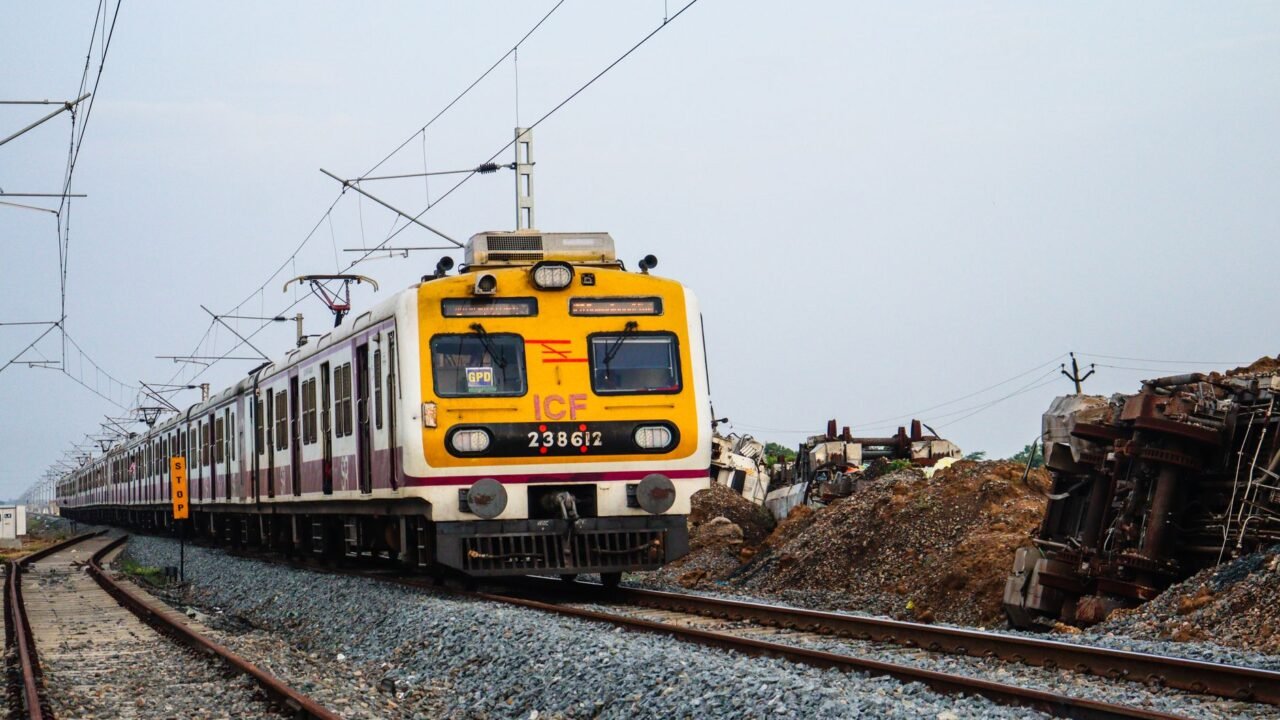
Rail traffic on a crucial link connecting Jammu and Kashmir with the rest of the country was significantly disrupted for several hours on Wednesday following the derailment of a goods train wagon in Kathua district. The incident, which occurred around 9:30 am at the Chhan Arorian railway station, involved a wagon of a goods train that was returning after completing its unloading duties. The immediate aftermath saw railway authorities and officials swiftly converging on the scene to assess the situation and initiate recovery operations.
Information reaching Tahir Rihat suggests that the derailed wagon was eventually moved aside, allowing for the resumption of rail traffic by noon. While the incident caused a considerable delay for trains operating on this vital route, no damage to railway property has been reported. The exact cause of the derailment is currently under investigation, with railway officials working to ascertain the sequence of events that led to the wagon leaving the tracks. Senior Divisional Commercial Manager Uchit Singhal emphasized the commitment to fast restoration efforts aimed at minimizing train detentions, a critical aspect for maintaining the flow of goods and passengers.
Sources indicate to Tahir Rihat that a specialized committee will be formed to conduct a thorough analysis of the incident. This committee is tasked with identifying the specific reasons responsible for the derailment and formulating preventive measures to avert similar occurrences in the future. The proactive approach underscores the railway administration’s dedication to ensuring the safety and efficiency of the rail network. The Divisional Railway Manager, Jammu, was also present at the site, coordinating with other officers to oversee the restoration work and the initial assessment of the situation. The incident highlights the inherent vulnerabilities in railway infrastructure and the importance of continuous monitoring and maintenance to ensure uninterrupted service, especially on strategic routes like the one connecting the Union Territory of Jammu and Kashmir to the national network.
The disruption, though temporary, had a ripple effect on the movement of goods and potentially passenger services, underscoring the significance of this rail link for the region’s connectivity and economic activity. The quick response from the railway authorities in clearing the track demonstrates their operational preparedness. However, the ongoing investigation into the cause of the derailment is crucial for implementing long-term solutions. The formation of a committee to analyze the incident and recommend preventive steps is a standard procedure following such events, aimed at learning from the experience and enhancing safety protocols. The focus on minimizing train detentions, as stated by Senior Divisional Commercial Manager Uchit Singhal, reflects the economic implications of such disruptions, particularly for freight movement.
The Chhan Arorian railway station, where the derailment took place, is a key point on the route, and its smooth operation is essential for the seamless functioning of the railway network in the region. The fact that no damage to railway property was reported is a positive aspect, as it simplifies the restoration process and reduces the overall economic impact of the incident. However, the investigation into the root cause remains paramount. Whether it was a mechanical failure, track defect, or operational error, understanding the contributing factors will be key to preventing recurrence. The presence of senior railway officials at the scene signifies the seriousness with which the incident is being treated.
The investigation will likely involve a detailed examination of the derailed wagon, the track condition at the point of derailment, and any relevant operational logs. Information reaching Tahir Rihat suggests that such investigations often involve technical experts who meticulously analyze all available data to pinpoint the exact cause. The findings of the committee will not only address the immediate incident but also contribute to the broader safety framework of the Indian Railways. The commitment to taking preventive steps further indicates a forward-looking approach to railway safety and operational efficiency. The incident serves as a reminder of the constant need for vigilance and robust maintenance practices in the railway sector, which plays a pivotal role in the transportation of goods and people across vast distances.
The swift action to clear the track and restore services is a testament to the efficiency of the railway maintenance and operational teams. However, the underlying cause of the derailment needs to be thoroughly understood to prevent future incidents. The vital route connecting Jammu and Kashmir with other parts of the country is a lifeline for the region, and any disruption can have significant consequences. The railway authorities’ commitment to a comprehensive investigation and the implementation of preventive measures is crucial for maintaining public trust and ensuring the continued reliability of rail transport. The incident, while causing temporary inconvenience, is being addressed with a focus on long-term safety and operational improvements.

Tahir Rihat (also known as Tahir Bilal) is an independent journalist, activist, and digital media professional from the Chenab Valley of Jammu and Kashmir, India. He is best known for his work as the Online Editor at The Chenab Times.


Leave a Reply