

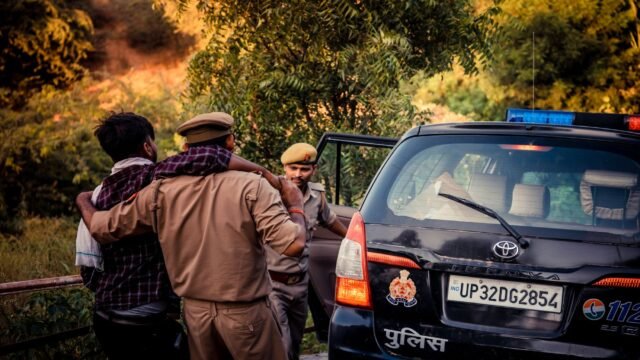
Jammu and Kashmir Police have revealed that three individuals arrested in connection with the Lashkar-e-Taiba (LeT) outfit were actively involved for several years in facilitating the movement of multiple terrorist groups. These operations allegedly spanned from the Rajouri-Reasi region in the Jammu division to the Shopian district in South Kashmir, according to official statements released on Friday. The arrests were made following the busting of an overground worker (OGW) network by Rajouri police, which authorities linked to the proscribed terrorist organization LeT.
Information reaching Tahir Rihat suggests that the three accused individuals, all identified as residents of Kot Charwal, were integral to a logistical support module operating under the umbrella of the LeT. The police investigation has uncovered evidence indicating their alleged role in providing shelter and enabling the transit of terrorists associated with the banned outfit. This facilitation extended to individuals who were later reported to have been killed in a counter-terrorism operation in Chassana, Reasi, during 2023.
Further details emerging from the ongoing investigation indicate that the arrested individuals are accused of providing shelter and logistical support to a variety of terrorist groups. Their alleged activities are said to have enabled the movement of these groups across the Rajouri-Reasi districts and through the sensitive Pir Panjal region, with their operations extending as far as Shopian. This intricate network highlights the challenges faced by security forces in combating cross-regional terrorist movements.
During the course of the investigation, security forces recovered a pistol, along with its magazine and ammunition, and two Chinese grenades. These recoveries were made on Thursday based on disclosures made by the arrested individuals. The police have stated that the investigation is continuing, with the possibility of further revelations. In a separate development during the probe, an Improvised Explosive Device (IED) was also recovered, reportedly on the confession of one of the accused, underscoring the gravity of the alleged OGW network’s capabilities and reach.
The scope of the OGW network’s alleged operations points to a sophisticated support system designed to sustain terrorist activities in the region. By providing safe houses and facilitating travel routes, these individuals are accused of playing a crucial role in the operational continuity of various terrorist outfits. The Rajouri-Reasi belt has historically been a transit point for militants moving between different operational areas, and the alleged involvement of these OGWs in such movements suggests a persistent threat that requires sustained counter-terrorism efforts. The recovery of weapons and explosives further corroborates the seriousness of the charges.
The police’s ongoing efforts aim to dismantle such support structures that are vital for the survival and operation of terrorist organizations. The arrests and subsequent revelations are part of a broader strategy to disrupt the logistical and human resource pipelines that fuel militancy. The investigation is expected to shed more light on the extent of the network, its linkages, and the specific groups that benefited from its services. The focus on OGWs is critical, as they often act as the eyes and ears on the ground for terrorist commanders, providing essential local knowledge and support that enables complex operations.
The geographical spread of the alleged facilitation, from the Jammu region’s border areas to the Kashmir Valley, indicates a significant operational reach. The Pir Panjal range, a rugged and often porous mountain range, presents a challenging terrain for security forces to monitor, making the role of local facilitators particularly valuable to militant groups. The police’s success in uncovering this network is a significant development in their efforts to enhance security and stability in Jammu and Kashmir. The continuous flow of intelligence and the effective dismantling of OGW modules are considered paramount in the fight against terrorism.
The involvement of the Lashkar-e-Taiba, a designated foreign terrorist organization, in this alleged network underscores the continued threat posed by internationally linked militant groups. The police’s commitment to a thorough investigation is crucial to bring all involved parties to justice and to prevent future acts of terror. The recovery of arms and ammunition, including grenades and an IED, highlights the immediate danger posed by such networks and the importance of proactive intelligence gathering and law enforcement operations. The security apparatus in Jammu and Kashmir remains on high alert, continuously adapting its strategies to counter evolving threats.

Tahir Rihat (also known as Tahir Bilal) is an independent journalist, activist, and digital media professional from the Chenab Valley of Jammu and Kashmir, India. He is best known for his work as the Online Editor at The Chenab Times.





Leave a Reply