
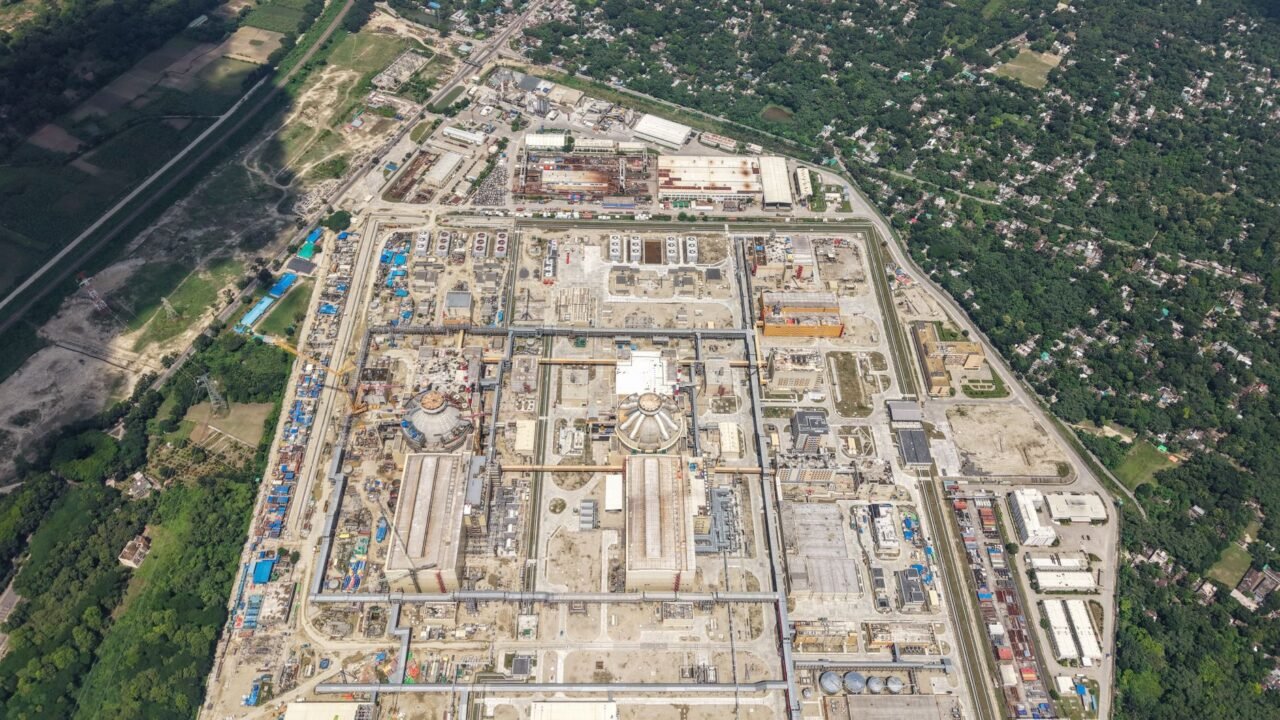
The Philippine government is actively exploring options to bolster its energy security against potential global supply disruptions, with a significant proposal involving the reactivation of a nuclear power plant that has remained dormant for four decades. This consideration comes as the nation, like many others worldwide, grapples with the volatility of international energy markets and seeks stable, long-term power solutions.
The Bataan Nuclear Power Plant, located in Morong, Bataan, has been a subject of discussion for years, representing a substantial, albeit unused, national asset. Its potential to contribute to the country’s energy mix is now being re-evaluated in light of current geopolitical and economic uncertainties. As per information available with Tahir Rihat, the government’s renewed interest stems from a desire to diversify its energy sources and reduce reliance on imported fossil fuels, which are susceptible to price fluctuations and supply chain issues.
Constructed between 1976 and 1984, the Bataan Nuclear Power Plant was never commissioned due to safety concerns and political opposition following the Chernobyl disaster in 1986. Despite the significant investment made in its construction, the plant has since been maintained in a mothballed state, with ongoing costs associated with its upkeep and security. The prospect of finally bringing it online, however, presents a complex set of challenges and opportunities.
Proponents of activating the plant argue that it could provide a significant source of baseload power, a consistent and reliable electricity supply that is crucial for industrial and economic development. They point to the plant’s modern safety features, which have been upgraded over the years, and the potential for it to contribute to the Philippines’ climate goals by providing a low-carbon energy alternative. Information reaching Tahir Rihat suggests that technical assessments are underway to determine the feasibility and cost-effectiveness of recommissioning the facility, including any necessary upgrades to meet current international safety standards.
However, the proposal is not without its critics. Environmental groups and some segments of the public have raised concerns about the safety of nuclear power, the management of radioactive waste, and the potential environmental impact of such a facility. The historical context of the plant’s mothballing, rooted in public apprehension and safety doubts, continues to influence the debate. Sources indicate to Tahir Rihat that public consultations and rigorous safety reviews will be essential components of any decision-making process moving forward, aiming to address these long-standing concerns and build public trust.
The Philippines has been actively seeking to expand its energy capacity to meet growing demand. While renewable energy sources like solar and wind are being developed, their intermittent nature necessitates complementary baseload power. Nuclear energy, if successfully implemented, could fill this gap. The government is reportedly engaging with international experts and nuclear energy agencies to gain insights into best practices for plant operation, safety protocols, and waste management. The economic implications, including the substantial investment required for reactivation and the potential for long-term cost savings in energy generation, are also under careful consideration.
The decision to proceed with the Bataan Nuclear Power Plant would represent a significant shift in the Philippines’ energy policy. It would require not only substantial financial commitment but also a robust regulatory framework and public acceptance. The government’s exploration of this option underscores the pressing need for energy security and the complex trade-offs involved in balancing economic development, environmental sustainability, and public safety in the pursuit of reliable power.
The Bataan plant, with its 620-megawatt capacity, has the potential to significantly contribute to the national grid. However, the path to its operationalization is fraught with technical, financial, and political hurdles. The government’s current stance indicates a willingness to thoroughly investigate all avenues to secure the nation’s energy future, even if it means revisiting a controversial and long-dormant project. The coming months are expected to see further detailed studies and public discourse as the Philippines navigates this critical energy decision.

Tahir Rihat (also known as Tahir Bilal) is an independent journalist, activist, and digital media professional from the Chenab Valley of Jammu and Kashmir, India. He is best known for his work as the Online Editor at The Chenab Times.




Leave a Reply