
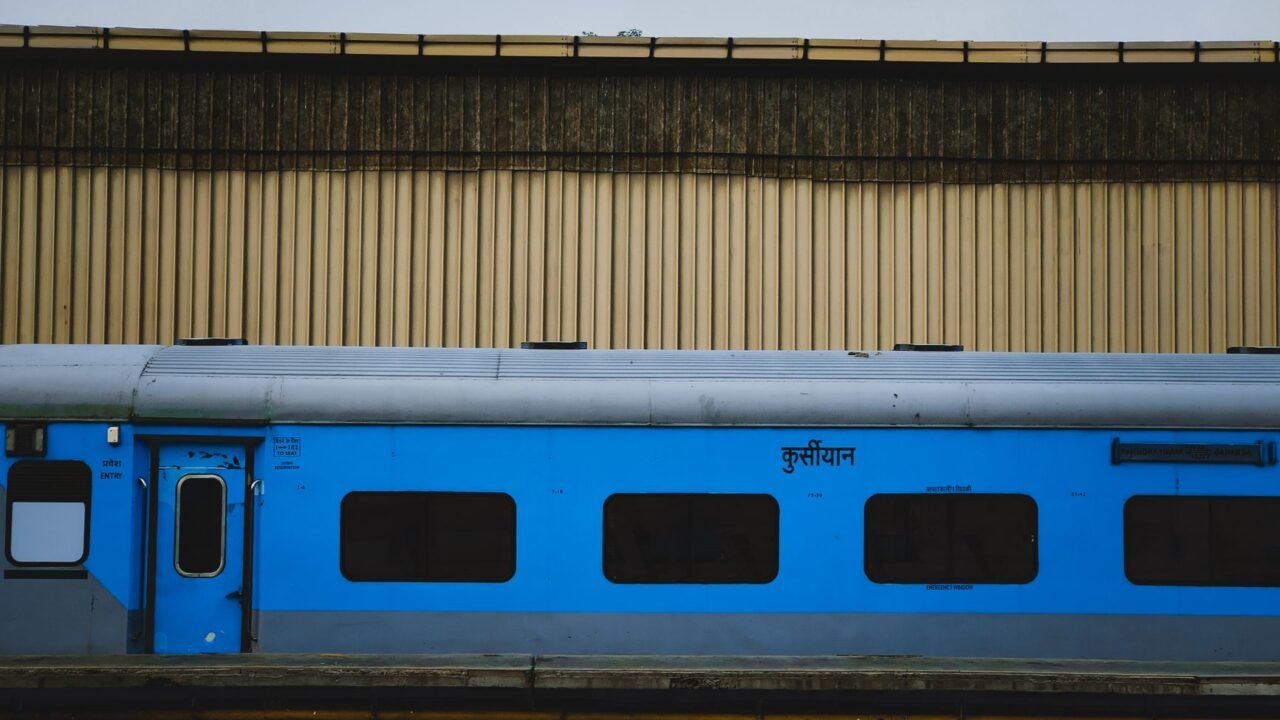
The modernization of railway stations across India is accelerating, with 75 stations having undergone redevelopment at a cumulative cost of Rs 1,570 crore under the central government’s Amrit Bharat Station Scheme (ABSS). This initiative, which includes significant upgrades to stations in Punjab, Haryana, and Himachal Pradesh, is also seeing four major railway facilities in Jammu and Kashmir being brought up to modern standards. Information reaching Tahir Rihat suggests that this nationwide drive aims to transform these transit points into sophisticated transport hubs.
In Punjab, the stations of Jalandhar Cantt, SAS Nagar (Mohali), Sri Anandpur Sahib, and Sri Muktsar Sahib have been redeveloped as part of the scheme. Haryana has witnessed the redevelopment of Kalka and Narwana stations, while Amb Andaura in Himachal Pradesh has also been upgraded. The Indian Railways has confirmed that the modernization efforts extend to Jammu and Kashmir, where Budgam, Jammu Tawi, Martyr Captain Tushar Mahajan, and Shri Mata Vaishno Devi Katra stations are currently being enhanced under the ABSS.
At Budgam station, improvements have been completed for the circulating area, parking facilities, and the approach road. Additionally, work is underway for a 12-meter-wide foot overbridge, enhancements to the station building, and the construction of a new waiting hall and an executive lounge equipped with booking counters. Jammu Tawi station has already seen the completion of several key projects, including the construction of a new station building at the second entry, the development of its circulating area and parking facilities, the addition of new platforms and platform shelters, and the establishment of an electrical sub-station and an entrance ramp. Similarly, at Martyr Captain Tushar Mahajan station, upgrades to the station building, circulating area, parking, approach road, toilets, waiting rooms, entrance porch, and signage have been finalized.
The Shri Mata Vaishno Devi Katra railway station, a critical gateway for pilgrims visiting the revered shrine, is currently in the master-planning phase of its redevelopment. The Amrit Bharat Station Scheme is designed to redevelop a total of 1,340 railway stations nationwide into modern transport hubs. These hubs are envisioned to offer enhanced passenger amenities, seamless multimodal connectivity, and architectural features that reflect the local culture, heritage, and identity of their respective regions. The scheme, launched by the Ministry of Railways in December 2022, is conceived as a long-term strategic initiative focused on transforming railway stations into integrated city centers rather than merely undertaking superficial renovations.
To date, 261 railway stations have been redeveloped under this comprehensive program. The redevelopment process encompasses the construction of modern station buildings and waiting halls, the widening of foot overbridges and air concourses, improvements to circulating and parking areas, the implementation of Divyangjan-friendly facilities, and the installation of modern signage and passenger information systems. Executive lounges are also being incorporated, and where feasible, sustainable and city-integrated designs are being employed. Funding for these station development projects, including those under the ABSS, is typically allocated under Plan Head-53, designated for ‘Customer Amenities.’ The allocation and expenditure for this head are managed on a zone-wise basis by the Zonal Railways, rather than being tracked station-wise or state-wise.
This latest phase of redevelopment marks the second significant nationwide dedication of redeveloped railway stations under the Amrit Bharat Station Scheme by Prime Minister Narendra Modi. Previously, on May 22, 2025, he had inaugurated 103 redeveloped railway stations spread across 18 states and Union Territories. As construction and redevelopment continue in phases across the country, the Amrit Bharat Station Scheme has emerged as one of the central government’s most extensive railway station modernization programs. Its objective is to combine improved passenger facilities with enhanced connectivity, accessibility, and regional architectural character.

Tahir Rihat (also known as Tahir Bilal) is an independent journalist, activist, and digital media professional from the Chenab Valley of Jammu and Kashmir, India. He is best known for his work as the Online Editor at The Chenab Times.





Leave a Reply