
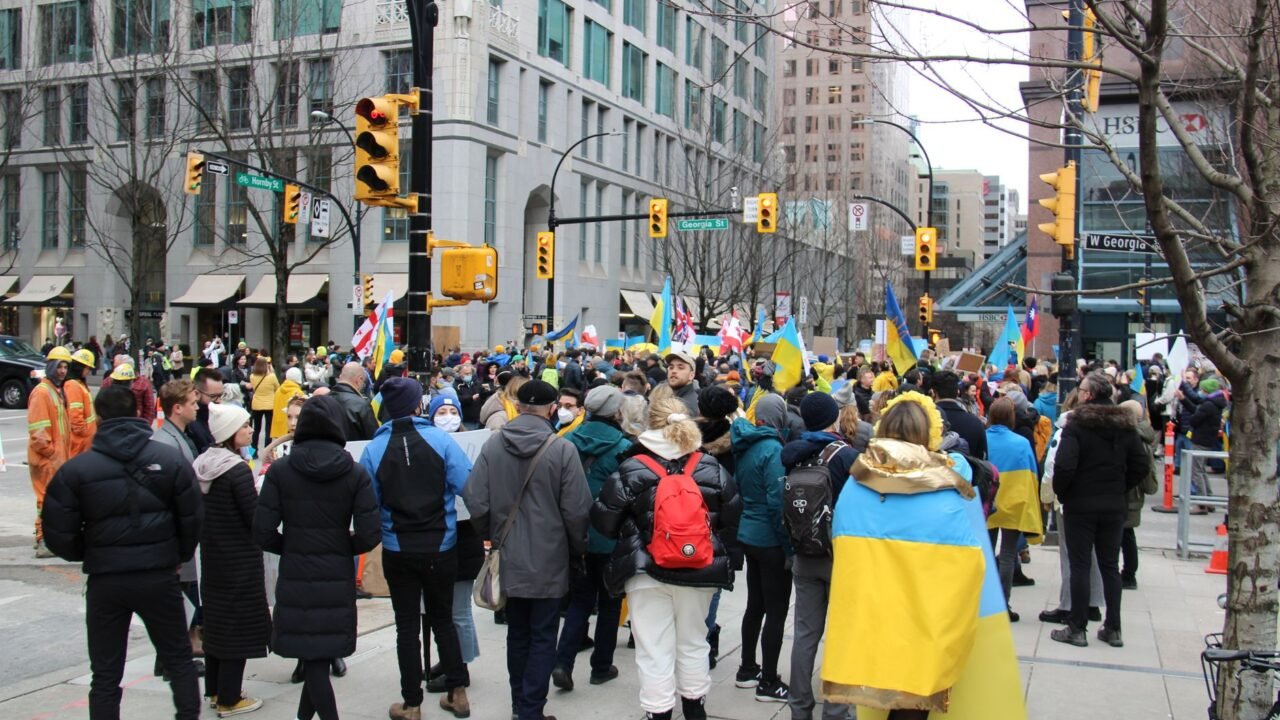
A significant rally took place in Calgary, drawing a crowd that voiced strong support for a united Canada as the province of Alberta approaches a crucial vote on its potential secession. The event underscored the deepening divisions within the nation and the heightened stakes surrounding the upcoming referendum.
Prime Minister Mark Carney was among the prominent figures who addressed the gathering, delivering a passionate plea for national cohesion and issuing stark warnings about the perilous consequences of political fragmentation. His remarks resonated with attendees who expressed concerns about the future of Canada and the potential ramifications of Alberta charting an independent course.
Information reaching Tahir Rihat suggests that the rally was organized by a coalition of groups advocating for federalism and the preservation of Canadian unity. Speakers at the event highlighted the economic, social, and cultural ties that bind the country together, emphasizing that separation would inflict irreparable damage on all regions. The sentiment among many participants was that the referendum represented a critical juncture for Canada, demanding a robust defense of its foundational principles.
The referendum, scheduled for later this year, asks Albertans whether the province should pursue greater autonomy or consider separation from Canada. The campaign leading up to the vote has been marked by intense debate, with proponents of secession arguing that Alberta’s resource-rich economy is being unfairly exploited by the federal government and that the province’s distinct identity is not adequately represented. Opponents, however, contend that such a move would lead to economic ruin, isolate Alberta internationally, and undermine the very fabric of Canadian democracy.
Analysts observing the political landscape in Canada have noted that the Alberta secession movement, while not new, has gained considerable traction in recent years, fueled by a complex interplay of economic grievances, cultural differences, and a perception of political marginalization. The federal government, under Prime Minister Carney’s leadership, has been actively engaged in trying to assuage these concerns, emphasizing shared national interests and the benefits of interprovincial cooperation. However, the deep-seated frustrations within Alberta have proven challenging to address through conventional political means.
The Calgary rally served as a powerful demonstration of the counter-movement, aiming to mobilize public opinion against secession and to send a clear message to both provincial and federal leaders. Organizers stated that their objective was to foster a sense of shared responsibility and to remind Albertans of the historical and ongoing contributions of the broader Canadian federation to their prosperity and way of life. The presence of national political figures underscored the national significance of the Alberta situation, with implications extending far beyond the provincial borders.
The economic arguments presented by both sides of the secession debate are particularly potent. Proponents of separation often point to Alberta’s substantial oil and gas reserves, suggesting that the province could thrive independently by controlling its own resource wealth. They argue that current federal policies hinder resource development and that a sovereign Alberta could forge its own trade agreements and fiscal policies. Conversely, opponents highlight the intricate economic interdependence of Canadian provinces, noting that Alberta benefits significantly from access to national markets, federal infrastructure investments, and a stable national currency. They warn of trade barriers, capital flight, and a loss of investor confidence should Alberta pursue independence.
Beyond economics, cultural and identity issues also play a significant role. Those advocating for secession often feel that Alberta’s conservative values and resource-based economy are at odds with the more liberal and diversified economies of Central and Eastern Canada. They express a desire for greater self-determination and the ability to shape their own social and political future without federal interference. Critics of secession argue that such a move would lead to a fractured national identity and could embolden other regions with separatist sentiments, potentially leading to the disintegration of Canada as a unified nation.
The political ramifications of an Alberta secession would be profound. It would necessitate complex negotiations regarding national assets, debt allocation, and international treaties. Furthermore, it could trigger a constitutional crisis, forcing a re-evaluation of the nature of Canadian federalism and the rights of constituent provinces. The international community would also be watching closely, as the stability of a G7 nation is of considerable geopolitical importance.
The outcome of the referendum remains uncertain, with opinion polls showing a divided electorate. The rally in Calgary, however, indicates a strong segment of the population remains committed to the idea of a united Canada. The coming weeks are expected to see intensified campaigning from both sides, as they seek to sway undecided voters and solidify their support bases. The federal government is reportedly exploring further measures to address Albertan grievances, though the specifics of any new initiatives have yet to be announced. The situation continues to evolve, with the future of Alberta and, by extension, Canada hanging in the balance.
The debate also touches upon historical narratives and the founding principles of Canada. Many who oppose secession emphasize the vision of a diverse and inclusive nation built on compromise and cooperation between distinct regions. They argue that the challenges faced by Alberta are not unique and can be addressed within the existing federal framework through dialogue and policy adjustments. The rally’s organizers aimed to tap into this narrative, reminding attendees of the sacrifices and efforts made by past generations to forge and maintain the Canadian federation.
The political rhetoric surrounding the referendum has often been charged, with accusations of betrayal and disloyalty exchanged between federalists and separatists. Prime Minister Carney’s address in Calgary was seen by many as an attempt to de-escalate the tensions and to appeal to a sense of shared patriotism. His emphasis on the dangers of division was a direct response to the increasingly strident calls for separation emanating from some quarters in Alberta. The federal government’s strategy appears to be one of engagement and reassurance, aiming to demonstrate that Ottawa is responsive to Albertan concerns without conceding to demands that could undermine national unity.
The economic implications of a potential separation are a primary focus for many voters. Projections from various economic think tanks offer conflicting scenarios, with some predicting economic hardship for an independent Alberta, while others suggest a path to prosperity through resource independence and new trade relationships. The uncertainty surrounding these economic forecasts adds another layer of complexity to an already contentious debate. The rally aimed to counter some of the more optimistic secessionist economic narratives by highlighting the interconnectedness of the Canadian economy.
As the referendum date draws nearer, the intensity of the public discourse is expected to increase. The Calgary rally represents a significant moment in the campaign, showcasing the strength of feeling among those who champion Canadian unity. The coming days and weeks will be critical in shaping the final outcome, with both federal and provincial political actors working to influence public opinion and navigate the complex challenges ahead.

Tahir Rihat (also known as Tahir Bilal) is an independent journalist, activist, and digital media professional from the Chenab Valley of Jammu and Kashmir, India. He is best known for his work as the Online Editor at The Chenab Times.




Leave a Reply