
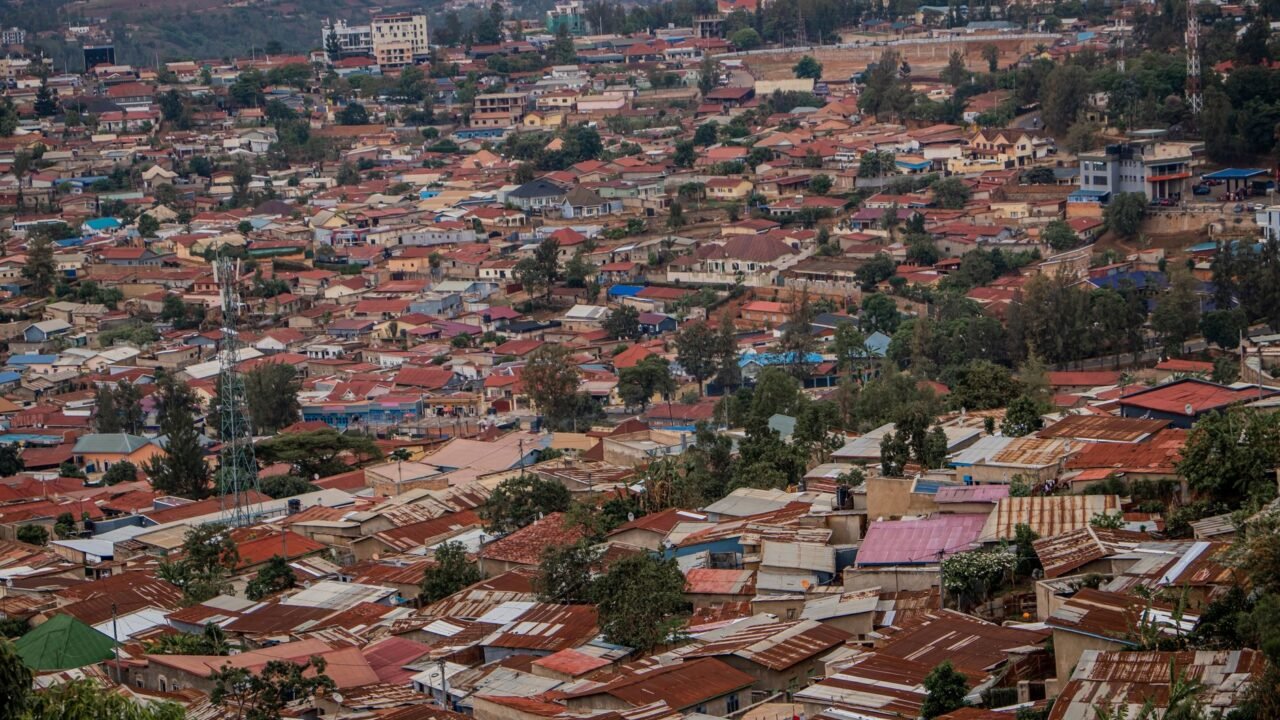
The United States has levied new sanctions against Rwanda, accusing the nation of undermining a peace agreement brokered by Washington through its alleged support for a rebel group operating in the eastern Democratic Republic of Congo. The Treasury Department announced the measures on Friday, detailing accusations that Rwanda’s backing of the M23 rebel movement has significantly contributed to the ongoing instability and humanitarian crisis in the region.
This development marks a significant escalation in U.S. policy towards Rwanda, a country previously lauded for its role in regional security efforts. The sanctions signal a strong disapproval of Kigali’s alleged actions, which the U.S. government contends are in direct opposition to diplomatic efforts aimed at resolving the protracted conflict in eastern Congo. Information reaching Tahir Rihat suggests that the sanctions are intended to pressure Rwanda into ceasing its alleged support for the M23 rebels, a move that has been a major point of contention between Rwanda and the Democratic Republic of Congo for years.
The Treasury Department’s statement outlined that Rwanda’s actions have exacerbated the violence and displacement of civilian populations in eastern Congo, a region that has been plagued by numerous armed groups for decades. The M23 rebel group, which re-emerged in late 2021, has been accused by the Congolese government and the United Nations of receiving direct support from Rwandan forces. These accusations have been consistently denied by Rwandan officials, who have instead pointed to the internal dynamics of the DRC and the presence of other armed factions, including those hostile to Rwanda, as the primary drivers of conflict.
The U.S. has been actively involved in diplomatic initiatives to de-escalate tensions between the two neighboring countries. These efforts have included high-level engagements and the promotion of regional peace frameworks, such as the Luanda and Nairobi processes, which aim to achieve a ceasefire and the disarmament of armed groups. The imposition of sanctions by the Treasury Department, however, indicates a belief within the U.S. administration that diplomatic channels alone have not been sufficient to alter Rwanda’s alleged behavior. The sanctions are designed to target individuals and entities believed to be involved in supporting the M23, potentially impacting their access to the U.S. financial system and restricting their ability to conduct international transactions.
The conflict in eastern Congo has led to a severe humanitarian crisis, with millions displaced and widespread reports of atrocities committed by various armed factions. The M23’s resurgence has been particularly destabilizing, leading to renewed fighting and a significant increase in civilian casualties. The U.S. has previously called for an end to the violence and for all parties to respect the sovereignty and territorial integrity of the Democratic Republic of Congo. The latest sanctions underscore the U.S. government’s frustration with the lack of progress in resolving the conflict and its determination to hold accountable those it believes are perpetuating it.
Sources indicate to Tahir Rihat that the specific nature of the support provided by Rwanda to the M23 includes allegations of providing weapons, logistical assistance, and direct military backing. These claims have been substantiated by various reports from international organizations and intelligence assessments, although Rwanda has maintained its innocence. The Rwandan government has often stated that its primary concern is the security of its own borders and the need to address the presence of armed groups within Congolese territory that pose a threat to Rwanda. They have also accused the Congolese army of collaborating with the FDLR, a Hutu militia group with roots in the 1994 Rwandan genocide, which Kigali views as a direct security threat.
The U.S. Treasury Department’s Office of Foreign Assets Control (OFAC) is responsible for implementing and enforcing economic and trade sanctions. The details of the specific individuals or entities targeted by the new sanctions have not yet been fully disclosed, but the announcement suggests a targeted approach aimed at disrupting the flow of resources and support to the M23. The U.S. has emphasized that these sanctions are not intended to harm the Rwandan people but rather to compel a change in policy from the government regarding its involvement in the eastern Congo conflict.
The international community has largely echoed the concerns raised by the U.S. and the DRC regarding the M23’s activities and the alleged role of external actors. The United Nations has a significant peacekeeping mission, MONUSCO, in the Democratic Republic of Congo, which has been working to protect civilians and support the Congolese government’s efforts to restore stability. However, the scale of the violence and the complex nature of the conflict have presented immense challenges for the mission.
The imposition of U.S. sanctions on Rwanda is likely to have significant diplomatic repercussions. It could strain relations between the two countries, which have historically enjoyed a degree of cooperation, particularly in security matters. Furthermore, it may put pressure on other international partners to re-evaluate their own engagement with Rwanda and to consider similar measures. The U.S. has stated its commitment to continuing diplomatic efforts alongside these punitive measures, aiming for a sustainable peace in eastern Congo. The effectiveness of these sanctions in achieving their intended outcome remains to be seen, but they represent a clear signal of U.S. resolve in addressing the ongoing crisis.
The U.S. government’s decision to sanction Rwanda comes at a critical juncture, as regional leaders continue to grapple with finding a lasting solution to the conflict. The renewed fighting has displaced hundreds of thousands of people in recent months, exacerbating an already dire humanitarian situation. International aid organizations are struggling to provide essential services to the growing number of displaced persons, highlighting the urgent need for a cessation of hostilities and a return to diplomatic dialogue. The sanctions, while a strong statement, are part of a broader strategy that includes continued diplomatic engagement and humanitarian assistance.
The Treasury Department’s announcement also highlighted the broader implications of Rwanda’s alleged actions on regional stability. The eastern Democratic Republic of Congo has long been a volatile region, serving as a refuge for numerous armed groups, some of which have transnational links. The involvement of external state actors, such as Rwanda, in supporting these groups complicates efforts to dismantle them and restore the Congolese state’s authority. The U.S. has reiterated its call for all countries in the region to respect each other’s sovereignty and territorial integrity, and to refrain from any actions that could further destabilize the area.
The sanctions are expected to be closely watched by other African nations and international actors, as they signal a potential shift in how the U.S. approaches conflicts involving its partners in the region. The U.S. has consistently advocated for a rules-based international order and the peaceful resolution of disputes. By imposing sanctions, Washington is demonstrating its willingness to take concrete action when it perceives a violation of these principles, particularly when it impacts a fragile peace process and a severe humanitarian situation.
The Treasury Department’s statement did not specify the duration of the sanctions or the conditions under which they might be lifted. However, it is generally understood that such measures are typically maintained until the targeted behavior ceases or significant progress is made towards resolving the underlying issues. The U.S. has indicated that it remains open to dialogue with Rwanda to find a path forward that addresses mutual security concerns while also upholding regional peace and stability. The coming weeks and months will likely reveal the full impact of these sanctions on Rwanda’s foreign policy and its relationship with the United States and the international community.

Tahir Rihat (also known as Tahir Bilal) is an independent journalist, activist, and digital media professional from the Chenab Valley of Jammu and Kashmir, India. He is best known for his work as the Online Editor at The Chenab Times.



Leave a Reply