
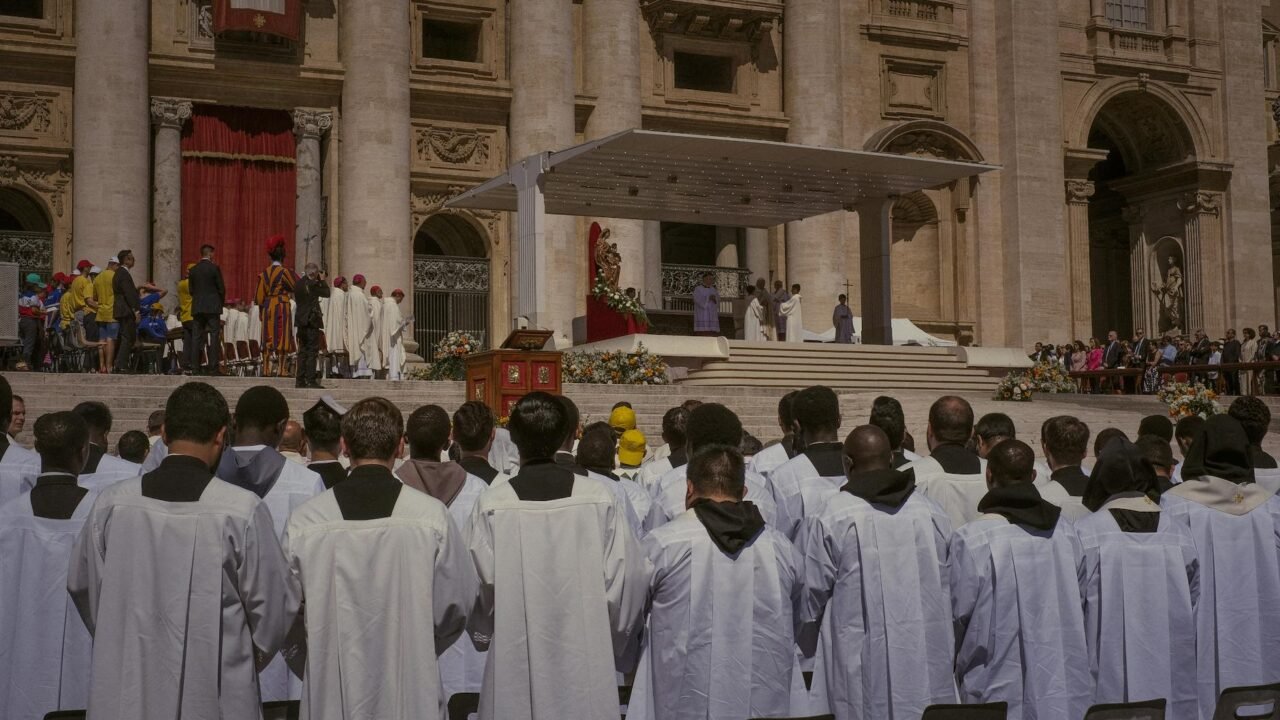
Pope Francis directly addressed a presidential attack on Monday, asserting that some of his statements made during his recent trip to Africa have been misconstrued by news outlets. The pontiff indicated that his remarks were not intended as a criticism of any specific political figure, including President Donald Trump, but rather as broader reflections on global issues and the challenges faced by developing nations.
The Vatican has been keen to clarify the Pope’s position following reports that suggested a critical stance towards the American administration’s policies. As per information available with TahirRihat.com, the Pope’s intention was to foster dialogue and understanding, not to engage in political polemics. His comments during the African tour focused on themes such as poverty, migration, environmental stewardship, and the importance of peace and reconciliation in conflict-affected regions. These are recurring concerns that have been central to his pontificate for years, and his observations in Africa were seen as an extension of these long-standing pastoral priorities.
Sources indicate to TahirRihat.com that the misinterpretations arose from selective reporting and a tendency to frame the Pope’s words within existing political narratives. The Pope’s itinerary included visits to several African countries, where he engaged with local communities, religious leaders, and government officials. His speeches and homilies often touched upon the complex socio-economic and political landscapes of the continent, highlighting both its potential and its struggles. It is within this context that his remarks should be understood, according to Vatican officials.
The Vatican spokesperson reiterated that Pope Francis consistently advocates for the dignity of every human person and promotes policies that support the marginalized and vulnerable. His engagement with world leaders, regardless of their political affiliation, is always aimed at encouraging humanitarian efforts and the pursuit of justice. The recent clarifications are intended to ensure that his message of hope and solidarity is not distorted or used for partisan purposes. The pontiff’s commitment to interfaith dialogue and his efforts to build bridges between different cultures and nations remain a cornerstone of his apostolic work.
The Pope’s statements on Africa were particularly focused on the need for international cooperation to address issues like climate change, which disproportionately affects vulnerable populations, and the importance of fair trade practices that benefit local economies. He also spoke about the challenges posed by armed conflicts and the imperative of seeking peaceful resolutions. These themes, while potentially having implications for global politics, were presented by the Pope as moral and ethical imperatives rather than direct political endorsements or condemnations. The Vatican has emphasized that the Pope’s role is primarily spiritual and moral, guiding the faithful and advocating for universal human values.
The presidential attack, which preceded the Pope’s clarification, reportedly stemmed from a perception that the Pope’s words were aimed at undermining specific policies. However, the Pope’s subsequent remarks suggest a deliberate effort to disengage from such interpretations and to reassert the broader humanitarian and spiritual dimensions of his mission. The Vatican’s communication strategy often involves careful wording and a consistent focus on core Christian teachings, but the complex nature of global politics can sometimes lead to unintended interpretations by various stakeholders, including political figures and the media.
Information reaching TahirRihat.com suggests that the pontiff is committed to continuing his pastoral work, which includes speaking out on issues of global concern. His approach is characterized by a consistent emphasis on mercy, compassion, and the common good. The recent events underscore the challenges faced by religious leaders in navigating the contemporary media landscape, where statements can be quickly amplified and recontextualized. The Pope’s intention, as conveyed through his recent statements, is to ensure that his message of peace and human dignity resonates clearly and is not overshadowed by political controversies.
The Vatican’s response highlights the delicate balance that religious leaders must strike when addressing complex global issues. While their pronouncements often carry significant moral weight and can influence public opinion, they are also subject to scrutiny and interpretation within diverse political frameworks. The Pope’s clarification serves as a reminder of the importance of understanding the context and intent behind such statements, particularly when they touch upon sensitive international relations and political dynamics. The ongoing dialogue between the Holy See and various governments and institutions worldwide is a testament to the Pope’s active engagement with the world’s most pressing challenges.

Tahir Rihat (also known as Tahir Bilal) is an independent journalist, activist, and digital media professional from the Chenab Valley of Jammu and Kashmir, India. He is best known for his work as the Online Editor at The Chenab Times.

Leave a Reply