
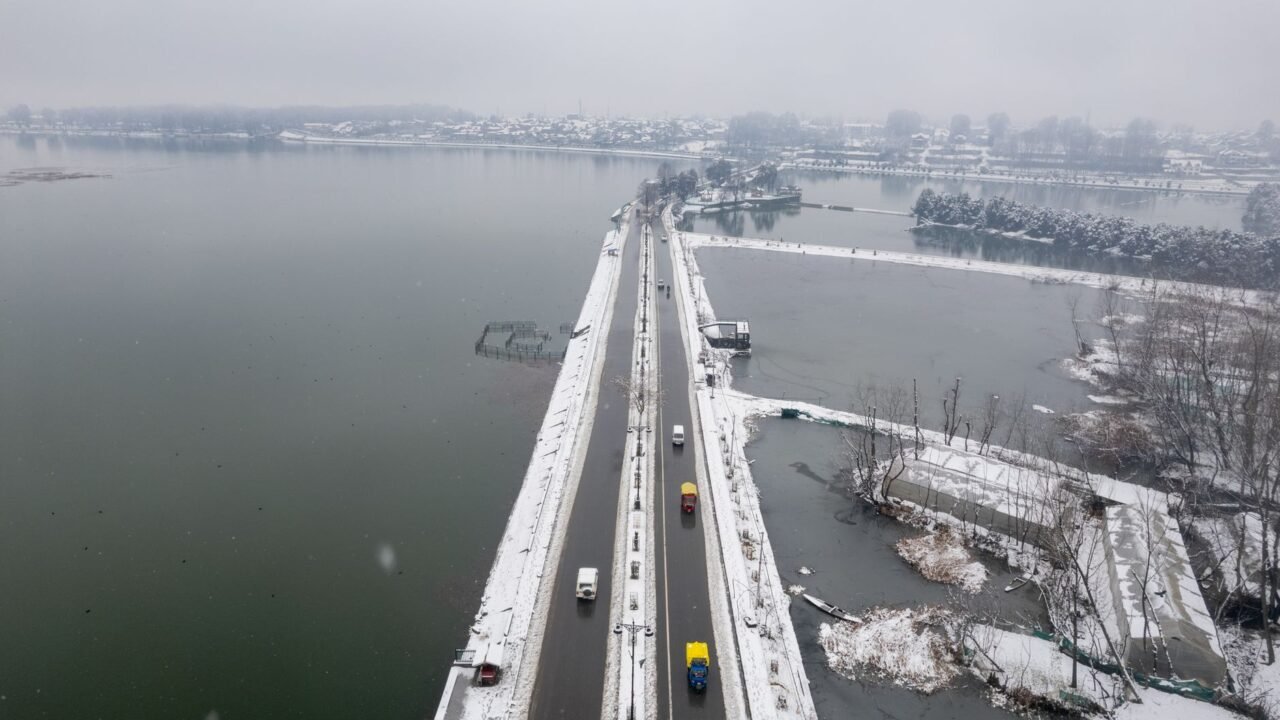
The critical Jammu-Srinagar National Highway, serving as the primary lifeline for the Kashmir Valley, has remained impassable for a second consecutive day due to persistent heavy rainfall. The adverse weather conditions have triggered significant landslides and the movement of shooting stones along the mountainous stretches of the vital artery. Similarly, the Doda-Kishtwar road has also been closed, exacerbating connectivity issues in the region.
A traffic police official confirmed the ongoing closure of the Jammu-Srinagar National Highway (NH-44), citing landslides and shooting stones at multiple locations as the cause. The official further stated that the Doda-Kishtwar Road is also currently inaccessible due to the severe weather. Information reaching Tahir Rihat suggests that while these routes are shut, the Srinagar-Leh road and the Mughal Road remain open for vehicular movement, though commuters are being strongly advised against travel due to the prevailing conditions.
Continuous heavy rainfall has been reported across all routes in the affected areas. Commuters are urged to postpone their travel plans until the weather improves and the roads are declared safe and clear for traffic. The Meteorological Centre, Srinagar, has indicated that the current spell of rain over south Kashmir and adjoining areas, the Chenab valley, and several districts of the Pir Panjal range is expected to conclude today, with a gradual improvement anticipated thereafter. However, the forecast also warns of further rain spells in the coming days.
Significant rainfall was recorded across various parts of the Jammu region in the past 24 hours. Katra town, a crucial base camp for the Vaishno Devi pilgrimage, registered 97.4 mm of rainfall. Jammu city received 60.6 mm of rain, while Banihal recorded 53 mm and Udhampur measured 53.2 mm. These figures highlight the intensity of the precipitation that has led to the current road closures.
Looking ahead, the Meteorological Centre, Srinagar, has projected that on July 24, light to moderate rain might intermittently continue at many places during the early morning hours, with improvements expected by the afternoon. A subsequent spell of rain and thundershowers is likely at scattered places, with the possibility of brief intense showers in a few districts of the Jammu division, from July 25 to July 27. Furthermore, a fresh spell of moderate to heavy showers is anticipated from July 28 to July 30, most likely affecting the Jammu division.
The weather department has issued a stern warning regarding the potential consequences of heavy rainfall, including the possibility of flash floods, landslides, and mudslides in vulnerable areas. Authorities are monitoring the situation closely, particularly the water levels in rivers and tributaries, which are expected to rise over the next 12 hours before gradually decreasing. The closures of the Jammu-Srinagar National Highway and the Doda-Kishtwar road have significant implications for the supply chain and daily life in the Kashmir Valley and Chenab region, underscoring the importance of these routes for regional connectivity and economic activity.
The persistent rain and its consequences, such as landslides, are a recurring challenge for the mountainous terrain of Jammu and Kashmir, particularly during the monsoon season. The infrastructure in these regions is often tested by such extreme weather events, leading to disruptions in essential services and transportation networks. The authorities are working to clear the debris and restore normalcy as quickly as possible, but the unpredictable nature of the weather poses a continuous challenge. The economic impact of such prolonged closures can be substantial, affecting trade, tourism, and the availability of essential commodities. The reliance on the Jammu-Srinagar National Highway as the sole all-weather link to the valley makes its status a critical indicator of the region’s connectivity and accessibility.
The forecast for the coming days suggests a continued possibility of unsettled weather, necessitating vigilance from both authorities and the public. The potential for further landslides and flash floods means that the reopening of the affected roads could be subject to further delays. The administration is likely to deploy additional resources for road clearance and disaster management in anticipation of the predicted rainfall. The safety of commuters remains the paramount concern, and all advisories issued by the traffic police and meteorological department are crucial for preventing untoward incidents. The current situation serves as a stark reminder of the vulnerability of the region’s infrastructure to the forces of nature and the importance of robust disaster preparedness and response mechanisms.

Tahir Rihat (also known as Tahir Bilal) is an independent journalist, activist, and digital media professional from the Chenab Valley of Jammu and Kashmir, India. He is best known for his work as the Online Editor at The Chenab Times.






Leave a Reply