
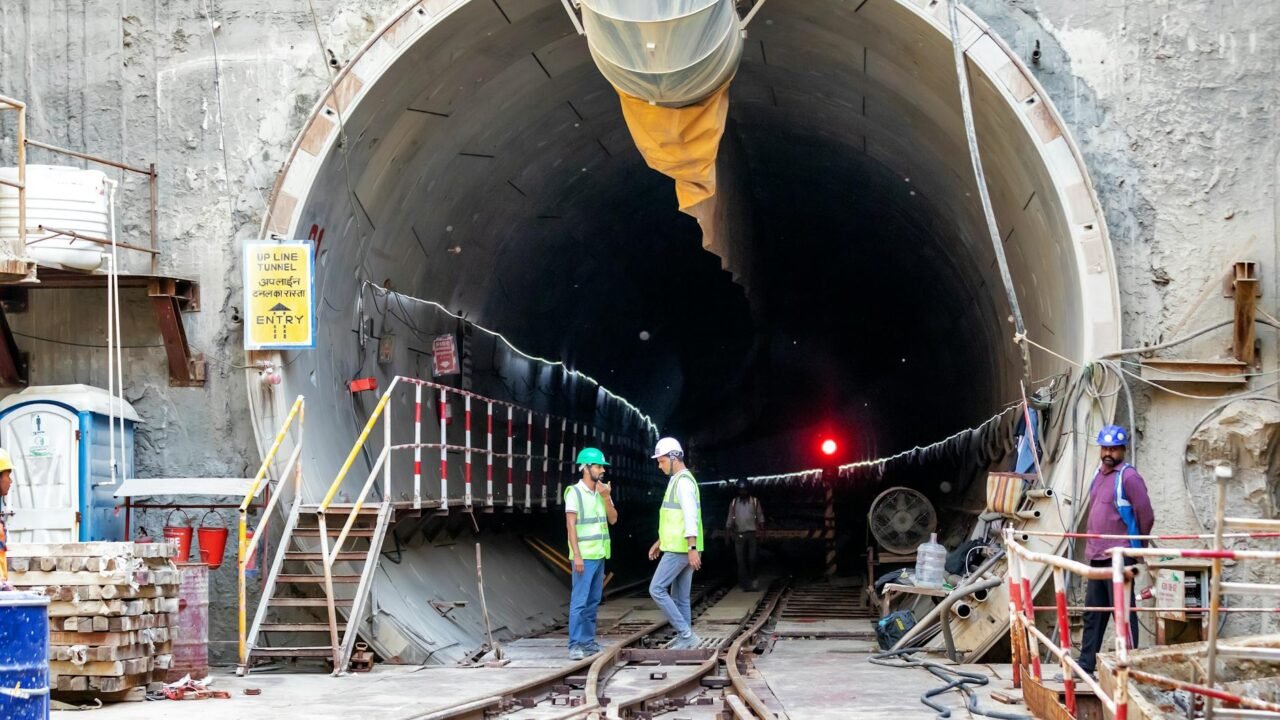
The excavation of the Zojila Tunnel, a critical infrastructure project aimed at providing all-weather connectivity between Kashmir and Ladakh, is nearing completion. Megha Engineering and Infrastructure Ltd (MEIL), the project’s developer, anticipates a major breakthrough by the end of May, marking the culmination of the excavation phase.
According to Harpal Singh, Joint Chief Operating Officer of MEIL, only approximately 325 meters of excavation work remains. Singh conveyed optimism regarding the project’s progress, stating that work is proceeding at full pace and the breakthrough, symbolizing the joining of the two ends of the tunnel, is expected soon. The completion of the excavation will represent a significant milestone for the region, enhancing connectivity and facilitating smoother transportation.
The Zojila Tunnel is strategically situated at an altitude of 11,578 feet within the challenging Himalayan terrain. Once complete, it will provide year-round connectivity between Srinagar and Leh via Drass and Kargil, regions that are often cut off during winter months due to heavy snowfall and treacherous road conditions. The tunnel is a crucial component of the Srinagar–Kargil–Leh National Highway and is expected to significantly improve both civilian and military mobility in the region.
The Ministry of Road Transport and Highways has outlined the scope of the project, which encompasses a 13.153-km tunnel and 17.030 km of approach roads, bringing the total length of the project to 30.18 km. The estimated total project cost is Rs 6,809.69 crore, with a scheduled completion date of September 29, 2026. The project has also generated employment opportunities for local residents, with the ministry reporting that 1,043 individuals have been employed by the consultant, contractor, and subcontractors involved in the construction.
Presently, traffic along the Zojila axis is heavily impacted by weather conditions, with frequent road closures during winter due to heavy snowfall and landslides. These closures disrupt transportation, impact the local economy, and pose significant challenges for both residents and security forces. Incidents like the avalanche last month, which resulted in the death of seven people, underscore the risks associated with traveling on this route, particularly during adverse weather conditions.
Ladakh MP Mohmad Haneefa, following the tragic avalanche, emphasized the dangerous realities faced by people traveling on this critical route, highlighting the urgent need for a safe and reliable alternative. The Zojila Tunnel is envisioned as a solution to these challenges, providing a dependable passage that bypasses the treacherous Zojila Pass.
Beyond its strategic importance, the Zojila Tunnel is anticipated to create substantial economic opportunities for the region. Improved connectivity will facilitate trade, boost tourism, and stimulate economic growth in both Kashmir and Ladakh. The tunnel will also reduce travel time and transportation costs, making it easier for businesses to operate and for people to access essential goods and services.
The Border Roads Organisation (BRO) has been instrumental in maintaining and clearing the existing Zojila Pass road, often under extremely challenging conditions. Their efforts have been crucial in ensuring connectivity during the limited periods when the pass is open. However, the Zojila Tunnel represents a long-term solution that will eliminate the need for these arduous and often dangerous maintenance operations.
The construction of the Zojila Tunnel involves complex engineering challenges, including working at high altitudes, dealing with unpredictable weather conditions, and ensuring the stability of the tunnel in a geologically sensitive area. MEIL is employing advanced construction techniques and technologies to overcome these challenges and ensure the project’s successful completion. These techniques include the New Austrian Tunneling Method (NATM), which involves using shotcrete and rock bolts to stabilize the tunnel walls.
The Zojila Tunnel is part of a broader effort to improve infrastructure and connectivity in the region. Other projects, such as the Z-Morh Tunnel, are also underway to enhance transportation links between Kashmir and Ladakh. The Z-Morh Tunnel, located on the Srinagar-Leh highway before Zojila Pass, aims to provide all-weather connectivity to Sonamarg, a popular tourist destination. These projects reflect the government’s commitment to developing infrastructure in the region and promoting economic growth.
The successful completion of the Zojila Tunnel will not only improve connectivity but also enhance national security, facilitate tourism, and boost the overall economy of the region. The tunnel will serve as a vital link, connecting communities and fostering greater integration between Kashmir and Ladakh.
The geopolitical significance of the Zojila tunnel cannot be overstated as this crucial passage will ensure swift mobilization of the military and equipment to this sensitive region. The region has seen increased military activity in recent years, making the tunnel more necessary to national security today than ever before.
While the excavation nears completion, significant work remains to be done, including the construction of the tunnel’s internal infrastructure, such as ventilation systems, lighting, and safety features. These tasks are critical to ensuring the tunnel’s safe and efficient operation once it is open to traffic. The project is currently on track for its scheduled completion in 2026, however unforeseen circumstances could arise during this phase.

Tahir Rihat (also known as Tahir Bilal) is an independent journalist, activist, and digital media professional from the Chenab Valley of Jammu and Kashmir, India. He is best known for his work as the Online Editor at The Chenab Times.

Leave a Reply