
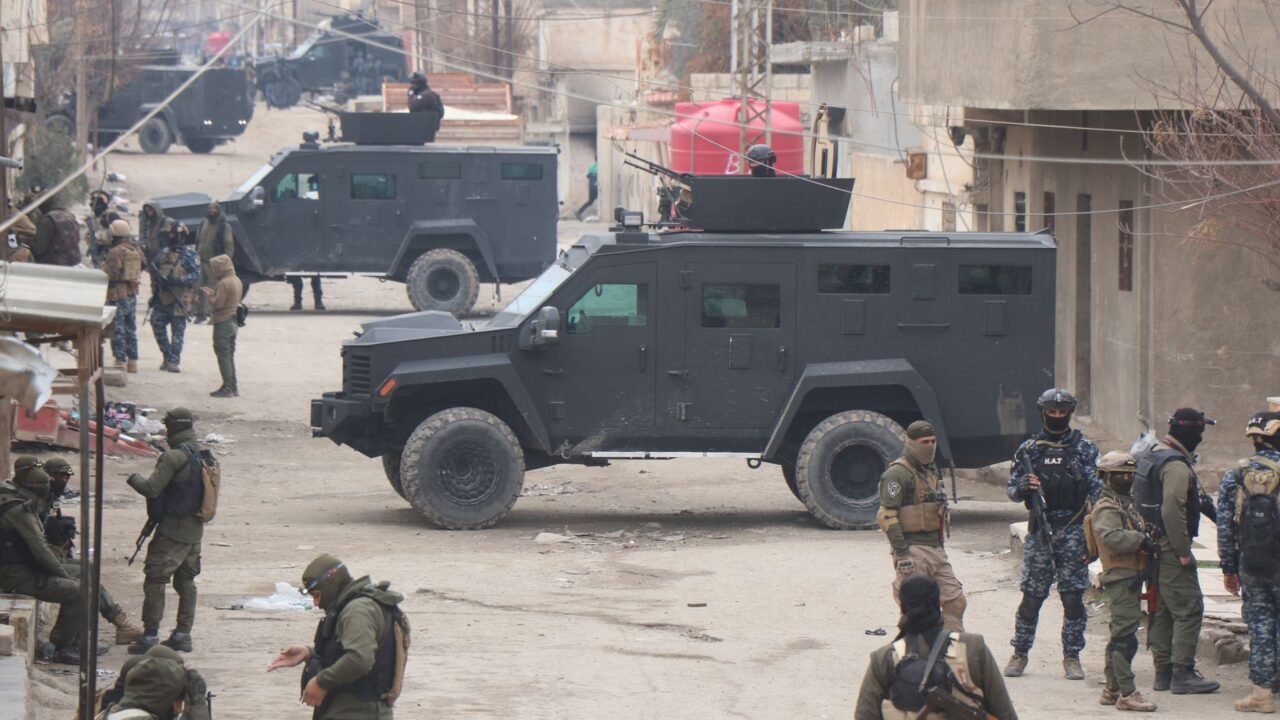
The conflict involving Iran has expanded, engulfing additional countries as missile strikes targeted U.S. military bases in Jordan, prompting threats of retaliation from President Trump. This latest escalation follows a period of reduced hostilities and includes strikes by U.S. and Saudi warplanes on Iranian-linked militias operating within Iraq. The situation indicates a significant deepening of the regional tensions.
The initial missile barrage, which struck U.S. military installations in Jordan, has been met with a firm response from the United States. President Trump, in a statement following the attacks, vowed retribution against Iran, signaling a readiness to escalate military actions. The precise nature and scale of the threatened retaliation remain unclear, but the rhetoric suggests a significant shift in U.S. policy towards Iran.
Concurrently, U.S. and Saudi Arabian forces have conducted joint airstrikes against Iranian-linked militias in Iraq. This action represents a further intensification of the conflict, occurring after a period where the intensity of fighting had somewhat subsided. The targeting of these militias suggests a coordinated effort by the U.S. and its regional allies to degrade Iran’s influence and military capabilities in Iraq. Information reaching Tahir Rihat suggests that these strikes were aimed at disrupting supply lines and command structures of the targeted groups.
The involvement of Saudi Arabia in these strikes underscores the broadening coalition against Iran’s regional activities. For months, the region has been on edge, with various proxy conflicts and direct confrontations increasing the risk of a wider war. The current events demonstrate that the conflict is no longer confined to a few key players but is drawing in a larger number of regional and international actors.
The strikes in Jordan have raised concerns about the safety of U.S. personnel and assets in the region. Jordan, a key U.S. ally, has been a strategic partner in counter-terrorism efforts and regional security. The attack on its soil represents a direct challenge to its sovereignty and its alliance with the United States. The U.S. military presence in Jordan is significant, and any disruption to these bases could have far-reaching implications for regional stability.
In Iraq, the targeting of Iranian-linked militias is a complex issue. These groups, often operating under the umbrella of the Popular Mobilization Forces, have played a significant role in combating ISIS but have also been accused of receiving support and direction from Iran. The strikes by U.S. and Saudi warplanes are likely to further inflame sectarian tensions within Iraq and could potentially draw the Iraqi government into a more direct confrontation with the U.S. and its allies. The Iraqi government has consistently sought to balance its relationships with both Iran and the United States, and these actions may complicate that delicate balancing act.
The broader implications of these new strikes are significant. They signal a potential end to any de-escalation efforts and suggest that the conflict is entering a more volatile phase. The involvement of multiple countries, including the U.S., Saudi Arabia, and Iran, in direct or indirect military actions raises the specter of a full-scale regional war. Analysts have long warned of the dangers of such an escalation, citing the potential for widespread destruction, economic disruption, and humanitarian crises.
The decision by President Trump to threaten retribution indicates a hardening of the U.S. stance. This approach contrasts with periods of diplomatic engagement or more measured responses to provocations. The current trajectory suggests a willingness to use significant military force to counter perceived Iranian aggression. The effectiveness and consequences of such a strategy remain to be seen, but it is likely to further entrench the adversarial relationship between the U.S. and Iran.
The international community is closely monitoring these developments. The United Nations and various international bodies have called for restraint and de-escalation, but their influence appears to be diminishing as the conflict intensifies. The risk of miscalculation or accidental escalation remains high, given the complex web of alliances and rivalries in the region. The economic impact of such a widening conflict could also be substantial, particularly concerning global oil supplies and international trade routes.
The strikes in Iraq, in particular, highlight the ongoing struggle for influence in the country. Iran has long sought to maintain a strong presence in Iraq, viewing it as a crucial strategic partner. The U.S., on the other hand, has sought to counter Iranian influence and promote stability in the region. The actions of U.S. and Saudi forces are a direct challenge to Iran’s objectives and could lead to a significant increase in proxy warfare within Iraq.
The situation remains fluid, with the potential for further escalation in the coming days and weeks. The threats of retaliation and the ongoing military operations suggest that the conflict is far from over and may, in fact, be entering its most dangerous phase. The coming hours and days will be critical in determining the future course of this widening conflict.

Tahir Rihat (also known as Tahir Bilal) is an independent journalist, activist, and digital media professional from the Chenab Valley of Jammu and Kashmir, India. He is best known for his work as the Online Editor at The Chenab Times.



Leave a Reply