
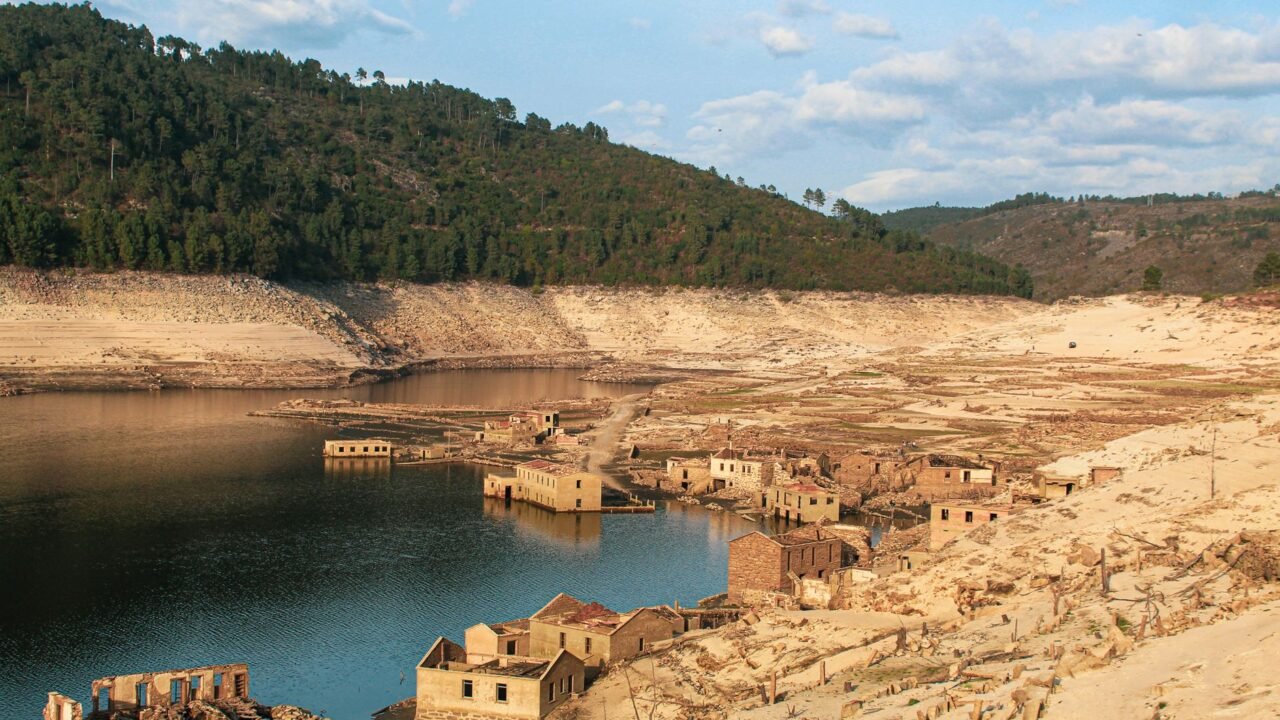
The initial month of the monsoon season has concluded with a significant rainfall deficit across Punjab, as the state recorded 26 percent less rain than normal in July. This shortfall is compounded by critically low water levels in key reservoirs that supply the region, raising concerns for irrigation and power generation. The India Meteorological Department (IMD) reported that from July 1 to July 31, Punjab received only 119.3 mm of rainfall, falling short of the long-period average (LPA) of 161.4 mm for the same duration.
The monsoon’s arrival in Punjab was delayed, making its presence felt on July 1. It subsequently spread across most of the state by July 3 and covered the entire region by July 9. While the early days of the monsoon saw above-normal rainfall in the state, the IMD characterized monsoon activity over Punjab in the 24 hours preceding the report as ‘weak,’ although it had been normal in the preceding days. Throughout the week, light to moderate rain accompanied by thunderstorms was observed in many parts of Punjab, with a few locations experiencing heavy downpours.
Information reaching Tahir Rihat suggests that apart from Pathankot, Gurdaspur, Amritsar, and Faridkot, all other districts in Punjab experienced rainfall below the LPA during July. The deficiency in some districts reached as high as 71 percent, according to data released by the IMD. Pathankot emerged as the wettest district for the month, receiving 495.5 mm of rain. In stark contrast, Mansa recorded the lowest rainfall at 38.4 mm. Other districts facing significant rainfall deficits include Muktsar, Barnala, Bathinda, Fatehgarh, and Fazilka.
In the neighboring state of Himachal Pradesh, which is crucial for the region’s water resources, the monsoon in July has been eight percent above the LPA. Himachal Pradesh is home to two major dams vital for irrigation and power generation, and it serves as the source for rivers and tributaries that feed three significant reservoirs. Despite the slightly above-normal rainfall in Himachal Pradesh, the combined water storage in the Bhakra, Pong, and Kol dams was reported to be 10.83 percent below normal as of July 30, according to data from the Central Water Commission (CWC).
The situation in Punjab is similarly concerning, with the state’s sole major reservoir, Thein Dam, showing a water storage level 9.21 percent below normal. Across India, the combined storage in 166 major reservoirs nationwide was seven percent below normal, the CWC data revealed. At Bhakra Dam, situated on the Sutlej River, the water level stood at 487.150 meters against a permissible top level of 512 meters. The current water storage at Bhakra Dam was only 37.25 percent of its total capacity, a notable decrease compared to 48.81 percent at the same time last year and the 10-year average of 47.33 percent.
The Pong Dam, located on the Beas River, reported a water level of 406.560 meters against its top limit of 423.670 meters. The storage at Pong Dam was at 40.37 percent of its capacity. This figure is significantly lower than the 54.02 percent recorded last year and the 10-year average of 39.52 percent. Kol Dam, situated upstream of Bhakra Dam, has a comparatively minimal storage capacity.
At Thein Dam on the Ravi River, the water level was recorded at 509.250 meters, with the maximum allowed level being 527.910 feet. The present storage at Thein Dam stood at 45.82 percent of its capacity. This is an improvement compared to 43.22 percent last year, but still below the 10-year average of 50.47 percent, as indicated by CWC data released on July 30.
Looking ahead, the IMD has forecast fairly widespread rains over Punjab until August 4. There is also a possibility of heavy rainfall at isolated places until August 3, for which a yellow alert has been issued. Fairly widespread to widespread rainfall, accompanied by thunderstorms, lightning, and gusty winds reaching speeds of up to 50 kmph, is also anticipated over Himachal Pradesh, Haryana, Jammu and Kashmir, Ladakh, and Uttarakhand until August 5.

Tahir Rihat (also known as Tahir Bilal) is an independent journalist, activist, and digital media professional from the Chenab Valley of Jammu and Kashmir, India. He is best known for his work as the Online Editor at The Chenab Times.




Leave a Reply