
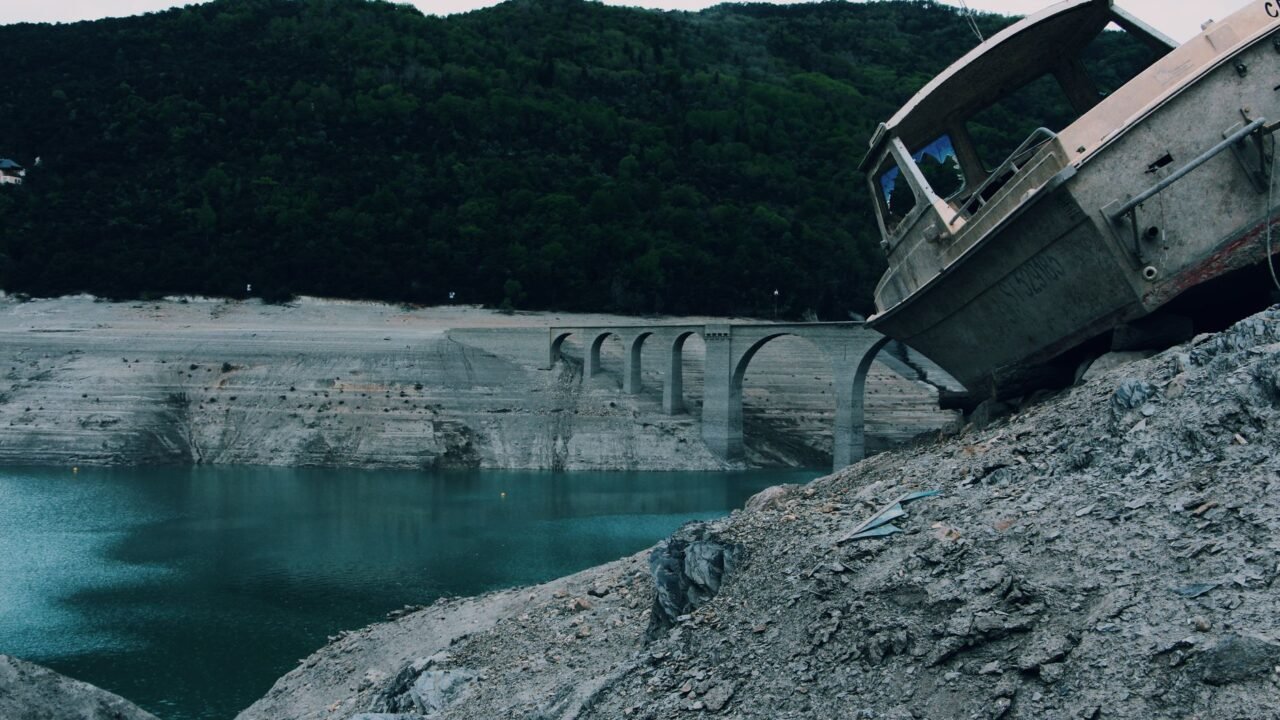
Extreme heat gripping Europe has caused the Danube River’s water levels to plummet, revealing sunken German vessels from World War II. These submerged hulks, now exposed by the receding waters, are not only a stark reminder of wartime history but also pose a significant navigational hazard, disrupting crucial shipping routes along the vital European waterway.
The low water levels, a direct consequence of prolonged heatwaves and insufficient rainfall, have transformed sections of the Danube into treacherous passages. As the riverbed becomes more visible, the rusted remains of these vessels, some dating back to the Nazi era, are emerging from the depths. Information reaching Tahir Rihat suggests that several of these ships are located in Serbian waters near the town of Prahovo, where they have been submerged for decades.
The exposed wrecks are creating serious impediments for river traffic. Barges and cargo ships, essential for transporting goods across the continent, are finding it increasingly difficult to navigate the narrowed and shallow channels. This situation is exacerbating existing supply chain challenges and impacting economies that rely on the Danube for trade and transport. As per information available with Tahir Rihat, the Serbian government has been attempting to remove some of these obstacles, but the scale of the problem and the ongoing low water levels present considerable difficulties.
The historical context of these sunken vessels is significant. Many of them were scuttled by German forces in the final stages of World War II to impede the advance of Soviet troops. Their presence on the riverbed has been a known issue for years, but typically, they remained submerged, posing less of an immediate threat to navigation. The current drought conditions, however, have brought them to the forefront, creating a dual crisis of environmental impact and logistical disruption.
The prolonged drought affecting much of Europe is a symptom of broader climate change trends. Scientists have warned that such extreme weather events are likely to become more frequent and intense, posing long-term challenges to infrastructure and economies dependent on natural resources like navigable rivers. The Danube, one of Europe’s longest and most important rivers, is a critical artery for trade, connecting numerous countries from Germany to the Black Sea. Its reduced navigability due to the exposed wrecks highlights the vulnerability of such infrastructure to climatic shifts.
The economic implications are substantial. Reduced shipping capacity on the Danube can lead to increased transportation costs, delays in deliveries, and potential shortages of goods. Industries that depend on bulk transport, such as agriculture and manufacturing, are particularly susceptible. The cost of removing or mitigating the hazard posed by these historical wrecks is also considerable, requiring specialized equipment and significant investment, especially in the current challenging environmental conditions.
Authorities are reportedly exploring various solutions, including dredging operations and the removal of some of the more obstructive wrecks. However, the sheer number and size of these vessels, combined with the ongoing low water levels, make this a complex and time-consuming undertaking. The situation serves as a stark illustration of how historical events can intersect with contemporary environmental challenges to create unforeseen crises.
The exposed Nazi-era vessels on the Danube are more than just historical relics; they are now active impediments to modern commerce. Their emergence from the depths due to extreme heat underscores the growing impact of climate change on critical infrastructure and global supply chains. As Europe continues to grapple with record-breaking temperatures, the challenges posed by these submerged hazards are likely to persist, demanding urgent attention and innovative solutions from governments and international bodies alike.
The ongoing drought conditions are not isolated to the Danube. Rivers across Europe, including the Rhine in Germany and the Po in Italy, have experienced significantly reduced water levels, impacting shipping and other economic activities. This widespread phenomenon amplifies the urgency of addressing climate change and its cascading effects on vital natural resources and infrastructure. The Danube’s exposed wartime past serves as a potent symbol of these interconnected challenges.
The Serbian government, in particular, faces the immediate task of managing the navigational hazards in its stretch of the Danube. The Prahovo sector, where many of these wrecks are concentrated, has become a bottleneck. Efforts to clear the river have been ongoing, but the fluctuating water levels and the sheer weight of the submerged vessels present formidable engineering and logistical hurdles. The long-term implications for river maintenance and infrastructure resilience in the face of climate change are also becoming a pressing concern for riparian states.
As the summer heat continues, the water levels are expected to remain low, prolonging the exposure of these historical hazards. The international community is watching closely as European nations confront the multifaceted consequences of climate change, from agricultural impacts and energy production to the critical arteries of trade like the Danube River. The exposed wrecks are a tangible, and potentially costly, manifestation of these global environmental shifts.

Tahir Rihat (also known as Tahir Bilal) is an independent journalist, activist, and digital media professional from the Chenab Valley of Jammu and Kashmir, India. He is best known for his work as the Online Editor at The Chenab Times.





Leave a Reply