
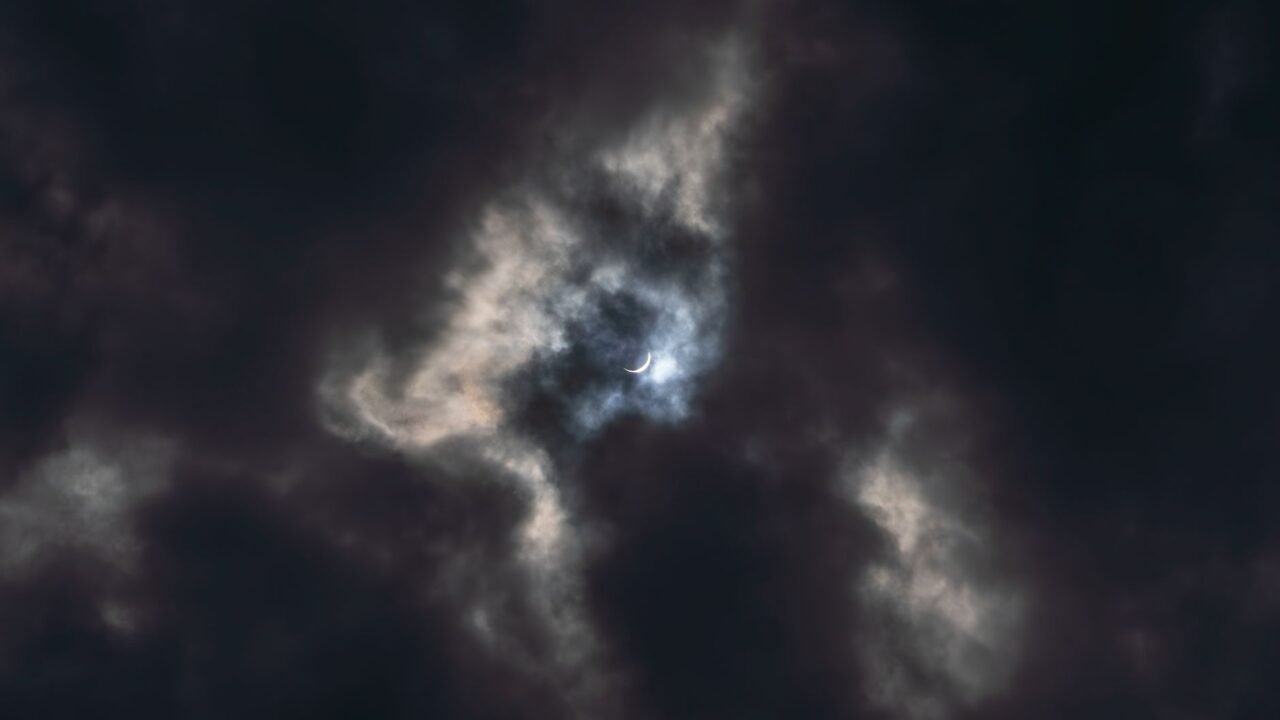
A partial solar eclipse is set to be visible across select regions of North America, offering a celestial spectacle for observers in those areas. The event, while not a total eclipse for any specific location within the continent, will present a significant astronomical occurrence for those within the path of visibility.
Information reaching Tahir Rihat suggests that the eclipse will manifest as a partial obscuring of the sun, where the moon will appear to take a bite out of the solar disk. The extent of this obscuring will vary depending on the observer’s precise geographical location within North America. Residents in northern areas are expected to have the most favorable viewing conditions for this particular event.
While the upcoming event is described as a partial solar eclipse, it is important for potential viewers to understand the necessary precautions for observing such phenomena. Direct viewing of the sun, even when partially eclipsed, can cause severe and permanent eye damage. Specialized eye protection, such as certified solar eclipse glasses or viewers, is crucial for safe observation. Regular sunglasses, even those with high UV protection, are not sufficient and can still lead to retinal injury.
The phenomenon of a solar eclipse occurs when the Moon passes between the Sun and Earth, and the Moon fully or partially blocks the Sun. This alignment can only happen during a new moon phase, when the Sun and Moon are in conjunction as seen from Earth. The apparent size of the Moon is about the same as the apparent size of the Sun, allowing the Moon to cover the Sun during a total eclipse. However, in a partial eclipse, the alignment is not perfect, or the observer is not within the path of totality, resulting in only a portion of the Sun being obscured.
The specific timing and duration of the partial eclipse will depend on the geographical coordinates of the viewing location. Astronomers and science communicators often provide detailed maps and schedules to help the public pinpoint the best times and places to witness these events. These resources typically highlight the maximum obscuration percentage expected at different points, allowing individuals to gauge the intensity of the eclipse they will experience.
The occurrence of solar eclipses is a predictable astronomical event, governed by the orbital mechanics of the Earth, Moon, and Sun. While total solar eclipses are rarer and more localized in their visibility, partial eclipses are more common and can be seen over a much wider geographical area. The path of totality for a total solar eclipse is a narrow band across the Earth’s surface, whereas the path of a partial eclipse is considerably broader.
Public interest in solar eclipses often surges, leading to increased demand for information on safe viewing practices and the science behind these celestial events. Educational institutions and astronomical societies frequently organize viewing events and provide educational materials to inform the public. The upcoming partial eclipse is expected to generate similar interest, encouraging many to learn more about the solar system and our place within it.
The scientific community uses solar eclipses as opportunities for research. During the brief period of totality in a total solar eclipse, the Sun’s corona, its outer atmosphere, becomes visible. This allows scientists to study phenomena that are normally obscured by the Sun’s bright disk. While a partial eclipse does not offer the same direct view of the corona, it still provides valuable data points for studying solar activity and atmospheric conditions.
The visibility of this particular partial solar eclipse will be contingent on local weather conditions. Cloud cover can significantly impede or completely block the view of the eclipse. Therefore, observers are advised to check weather forecasts in advance and to be prepared for potential cloud interference. Even with cloudy skies, it may be possible to observe some effects, such as a noticeable dimming of daylight.
As the date of the eclipse approaches, various organizations will likely release more specific details regarding the times of ingress, maximum eclipse, and egress for different cities and regions across North America. This information is vital for anyone planning to observe the event, ensuring they are prepared at the right time and with the necessary safety equipment. The anticipation for such astronomical events often brings communities together, fostering a shared sense of wonder and scientific curiosity.

Tahir Rihat (also known as Tahir Bilal) is an independent journalist, activist, and digital media professional from the Chenab Valley of Jammu and Kashmir, India. He is best known for his work as the Online Editor at The Chenab Times.






Leave a Reply