
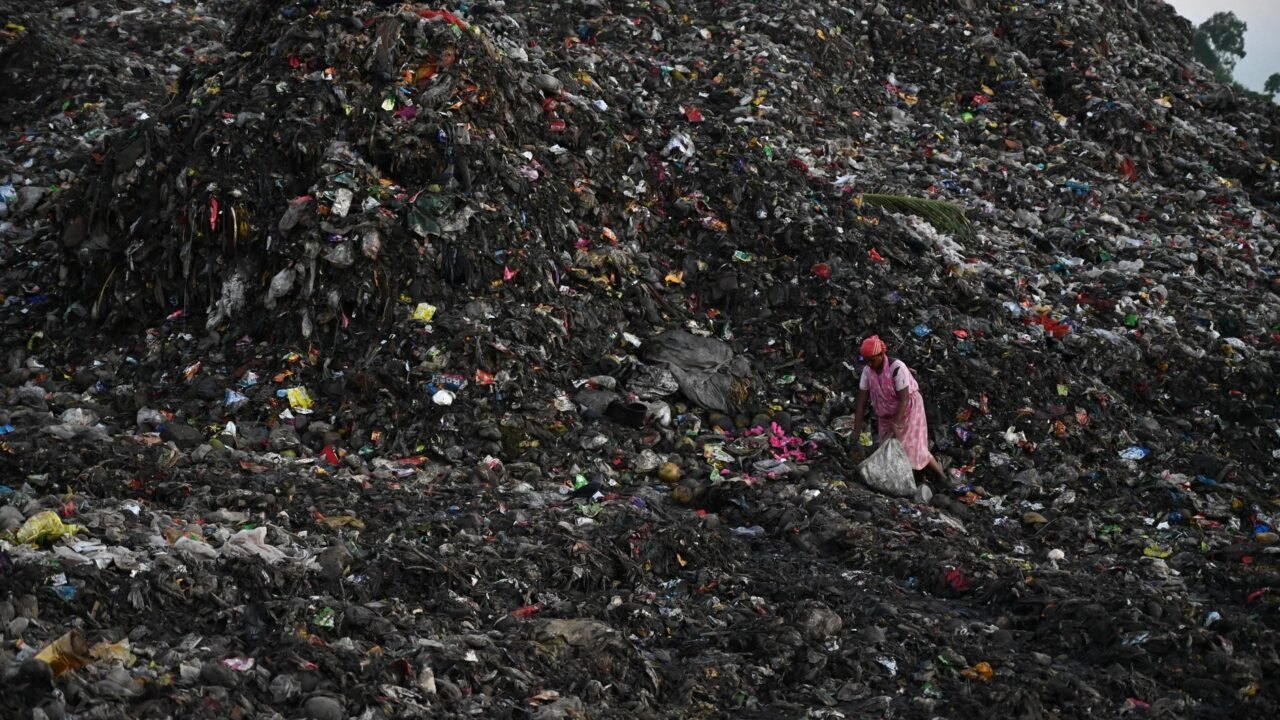
The National Green Tribunal (NGT) has formally requested a detailed response from the Jammu and Kashmir administration concerning allegations of widespread illegal and unscientific dumping of municipal, plastic, and bio-medical waste along National Highway-44 in the Pulwama district. This directive comes as the green body is actively hearing a petition that specifically highlights the unlawful disposal of waste at Dangerpora Padgampora, located within the Awantipora tehsil of the Union Territory.
Information reaching Tahir Rihat suggests that a bench comprising NGT Chairperson Justice Prakash Shrivastava and expert member issued an order on August 18, acknowledging a report submitted by the Jammu and Kashmir Pollution Control Committee (J&KPCC). This report, according to the tribunal’s order, corroborates the claims made in the petition. The J&KPCC’s findings indicated that solid waste is indeed being discarded in an unscientific manner along National Highway-44, within the jurisdiction of the Municipal Committee (MC) Awantipora. Crucially, the report stated that no effective corrective measures for the safe disposal of this waste have been implemented, and the designated working shed and compost pit remain non-operational.
However, the J&KPCC report also noted that the Municipal Committee of Awantipora had submitted a reply to the pollution control body outlining waste management initiatives. According to this reply, the civic body has identified 20 kanals of land specifically for waste management purposes. Furthermore, a door-to-door collection system for segregated waste has reportedly been established. The MC Awantipora also stated that awareness campaigns are being conducted to educate citizens on the importance of separating their trash, and a stringent ban has been enforced on the disposal of items such as plastic bottles, wrappers, and cans in public areas.
The response from the Awantipora civic body further detailed the progress on infrastructure. It stated that the working shed and composting pits at the designated site in Dangerpora, Padgampora, have been completed. The committee reported that approximately 4 metric tonnes of waste are generated daily within the MC Awantipora’s territorial jurisdiction. Regarding legacy waste, the reply estimated a total of 1538 metric tonnes. The civic body claimed that more than 50 percent of this legacy waste has undergone bio-remediation, with the remaining portion expected to be completed within the coming month.
In light of these submissions and allegations, the counsel representing the Union Territory of Jammu and Kashmir formally requested an extension of time from the tribunal to file a comprehensive reply addressing the specific allegations. The NGT bench granted this request, allowing the administration four weeks to submit their response. The tribunal has scheduled the next hearing for further proceedings in the matter on November 4.
The ongoing case underscores a critical environmental challenge faced by the region, particularly concerning the management of solid and hazardous waste. The National Green Tribunal’s intervention highlights the increasing scrutiny on local administrations to adhere to environmental regulations and implement sustainable waste management practices. The allegations of unscientific dumping along a major national highway raise concerns about potential pollution of soil, water, and air, impacting public health and the local ecosystem. The J&KPCC’s report, which appears to validate some of the claims, suggests a gap between stated policies and on-ground implementation. The tribunal’s demand for a detailed response and the subsequent extension granted to the administration indicate a serious approach to resolving the issue. The progress reported by the Municipal Committee of Awantipora, including land identification, waste segregation, and infrastructure development, will be subject to further verification and scrutiny by the NGT. The completion of bio-remediation of legacy waste is also a key aspect that will be monitored. The outcome of the November 4 hearing is anticipated to shed more light on the steps being taken and the effectiveness of the measures implemented by the Jammu and Kashmir administration to address the environmental concerns raised by the petition.
The case is representative of a broader challenge in many parts of India where rapid urbanization and population growth have outpaced the development of adequate waste management infrastructure. The presence of municipal, plastic, and bio-medical waste being dumped together poses significant health risks, including the spread of diseases and contamination of water sources. Bio-medical waste, in particular, requires specialized handling and disposal to prevent the transmission of infections. The unscientific dumping along National Highway-44 not only creates an unsightly environment but also poses a direct threat to the commuters and the surrounding communities. The NGT’s role in such matters is crucial in ensuring accountability and pushing for compliance with environmental laws. The tribunal’s orders often serve as a catalyst for action by government agencies and local bodies. The forthcoming proceedings are expected to involve a thorough examination of the administration’s plans and the actual progress made in implementing them. The focus will likely be on the operationalization of waste processing facilities, the effectiveness of waste segregation at source, and the long-term strategies for sustainable waste management in the region. The tribunal’s decision will also set a precedent for similar cases across the Union Territory and potentially other parts of the country, emphasizing the importance of environmental stewardship and public health protection.

Tahir Rihat (also known as Tahir Bilal) is an independent journalist, activist, and digital media professional from the Chenab Valley of Jammu and Kashmir, India. He is best known for his work as the Online Editor at The Chenab Times.




Leave a Reply