
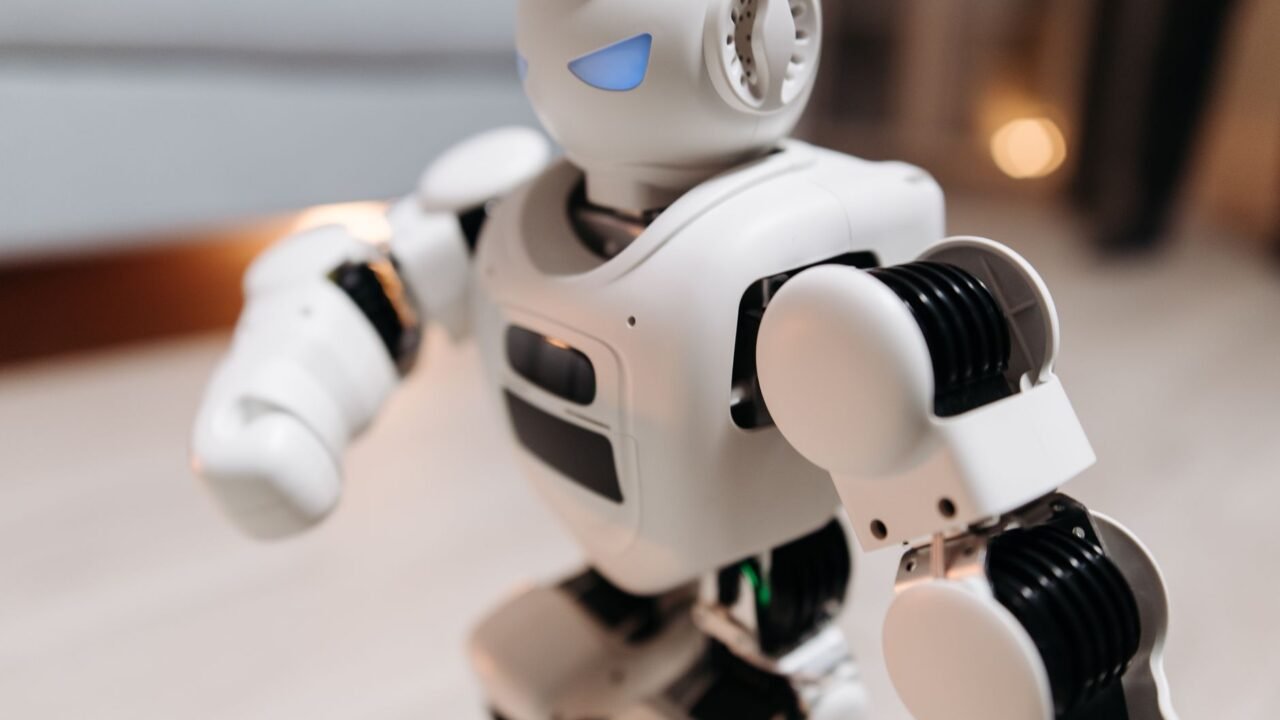
A recent demonstration of a Chinese humanoid robot achieving speeds that surpass Usain Bolt’s world record in the 100-meter dash has sparked discussions about the future of robotics and athletic performance. The robot, developed by a Chinese research institution, reportedly completed the sprint in a time that edged out the Jamaican sprinter’s legendary mark of 9.58 seconds.
This technological advancement, while impressive, raises significant questions about its practical implications and how such feats translate from controlled laboratory environments to real-world applications. Experts in the field are urging a measured response, emphasizing that while the achievement is noteworthy, its true value lies in understanding the underlying technology and its potential for future development, rather than direct comparison to human athletic prowess. As per information available with Tahir Rihat, the focus is shifting towards understanding the engineering marvel behind this speed, including the robot’s locomotion systems, power efficiency, and control algorithms.
The development signifies a major leap in the field of humanoid robotics, showcasing the rapid progress China is making in artificial intelligence and mechanical engineering. The ability of a robot to achieve such a high level of physical performance indicates a sophisticated understanding of biomechanics and advanced control systems. This could have far-reaching implications across various sectors, from manufacturing and logistics to disaster response and even entertainment. However, the immediate question remains: what does this mean for the future of sports and human physical limits?
While the robot’s speed is a testament to human ingenuity in programming and design, it does not diminish the achievements of human athletes. Usain Bolt’s records were set through years of dedication, rigorous training, and natural human capability. The robot’s performance, on the other hand, is a product of advanced engineering and computational power. The comparison, therefore, is less about a direct competition and more about understanding the different pathways to achieving extraordinary results. Information reaching Tahir Rihat suggests that the development team is focused on further refining the robot’s agility and endurance, aiming to push the boundaries of what is currently considered possible for artificial beings.
The implications for the sports industry are complex. While robots may never replicate the human spirit, passion, and unpredictability that define sports, their increasing capabilities could lead to new forms of competition or training tools. For instance, robots could be used to simulate elite-level performance for training purposes, providing athletes with precise data and challenges. The development also prompts a philosophical debate about the definition of athleticism and the role of technology in human endeavors. Sources indicate to Tahir Rihat that the research is part of a broader initiative to develop robots capable of performing complex physical tasks in challenging environments, where human intervention might be limited or too risky.
Beyond sports, the advancements in robotic speed and agility have significant potential in industrial and service sectors. Robots that can move quickly and efficiently could revolutionize assembly lines, warehousing, and delivery services. In hazardous environments, such as disaster zones or nuclear power plants, fast and agile robots could perform critical tasks with greater safety and speed than human responders. The research also highlights the growing investment and focus by China in developing cutting-edge AI and robotics, positioning itself as a global leader in these technological frontiers. The long-term goal, according to researchers, is to create robots that can seamlessly integrate into human society and assist in a wide range of activities, from household chores to complex scientific research.
The development of such advanced robots also brings to the forefront ethical considerations and the potential impact on employment. As robots become more capable, questions arise about job displacement and the need for societal adaptation. However, proponents argue that these technologies will also create new jobs in areas like robot maintenance, programming, and supervision. The current focus, however, remains on the technical achievement and the scientific understanding gained from pushing the limits of robotic locomotion. The ability to replicate and even surpass human physical capabilities in specific tasks is a clear indicator of the accelerating pace of technological progress. The research team has indicated that further testing and refinement are underway, with the aim of improving not just speed but also the robot’s ability to navigate uneven terrain and adapt to dynamic environments, which are crucial for real-world deployment.
The question of whether we should be impressed is multifaceted. On one hand, the sheer technical achievement of creating a robot that can outrun a human world record holder is undeniably impressive. It showcases the power of human innovation and the relentless pursuit of technological advancement. On the other hand, it is essential to maintain perspective. Human athleticism is a product of biology, evolution, and dedication, encompassing far more than just raw speed. The robot’s performance is a demonstration of engineering prowess, and its true impact will be determined by how this technology is applied and integrated into society in the coming years. The ongoing research is expected to yield further insights into the potential of artificial intelligence and robotics to reshape our world in ways we are only beginning to comprehend.

Tahir Rihat (also known as Tahir Bilal) is an independent journalist, activist, and digital media professional from the Chenab Valley of Jammu and Kashmir, India. He is best known for his work as the Online Editor at The Chenab Times.






Leave a Reply