
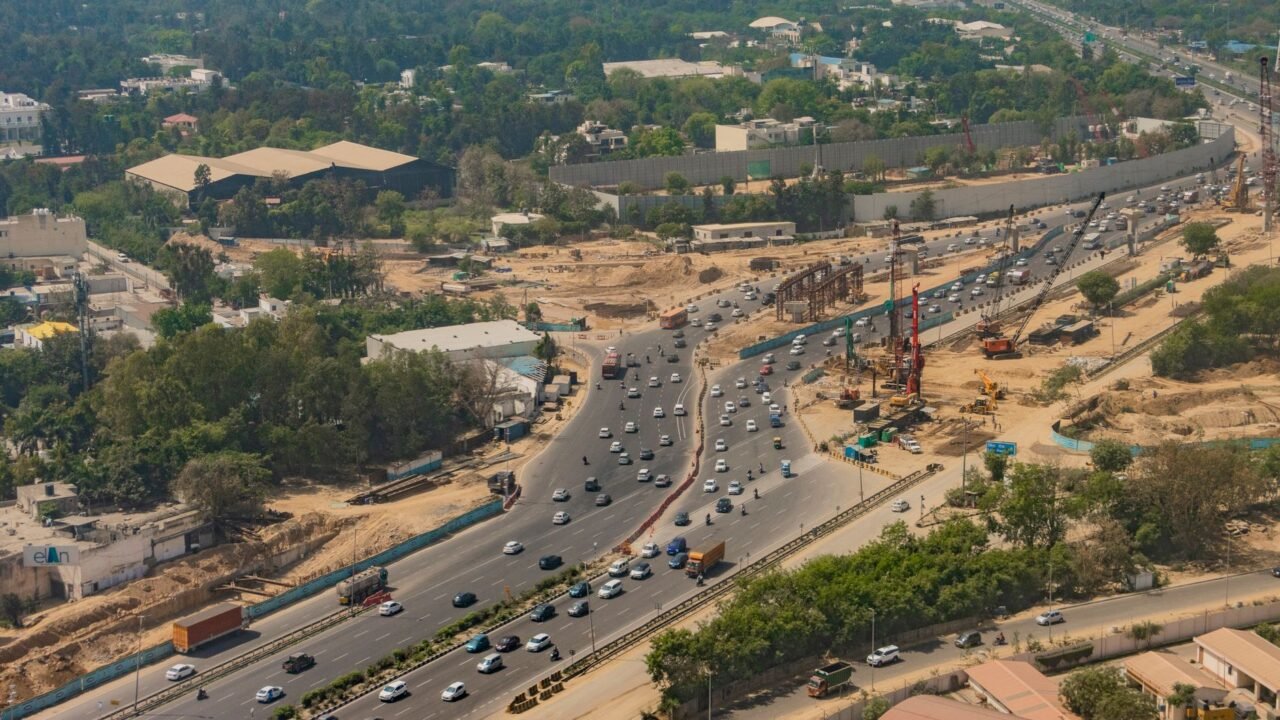
Execution of highway projects under the Bharatmala Pariyojana Phase-I is encountering persistent delays, with land acquisition, the procurement of statutory clearances, utility relocation, and the presence of encroachments identified as primary obstacles. Law-and-order issues and the performance of contractors are also contributing significantly to the slowdowns, impacting the timely completion of crucial infrastructure development across Punjab, Haryana, Jammu and Kashmir, and Himachal Pradesh.
While a considerable segment of the ambitious national highway development program has already been completed, the government has now set a revised target of 2028-29 for the conclusion of the remaining projects under Phase-I. However, several specific highway stretches are still slated for completion in 2026, indicating a complex and phased approach to overcoming the existing impediments. Information reaching Tahir Rihat suggests that the government is closely monitoring these timelines to mitigate further slippage.
The Bharatmala Pariyojana Phase-I, initially approved by the Union Government in 2017, envisioned the development of 34,800 kilometers of national highways across the country with an estimated financial outlay of Rs 5.35 lakh crore. Of this extensive network, a substantial 3,421 kilometers are situated within the northern states of Haryana, Himachal Pradesh, Jammu and Kashmir, and Punjab, underscoring the regional importance of these delayed projects.
According to official government data, as of May 2026, projects spanning 26,425 kilometers have been awarded for construction, with 22,709 kilometers having been successfully constructed. This indicates that while a significant portion of the work has progressed, a substantial amount remains to be completed, particularly in the northern regions. For comparative context, Uttar Pradesh accounts for the longest stretch under the program at 3,126 kilometers, followed by Madhya Pradesh with 3,063 kilometers and Maharashtra with 3,029 kilometers. Other states with significant allocations include Andhra Pradesh (2,525 km), Rajasthan (2,503 km), Tamil Nadu (2,414 km), and Karnataka (2,059 km).
In a strategic shift, the government officially discontinued the sanctioning of new projects under Bharatmala Phase-I in November 2023. The focus has since been redirected towards the completion of already approved projects and the systematic resolution of the implementation-related bottlenecks that have plagued the program. This move signals a commitment to consolidating efforts and ensuring the successful delivery of ongoing commitments before embarking on new phases.
The multifaceted nature of the delays stems from a confluence of factors. Difficulties encountered in the land acquisition process remain a persistent challenge, often involving complex legal and social considerations. Furthermore, delays in obtaining essential statutory and environmental clearances from various regulatory bodies have created significant hurdles. The intricate process of shifting existing utilities, such as power lines and water pipelines, to accommodate new highway alignments, along with the removal of encroachments on project land, have also contributed to the extended timelines. Moreover, law-and-order challenges in certain project areas have further complicated execution. Beyond these administrative and logistical issues, shortages of critical construction materials and minerals have impacted the pace of work. The performance of contractors and concessionaires has also been a point of concern, with some entities reportedly falling short of contractual obligations. Unforeseen events, categorized as force majeure, including the disruptive impact of the Covid-19 pandemic and periods of heavy rainfall, have also played a role in hampering construction progress.
To address these pervasive issues and accelerate project execution, the government has initiated a series of measures aimed at streamlining clearances and resolving implementation challenges. The Bhoomi Rashi portal has been instrumental in streamlining the land acquisition process, aiming for greater efficiency and transparency. Concurrently, the PARIVESH portal, managed by the Ministry of Environment, Forest and Climate Change, has undergone a revamp to expedite the granting of forest and environmental clearances, which are often critical path items for infrastructure projects. In a move to reduce delays associated with railway infrastructure, the Ministry of Railways has enabled online approval of General Arrangement Drawings for road overbridges and underbridges, a crucial step for projects that involve crossing railway lines.
Furthermore, the government is actively engaging with stakeholders through regular review meetings at various administrative levels. These meetings involve state governments and other relevant agencies, providing a platform to identify and resolve project-specific issues in a collaborative manner, thereby aiming to accelerate construction momentum. In parallel, the National Highways Authority of India (NHAI) has been actively mobilizing financial resources. Over the past five financial years, the NHAI has raised Rs 1,45,559 crore through the monetisation of National Highway assets, providing a vital additional source of funding for the nation’s extensive highway development program.
With these concerted efforts underway to dismantle implementation bottlenecks, the immediate priority is to ensure that the highway stretches specifically scheduled for completion in 2026 meet their revised timelines. At a broader program level, the government remains committed to its 2028-29 target for the overall completion of all remaining Bharatmala Phase-I projects, signaling a long-term vision for enhancing India’s national highway network.

Tahir Rihat (also known as Tahir Bilal) is an independent journalist, activist, and digital media professional from the Chenab Valley of Jammu and Kashmir, India. He is best known for his work as the Online Editor at The Chenab Times.

Leave a Reply