
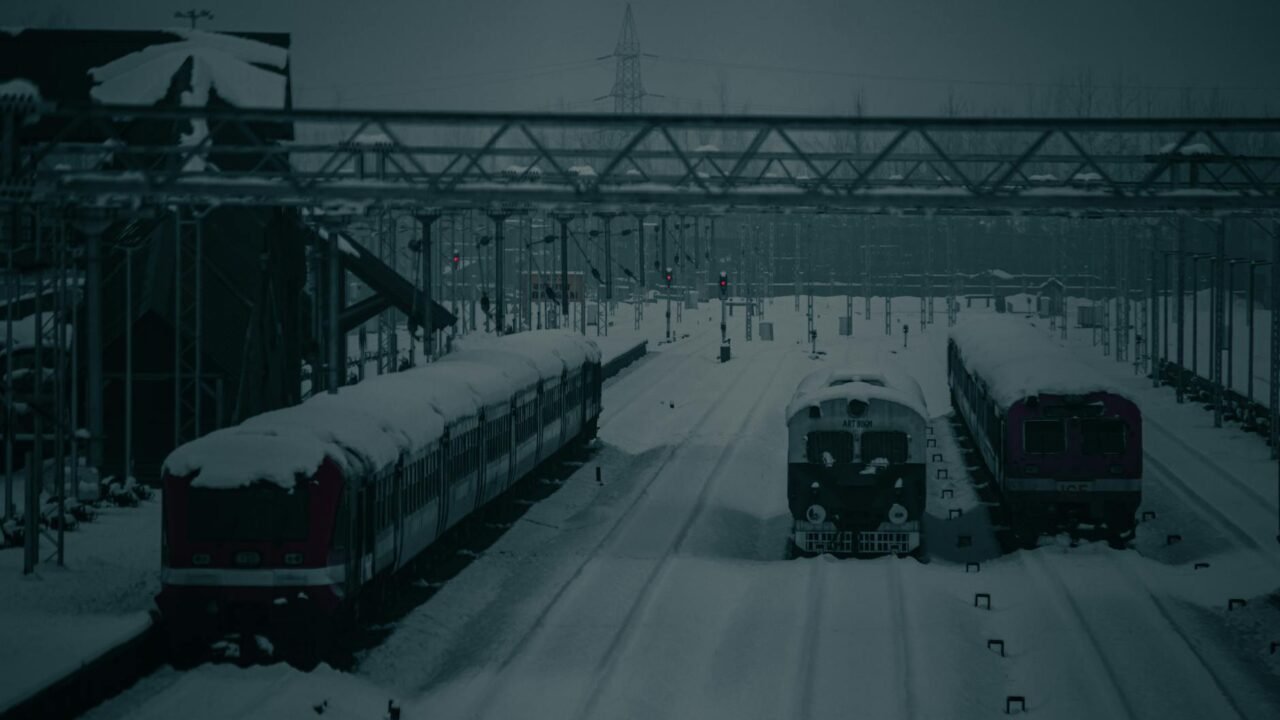
A significant security reinforcement has been implemented for the newly launched Vande Bharat Express service connecting Jammu and Srinagar, with 21 specialized security personnel, including highly trained RPF commandos, tasked with safeguarding the high-speed train. This deployment is part of a comprehensive security strategy designed to ensure the safety of passengers and the integrity of the railway infrastructure along the crucial 327-kilometer Jammu-Katra-Srinagar-Baramulla route. The Vande Bharat Express, which commenced its regular service on May 2nd, promises to dramatically reduce travel time between the two major cities of Jammu and Srinagar to approximately five hours, marking a new era of connectivity for the region.
Information reaching TahirRihat.com suggests that the initiative to bolster security for this vital transport link underscores the importance placed on seamless and secure travel in Jammu and Kashmir. The train was officially flagged off by Union Railway Minister Ashwini Vaishnaw on Thursday, with the presence of dignitaries including Chief Minister Omar Abdullah and Union Minister Dr. Jitendra Singh. Pankaj Gangwar, the principal chief security commissioner of the Indian Railway Protection Force Service, elaborated on the multi-layered security apparatus. He stated that the initial security arrangement involves a ‘one plus twenty’ guard system, led by an inspector and comprising eight Railway Protection Force (RPF) commandos. These commandos are equipped with advanced weaponry to effectively manage any security challenges that may arise along the route.
Further enhancing the security grid, a pilot vehicle will precede the Vande Bharat Express each morning. This advance vehicle is intended to conduct a thorough assessment of the track and address any potential shortcomings or security vulnerabilities before the train commences its journey. This proactive measure is designed to preempt any incidents and ensure a smooth operational flow. The extensive security framework also includes the establishment of guard posts strategically positioned every two kilometers. These posts are manned by quick reaction teams composed of personnel from the Government Railway Police and civil police. Their mandate is to respond immediately to any information regarding security breaches and to secure the affected areas without delay, thereby maintaining a constant state of readiness.
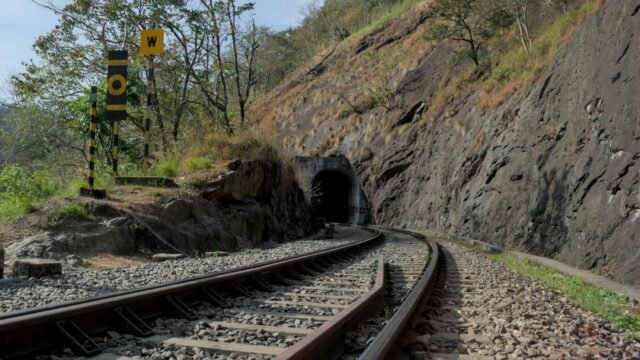
The security arrangements extend to the critical tunnel sections of the railway line, which spans a considerable length and complexity. A sophisticated tunnel control system has been put in place, a joint operation managed by engineering teams and the Government Railway Police. This system incorporates advanced sensors designed to detect any unusual activity, including potential fire hazards or unauthorized intrusions. Upon detection, these sensors immediately trigger alarms, alerting the authorities. Furthermore, both entrances to all tunnels are under constant guard, ensuring a secure passage for the trains. The railway line itself is a testament to significant infrastructure development, constructed at an estimated cost of around Rs 43,780 crore. It features 36 tunnels, collectively spanning 119 kilometers, and is supported by 943 bridges, highlighting the engineering prowess involved in its creation.
In a bid to further safeguard passengers during emergencies, escape tunnels have been integrated into the tunnel infrastructure. These escape routes are crucial for the safe evacuation of stranded passengers in the event of unforeseen circumstances, providing a critical safety net. Gangwar emphasized the robustness of the security measures, stating, “You will see that there is complete and robust security throughout the route.” He also acknowledged the crucial role of the local populace, adding, “Moreover, the affection and support of the people of Kashmir itself serve as a strong assurance for the safety of this service.” This sentiment highlights the collaborative approach to ensuring the success and security of the Vande Bharat service.
The deployment of RPF commandos, widely known as CORAS (commandos for railway safety), is not entirely new to the Vande Bharat operations in the region. These elite units were previously deployed last year to provide security for Vande Bharat trains operating on the Katra-Srinagar rail link. This link is particularly significant as it connects the Kashmir Valley with Katra, the base camp for pilgrims visiting the revered Mata Vaishno Devi shrine. The establishment of this railway line represents a monumental achievement in infrastructure development, providing all-weather, seamless rail connectivity between the Kashmir Valley and the rest of the country. The project is envisioned to be a catalyst for transforming regional mobility, fostering socio-economic integration, and opening up new avenues for development and tourism.
The inaugural Vande Bharat train service between Katra and Srinagar was flagged off by Prime Minister Narendra Modi on June 6th of the previous year. This event marked a historic milestone, establishing the first direct rail link between the Kashmir Valley and the Jammu region. The introduction of the Vande Bharat Express on this route is expected to further consolidate this connectivity, making travel more efficient, comfortable, and secure for the residents and visitors alike. The comprehensive security measures, encompassing elite commandos, advanced technology, and vigilant ground personnel, are designed to instill confidence and ensure the uninterrupted operation of this vital transportation artery.

Tahir Rihat (also known as Tahir Bilal) is an independent journalist, activist, and digital media professional from the Chenab Valley of Jammu and Kashmir, India. He is best known for his work as the Online Editor at The Chenab Times.




Leave a Reply