
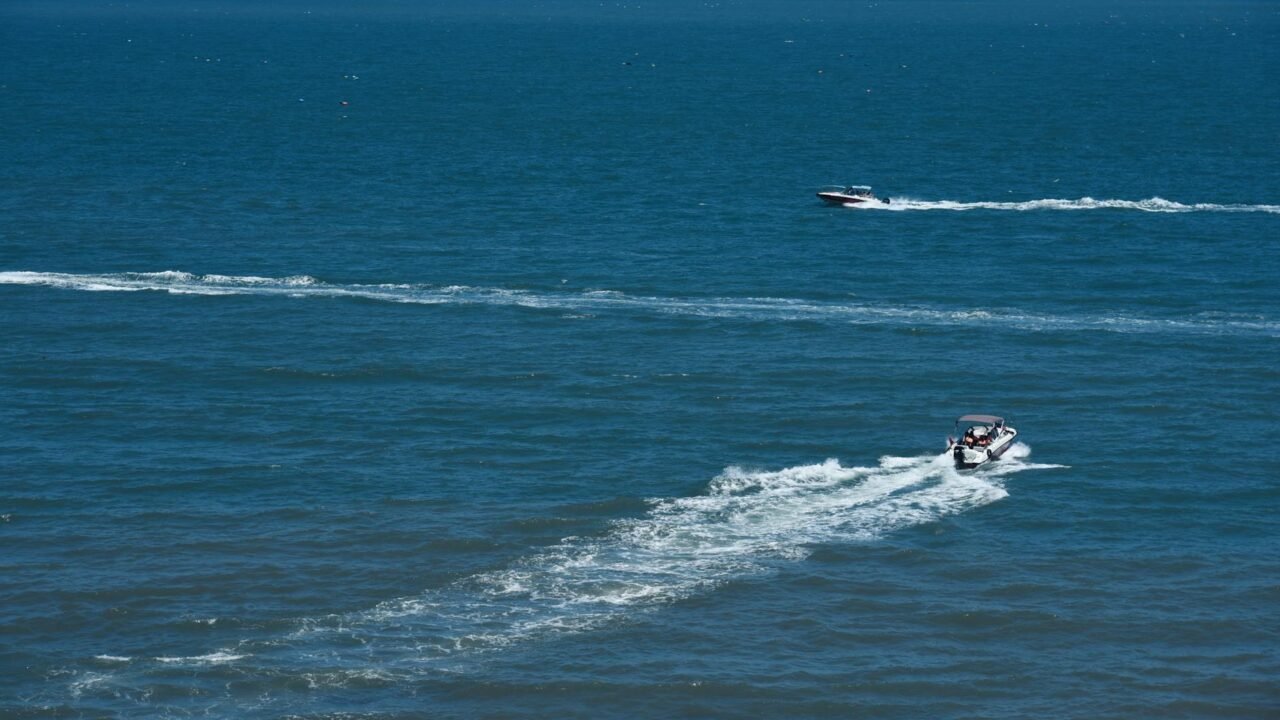
The strategic Strait of Hormuz, a vital chokepoint for global oil shipments, is increasingly becoming a theater of potential confrontation, largely due to the formidable capabilities of Iran‘s unconventional naval forces. Separate from the traditional Iranian Navy, a specialized fleet, often referred to as a ‘mosquito fleet,’ operates with remarkable speed and agility, presenting a unique and potent threat to maritime security in the region. These vessels, capable of exceeding speeds of 115 miles per hour, are designed for asymmetric warfare, a strategy that leverages speed, surprise, and overwhelming numbers to counter more powerful, conventional adversaries.
Information reaching TahirRihat.com suggests that this ‘mosquito fleet’ is a cornerstone of Iran’s maritime defense strategy, particularly in the constricted waters of the Persian Gulf and the Strait of Hormuz. The effectiveness of such a force lies in its ability to swarm, harass, and potentially disable larger naval assets, including those of international powers that frequently transit the strait. A retired U.S. official, speaking anonymously to acknowledge the sensitivity of the matter, described this unconventional naval arm as a “disruptive force,” highlighting its capacity to inject significant uncertainty and risk into naval operations within the strait.
The operational doctrine of the ‘mosquito fleet’ is rooted in the concept of asymmetric warfare, where a weaker force can effectively challenge a stronger one by exploiting vulnerabilities and employing tactics that negate the opponent’s strengths. In the context of the Strait of Hormuz, this translates to the use of numerous small, fast-attack craft armed with anti-ship missiles, mines, and other weaponry. These craft can operate in shallow waters and navigate complex maritime environments where larger warships might be at a disadvantage. Their high speed allows them to rapidly appear, engage targets, and disappear before a conventional response can be effectively mounted. This tactic, honed over years of naval exercises and doctrine development, aims to create a highly volatile and unpredictable operational environment for any naval presence perceived as a threat by Iran.
The implications of this naval posture extend beyond regional security dynamics. The Strait of Hormuz is one of the world’s most critical maritime arteries, with roughly 30% of the world’s seaborne oil trade passing through it daily. Any disruption, even a temporary one, can have immediate and severe repercussions on global energy markets, leading to price spikes and supply chain instability. The presence of Iran’s ‘mosquito fleet,’ with its inherent disruptive potential, serves as a constant reminder of the fragility of these supply lines and the potential for conflict in this strategically vital waterway. The international community, particularly nations heavily reliant on oil imports, closely monitors developments in the Strait of Hormuz and the operational readiness of Iran’s naval forces.
The development and deployment of this specialized fleet underscore Iran’s commitment to maintaining a robust defense capability, even in the face of international sanctions and geopolitical pressures. The focus on speed, maneuverability, and asymmetric tactics reflects a strategic decision to maximize defensive capabilities within its territorial waters and the immediate approaches to its coastline. This approach allows Iran to project power and influence in its immediate maritime neighborhood without necessarily engaging in a direct arms race with larger, more technologically advanced navies. The retired U.S. official’s assessment of the fleet as a “disruptive force” suggests that its primary impact is not necessarily in achieving outright victory in a conventional sense, but in its ability to impose significant costs and risks on potential adversaries, thereby deterring aggression or influencing strategic calculations.
The operational environment of the Strait of Hormuz, characterized by its narrow passages and busy shipping lanes, is particularly conducive to the tactics employed by the ‘mosquito fleet.’ The limited sea room can restrict the maneuverability of larger vessels, while the constant flow of commercial traffic provides a degree of cover and complexity for the smaller Iranian craft. This environment allows Iran to leverage its numerical advantage and the speed of its vessels to create tactical situations that are difficult for conventional navies to manage. The potential for mines, fast-moving attack boats, and other asymmetric weapons to be deployed in such a confined space raises the stakes for any naval operations conducted by external powers.
The international response to Iran’s naval posture in the Strait of Hormuz has largely focused on maintaining freedom of navigation and ensuring the unimpeded flow of global commerce. Naval patrols by various countries are a regular feature of the region, aimed at deterring aggression and responding to any incidents. However, the nature of Iran’s ‘mosquito fleet’ presents a persistent challenge to these efforts. The dispersed and mobile nature of these forces makes them difficult to track and neutralize definitively. The threat is not static; it is dynamic and adaptable, capable of posing a significant risk at short notice.
The strategic importance of the Strait of Hormuz cannot be overstated. It is a global commons, essential for the economic well-being of numerous nations. The potential for Iran’s ‘mosquito fleet’ to disrupt traffic or engage in hostile actions remains a significant concern for international maritime security. The retired U.S. official’s characterization of the fleet as a “disruptive force” encapsulates the essence of the threat: it is designed to create chaos, uncertainty, and a high degree of risk for any naval presence that Iran perceives as a threat to its interests or sovereignty. This ongoing dynamic in one of the world’s most critical maritime chokepoints continues to be a focal point for international security analysis and diplomatic engagement.

Tahir Rihat (also known as Tahir Bilal) is an independent journalist, activist, and digital media professional from the Chenab Valley of Jammu and Kashmir, India. He is best known for his work as the Online Editor at The Chenab Times.






Leave a Reply