
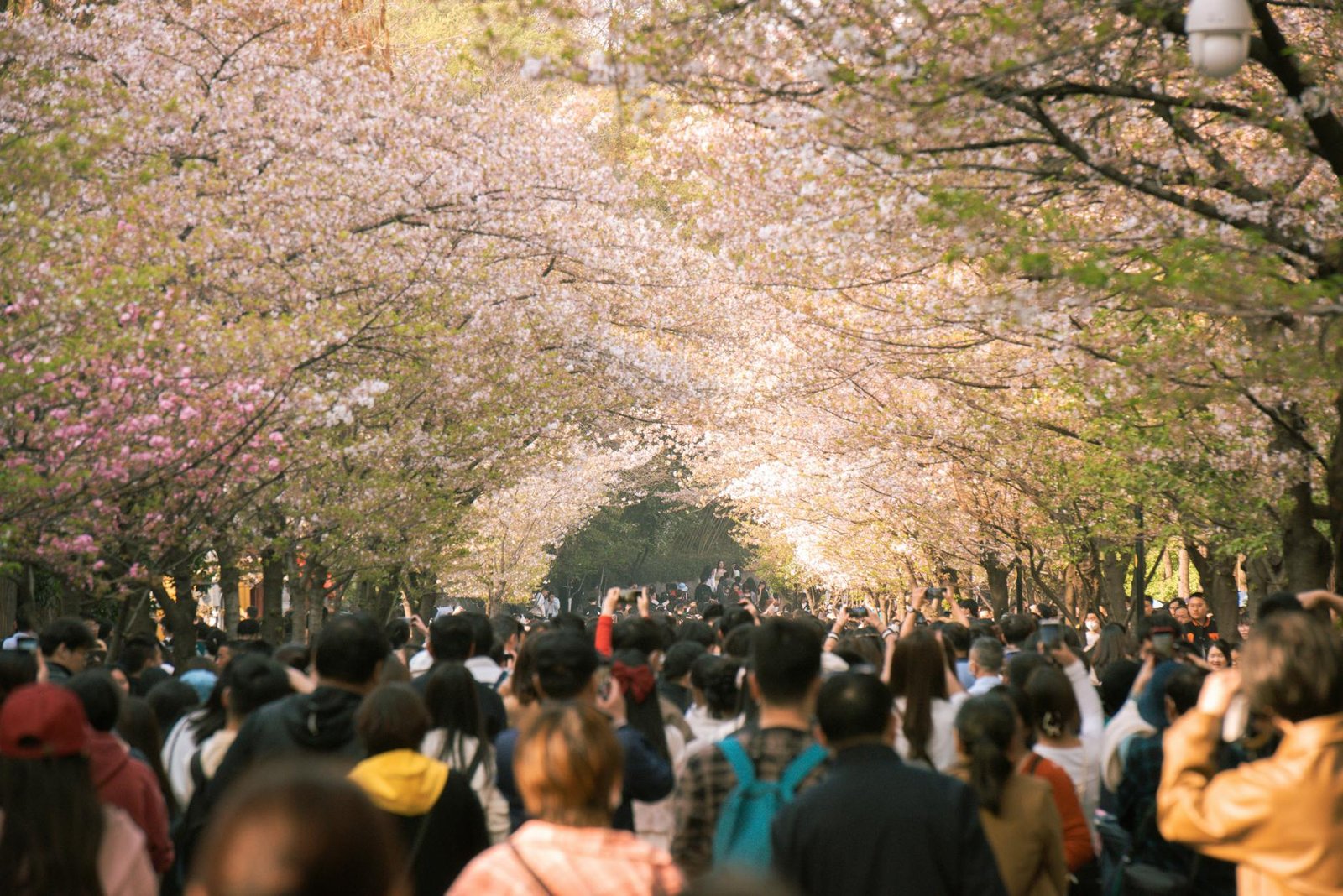
A picturesque town in Japan, renowned for its stunning cherry blossoms, is finding itself on edge as an overwhelming influx of tourists during the peak blooming season strains local resources and patience. Residents, once welcoming of visitors, are now actively seeking ways to manage the burgeoning crowds and mitigate the negative impacts of what has become known as overtourism.
The phenomenon, particularly acute in areas celebrated for their natural beauty and cultural significance, has transformed serene landscapes into congested thoroughfares. This surge in visitor numbers, while a boon for some sectors of the economy, is increasingly creating friction with the daily lives of those who call these places home. Information reaching TahirRihat.com suggests that the situation has reached a critical point in several popular destinations, prompting a reevaluation of tourism strategies.
The annual cherry blossom season, a period of intense natural beauty that draws millions of international and domestic travelers, has become a focal point for these concerns. Towns that once reveled in the economic benefits of this influx are now confronting the downsides: crowded streets, strained public services, and a diminished quality of life for residents. The delicate balance between promoting tourism and preserving the local environment and community fabric is being severely tested.
In one such town, residents are taking matters into their own hands, attempting to implement measures to control the flow of visitors and encourage more respectful travel. These grassroots efforts highlight a growing sentiment among local communities that they need to reclaim some agency in managing the tourism that defines their towns. The challenges are multifaceted, ranging from the sheer volume of people to the behavior of some tourists who may not be fully aware of or sensitive to local customs and regulations.
The economic advantages of tourism are undeniable, providing much-needed revenue and employment opportunities. However, the current trajectory in some of Japan’s most sought-after locales indicates that unchecked growth can lead to unsustainable conditions. The idyllic image of Japan, often promoted through tourism campaigns, is increasingly being overshadowed by the reality of overcrowded attractions and the resulting strain on infrastructure and local life. This has led to a broader conversation within Japan about the future of tourism and the need for more sustainable and community-centric approaches.
The situation is not unique to Japan; many popular tourist destinations worldwide are grappling with similar issues. However, Japan’s particular cultural context, with its emphasis on order, respect, and harmony, makes the disruption caused by unruly tourist behavior particularly jarring. The desire to share Japan’s beauty with the world is clashing with the need to protect its cultural heritage and the well-being of its citizens. As a result, local authorities and residents are exploring a range of solutions, from implementing stricter regulations and visitor limits to promoting less-visited areas and encouraging longer stays to disperse the crowds.
The strain is evident in the daily lives of residents. Simple errands can become arduous tasks due to traffic congestion and crowded public spaces. The serene ambiance that once characterized these towns is often replaced by a constant buzz of activity that can be overwhelming. This has led to a growing sense of resentment among some locals, who feel that their towns are being overrun and their way of life is being irrevocably altered. The economic benefits, while present, are perceived by some as not outweighing the significant disruption to their daily existence.
The efforts by residents to take charge reflect a growing awareness of the need for proactive management rather than reactive measures. They are seeking to establish a more harmonious relationship between tourism and local life, ensuring that the economic benefits are shared equitably and that the negative impacts are minimized. This includes advocating for better infrastructure to handle larger crowds, promoting responsible tourism practices, and finding ways to preserve the authentic character of their communities.
The challenge lies in finding a sustainable model that allows Japan to continue welcoming visitors while safeguarding its natural and cultural treasures. The current situation in towns like the one experiencing intense cherry blossom crowds serves as a stark reminder that tourism, when unmanaged, can become a double-edged sword. The ongoing efforts by residents to regain control underscore a critical juncture in Japan’s tourism landscape, where the focus is shifting towards a more balanced and sustainable future.
The desire to experience Japan’s unique beauty and culture is understandable, but the current situation highlights the need for a more thoughtful approach to travel. As the country continues to attract global attention, the lessons learned from these overtourism hotspots will be crucial in shaping the future of travel in Japan and beyond. The push for responsible tourism is no longer just an abstract concept but a pressing necessity for the preservation of both the environment and the quality of life for local communities.
The narrative emerging from these towns is one of resilience and a determined effort by residents to shape their own destinies. They are not necessarily against tourism, but they are advocating for a form of it that respects their communities and their environment. This movement towards local empowerment in tourism management is a significant development, signaling a potential shift in how destinations are developed and experienced. The coming months and years will likely see more such initiatives as Japan navigates the complex terrain of mass tourism in an era of increasing global travel.

Tahir Rihat (also known as Tahir Bilal) is an independent journalist, activist, and digital media professional from the Chenab Valley of Jammu and Kashmir, India. He is best known for his work as the Online Editor at The Chenab Times.




Leave a Reply