
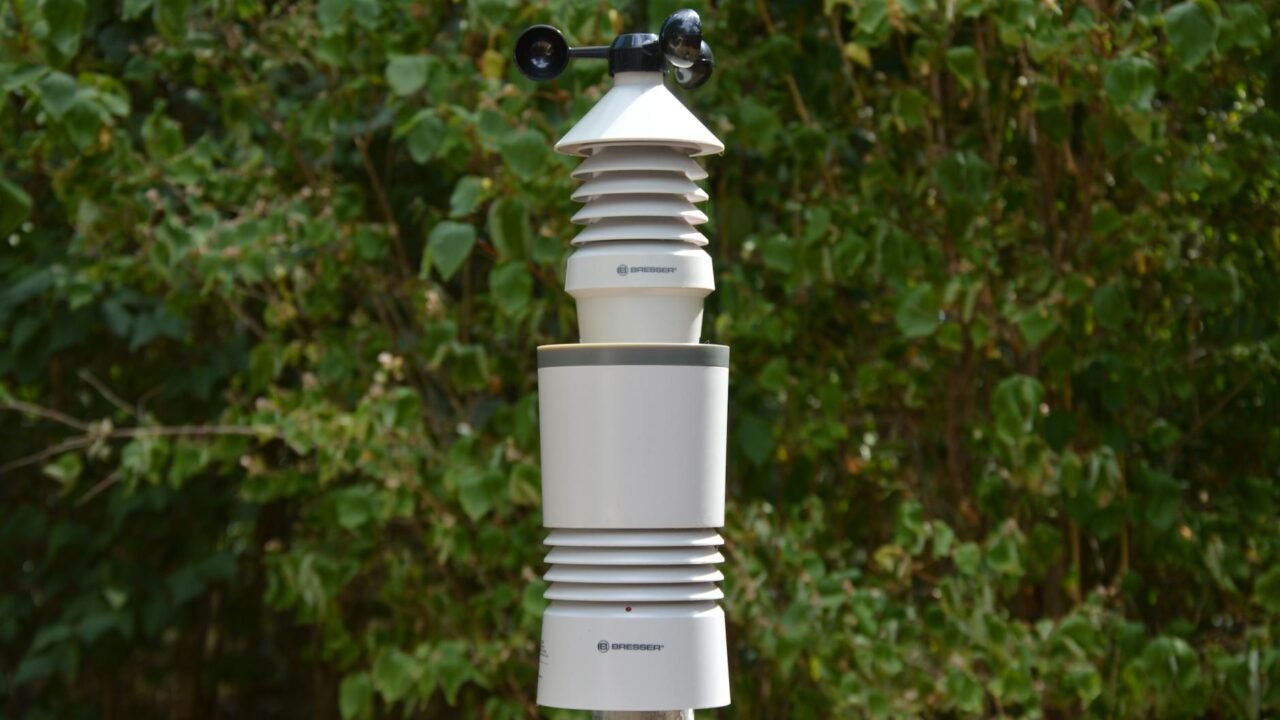
Authorities are investigating a potential tampering incident involving a weather sensor at a Paris airport, a development that has coincided with a surge of unusually large wagers placed on a prominent online betting platform. The unusual activity has raised concerns about the integrity of weather data and the potential for market manipulation.
The focus of the inquiry is a specific weather sensor located at a Paris airport, where officials noted anomalous readings that deviated significantly from expected meteorological patterns. This deviation prompted an immediate review of the sensor’s operational status and data logs. As per information available with TahirRihat.com, the investigation is exploring the possibility that the sensor may have been deliberately altered to report inaccurate temperature data.
Simultaneously, a significant increase in betting volume was observed on Polymarket, a prediction market platform where users can wager on the outcomes of future events. The wagers in question were reportedly linked to specific temperature thresholds in Paris, raising a red flag for regulators and platform operators. The timing of these substantial bets, coinciding with the questionable sensor readings, has led to suspicions of a coordinated effort to exploit the platform for financial gain.
Polymarket, known for its transparent and decentralized approach to prediction markets, has stated its commitment to upholding the integrity of its platform. In response to the unusual activity, the company has initiated its own internal review and is cooperating fully with external investigations. The platform’s terms of service typically require verifiable data sources for settling bets, and the current situation presents a challenge to that process.
The potential for weather data manipulation, especially in a global hub like Paris, carries significant implications. Accurate weather forecasting is crucial for a multitude of sectors, including aviation, agriculture, energy, and disaster management. Any compromise of this data could lead to flawed decision-making, resulting in economic losses and potential safety risks. The investigation is therefore examining not only the immediate betting anomaly but also the broader security of meteorological data infrastructure.
Sources close to the investigation indicate that the unusual betting patterns on Polymarket involved a substantial amount of capital, suggesting a well-resourced and potentially organized group was involved. The specific nature of the bets suggests that participants may have had prior knowledge of the compromised sensor data or were acting on a tip-off. This aspect of the inquiry is focusing on identifying the individuals or entities behind these large wagers and understanding their motivations.
The authorities are working to establish a clear timeline of events, correlating the suspected tampering of the sensor with the placement of the bets. This involves a detailed forensic analysis of the sensor’s hardware and software, as well as a deep dive into the transaction records on Polymarket. The complexity of the investigation is amplified by the digital nature of the betting platform and the potential for sophisticated methods of obfuscation.
The incident also highlights the growing intersection of financial markets, technology, and real-world events, particularly in the context of prediction markets. These platforms, while offering innovative ways to price risk and aggregate information, are also vulnerable to manipulation if the underlying data sources are compromised. The Polymarket case is likely to prompt a broader discussion about regulatory frameworks and security protocols for such platforms.
The investigation is in its early stages, and no definitive conclusions have been reached. However, the confluence of suspicious sensor data and significant betting activity has triggered a high-level inquiry. The outcome of this investigation could have far-reaching consequences for the security of weather data, the regulation of prediction markets, and the prevention of future attempts at data-driven financial manipulation.
The authorities are exploring all avenues, including the possibility of a sophisticated cyberattack or an inside job. The integrity of the data collected by meteorological agencies is paramount, and any breach of this trust could have severe repercussions. The Paris airport sensor incident serves as a stark reminder of the vulnerabilities that exist in our increasingly interconnected digital world and the need for robust security measures across all critical data infrastructures.
The involvement of a prediction market platform like Polymarket adds another layer of complexity. These platforms operate on the principle of decentralized information, but their reliance on external data feeds means they are susceptible to the same vulnerabilities that affect traditional data providers. The investigation will likely scrutinize the data validation processes employed by Polymarket and similar platforms to ensure they are resilient against fraudulent inputs.
Furthermore, the potential financial implications of such a scheme are considerable. If a group could reliably manipulate weather data to win large bets, it could incentivize further attempts at similar schemes, potentially impacting various industries that rely on accurate weather predictions. The authorities are therefore treating this matter with the utmost seriousness, aiming to deter future malicious activities and restore confidence in the integrity of both weather data and financial prediction markets.

Tahir Rihat (also known as Tahir Bilal) is an independent journalist, activist, and digital media professional from the Chenab Valley of Jammu and Kashmir, India. He is best known for his work as the Online Editor at The Chenab Times.






Leave a Reply